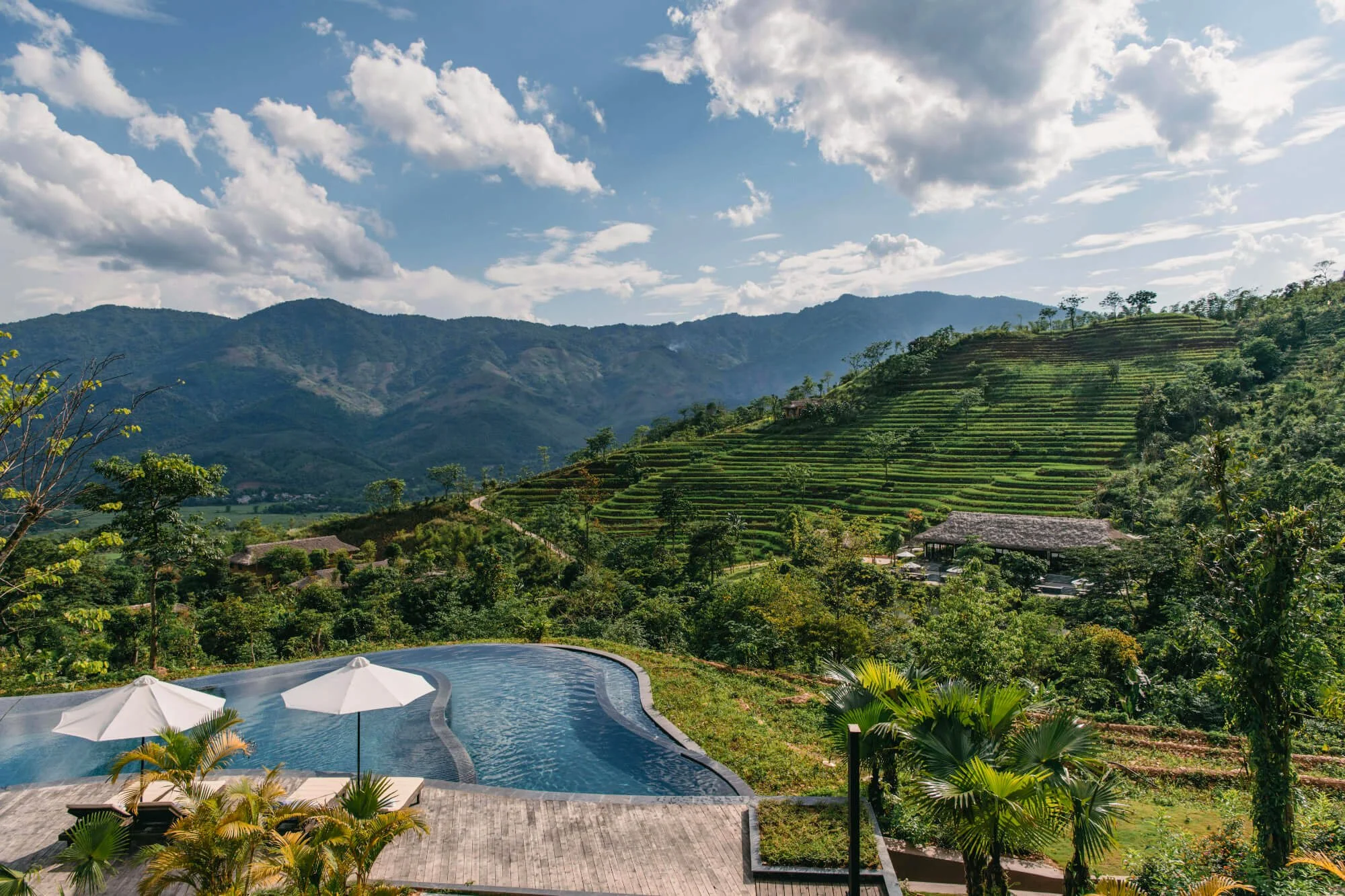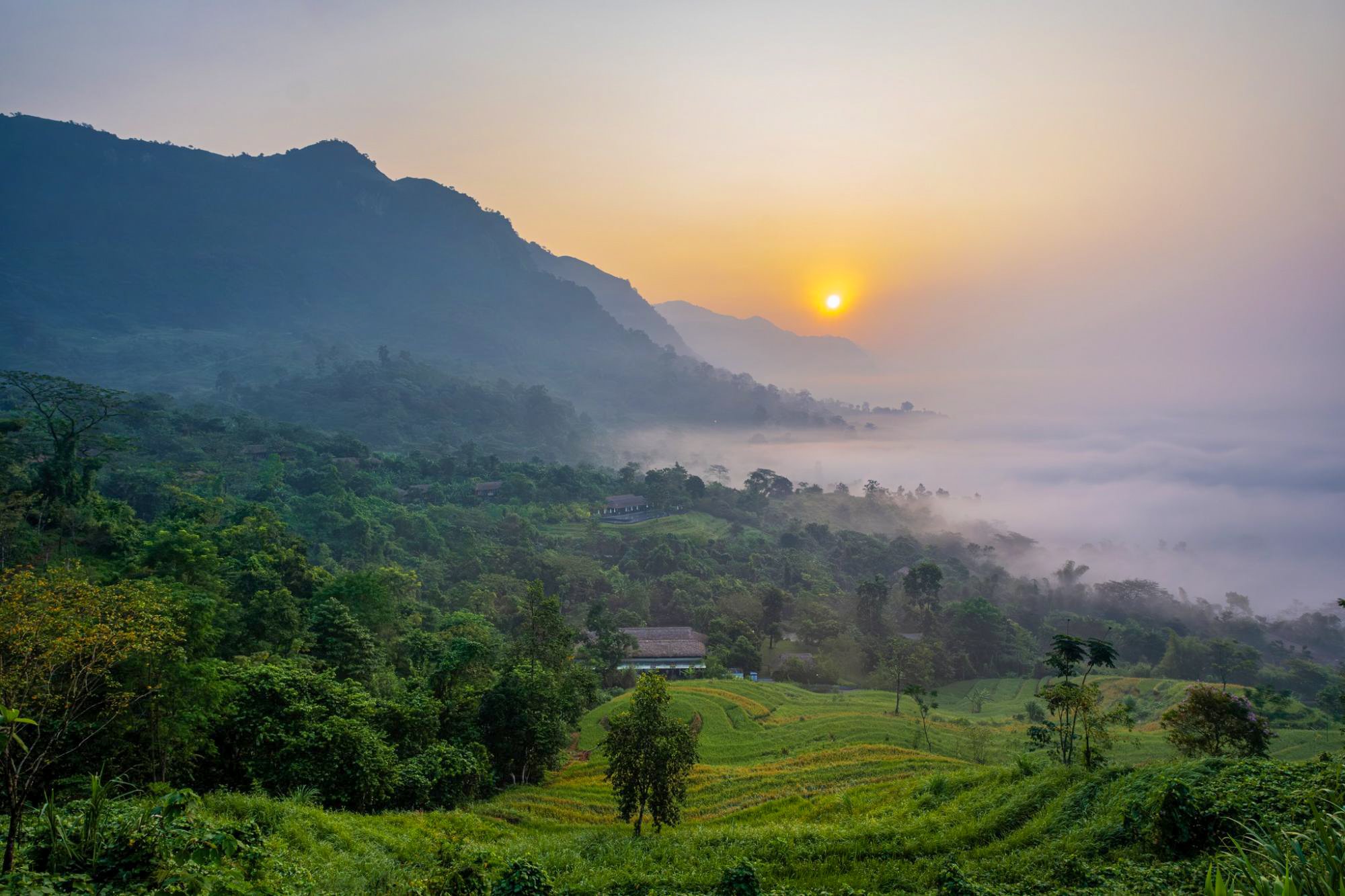
The road from Hanoi to Mai Chau gradually leaves the city behind. Traffic thins, buildings make way for fields and the landscape begins to fold into steep, green mountains. Avana Retreat is hidden deep inside this scenery, far beyond the better-known hotels and homestays in the central Mai Chau valley. It is not a resort that happens to have a beautiful view. The forest, rice terraces, streams and waterfall are the resort.
Arrival immediately changes the pace. There is no city outside the gate and no list of nearby monuments demanding attention. Paths climb and descend through dense vegetation, villas are scattered across the hills and the sound of running water appears almost everywhere. At times the property feels less like a conventional hotel than a secluded mountain village— allthough one with private pools, an extraordinary spa and exceptionally comfortable rooms.
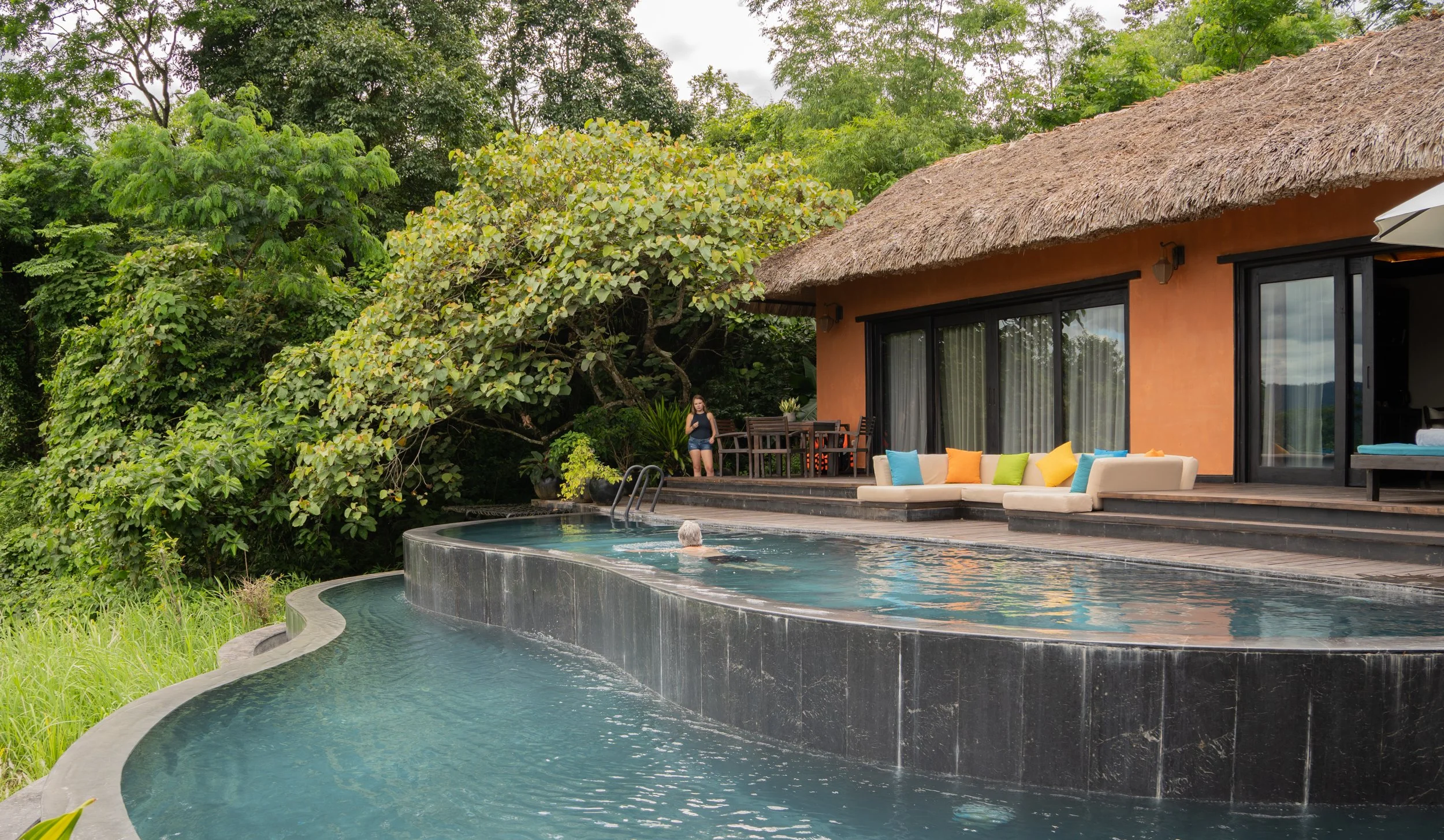
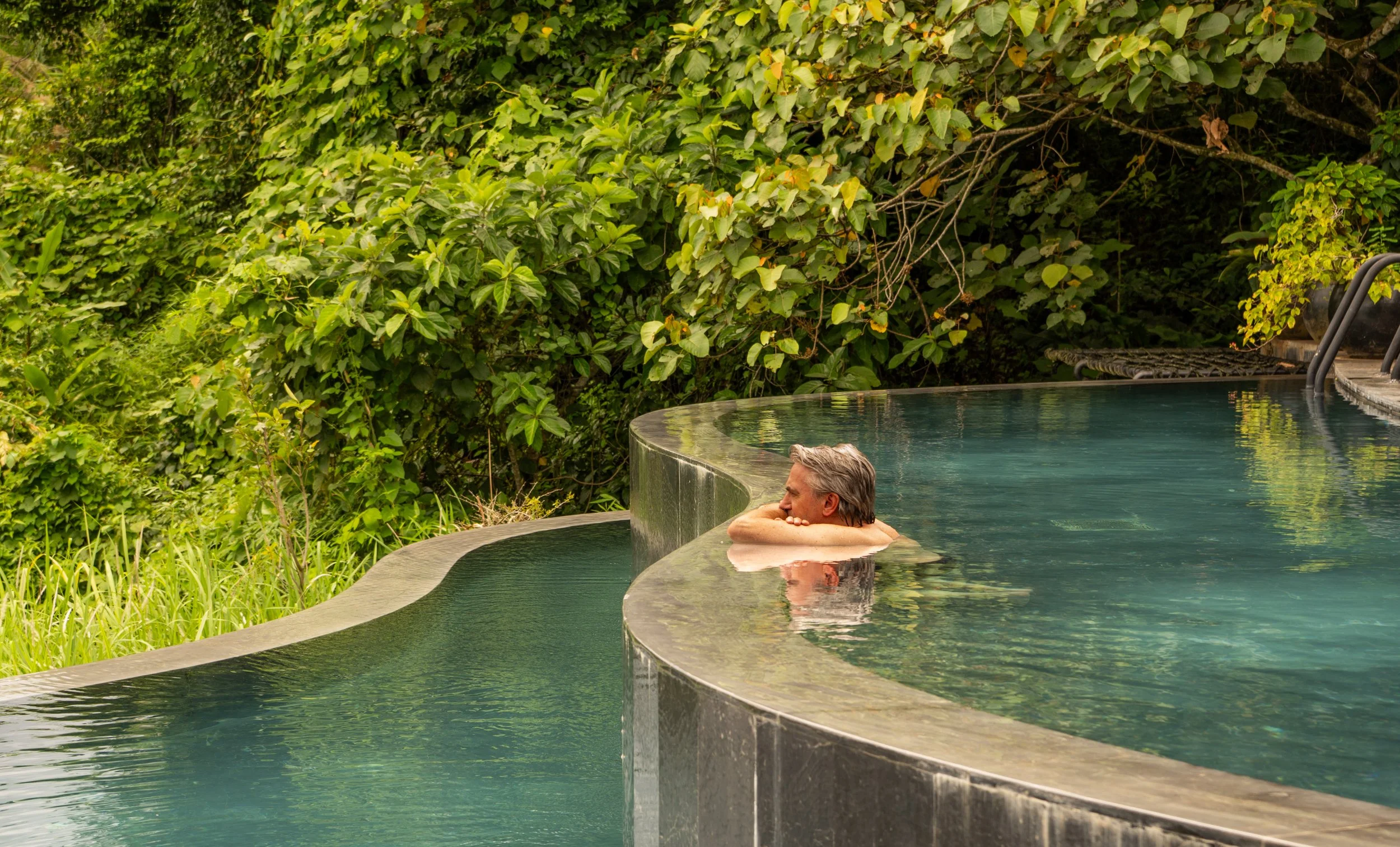
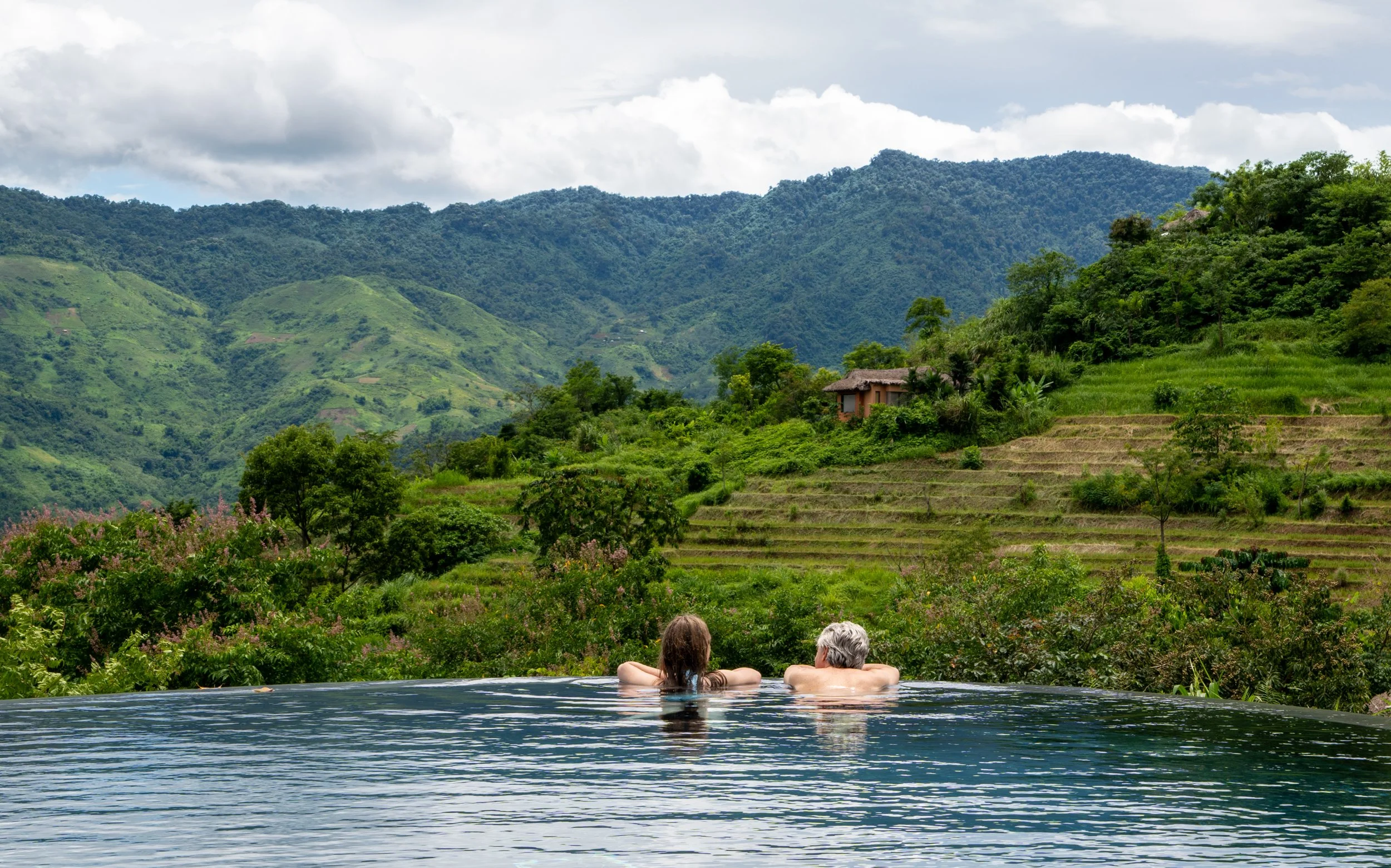
An exceptionally comfortable pool as well :-)
Avana is sufficiently remote that exploring the surrounding region requires time and transport. That did not feel like a limitation. We quickly conclude that there was nowhere we needed to go. The retreat and its setting are by far the most beautiful attraction in the wider area. Leaving for the sake of sightseeing would have meant exchanging forest, waterfalls and rice terraces for several hours in a car. We prefer to stay.
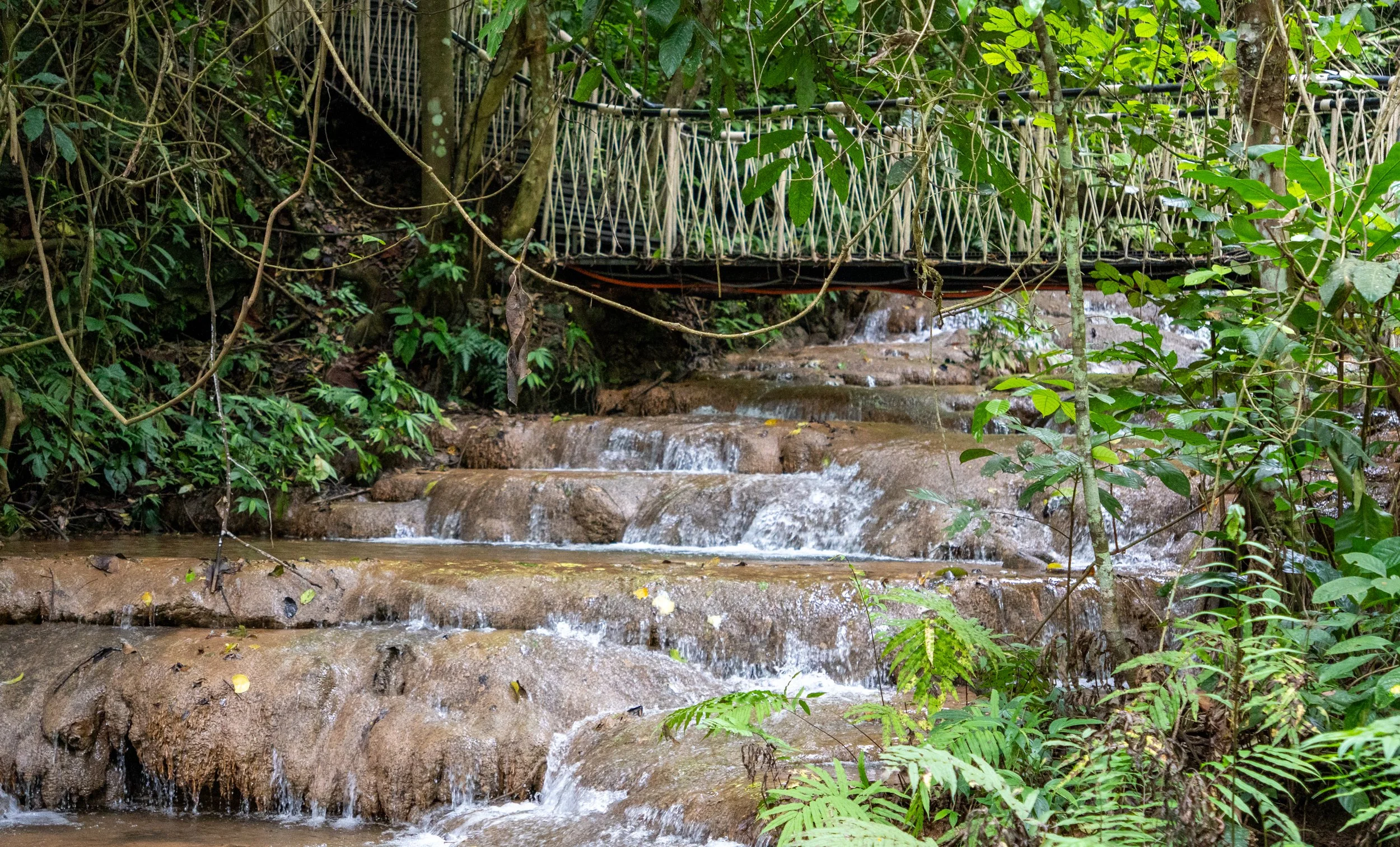
The resort was built around the Pùng waterfall, which runs directly through the grounds. The water feeds streams, ponds and cascades before continuing down the valley. This gives Avana a quality that landscaping alone could never create. Water is not added as decoration; it determines the shape and atmosphere of the place.
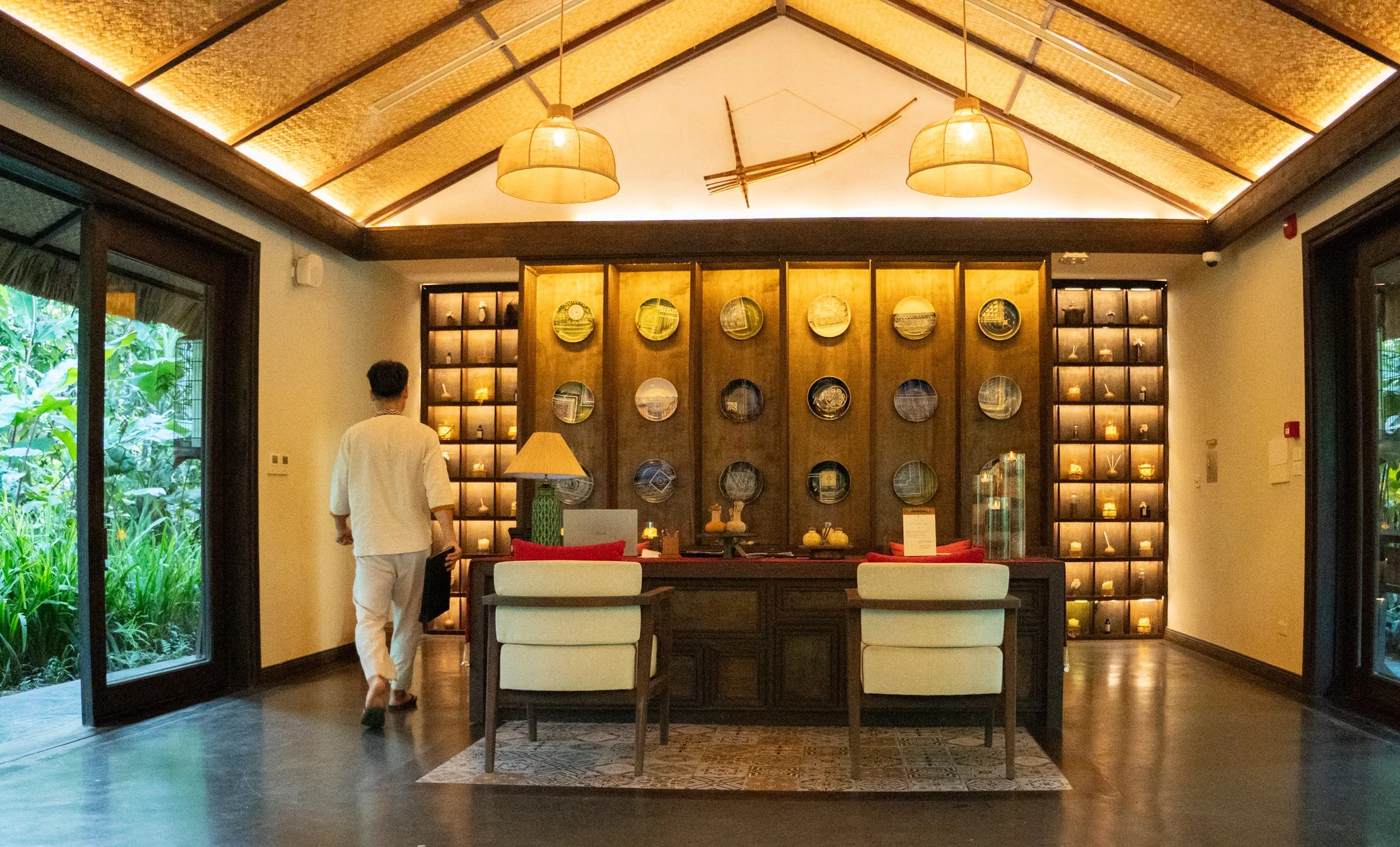
The architecture follows the contours of the hills instead of imposing a rigid plan on them. Villas have thatched roofs, rattan ceilings and earth-coloured walls, with details inspired by the Thai and H’mong communities of the region. The property contains only 36 villas distributed across roughly fifteen hectares. The low density matters. Even when other guests are present, it is easy to feel alone in the landscape.
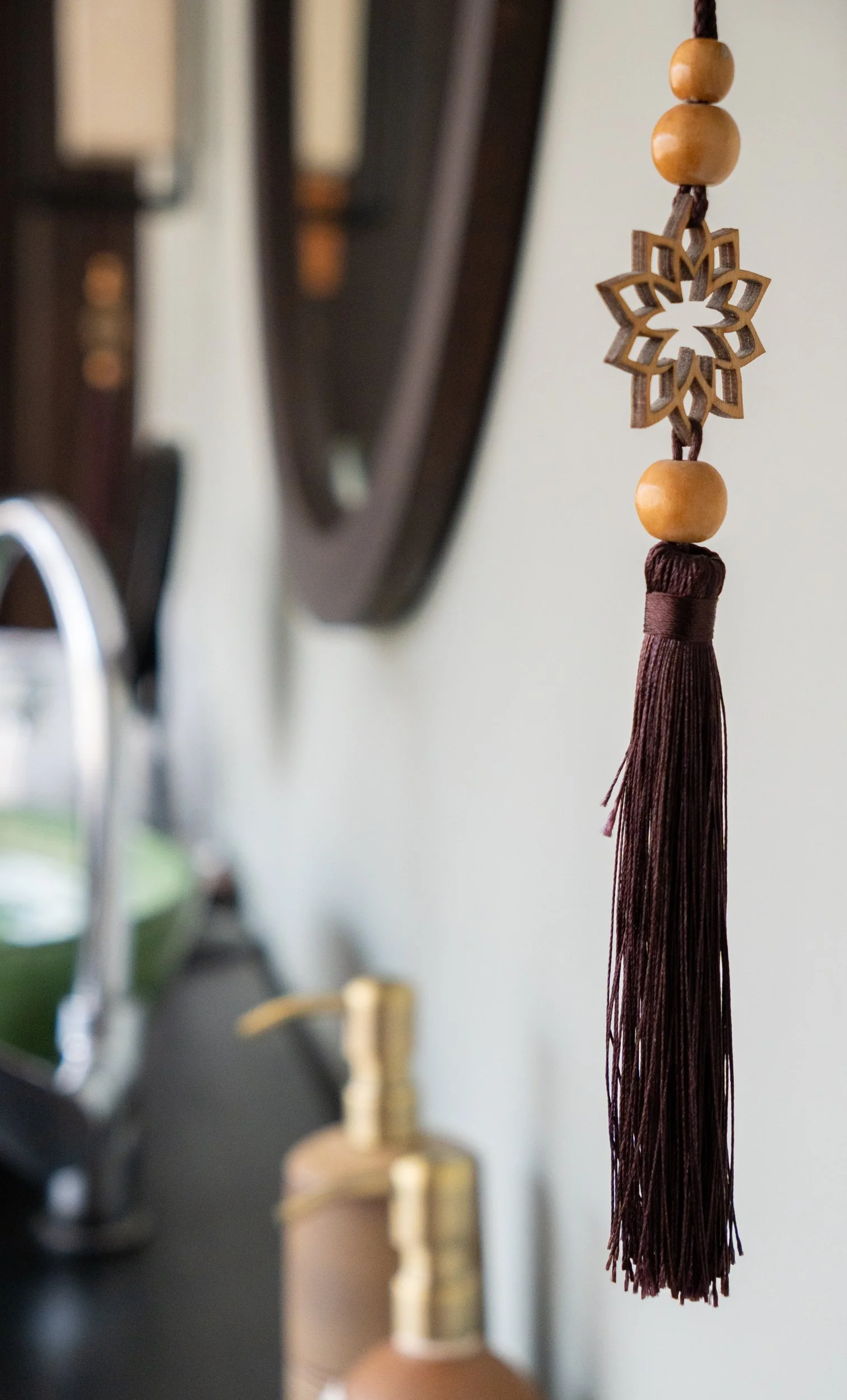
The Mai Chau region is home to several ethnic communities, particularly White Thai and H’mong villages. Traditional stilt houses, textile production, rice cultivation and small-scale farming remain visible throughout the surrounding countryside. Avana borrows heavily from that material culture. The most convincing details are not ornamental motifs placed on generic hotel rooms, but the use of local building forms, woven materials and craft techniques throughout the property.
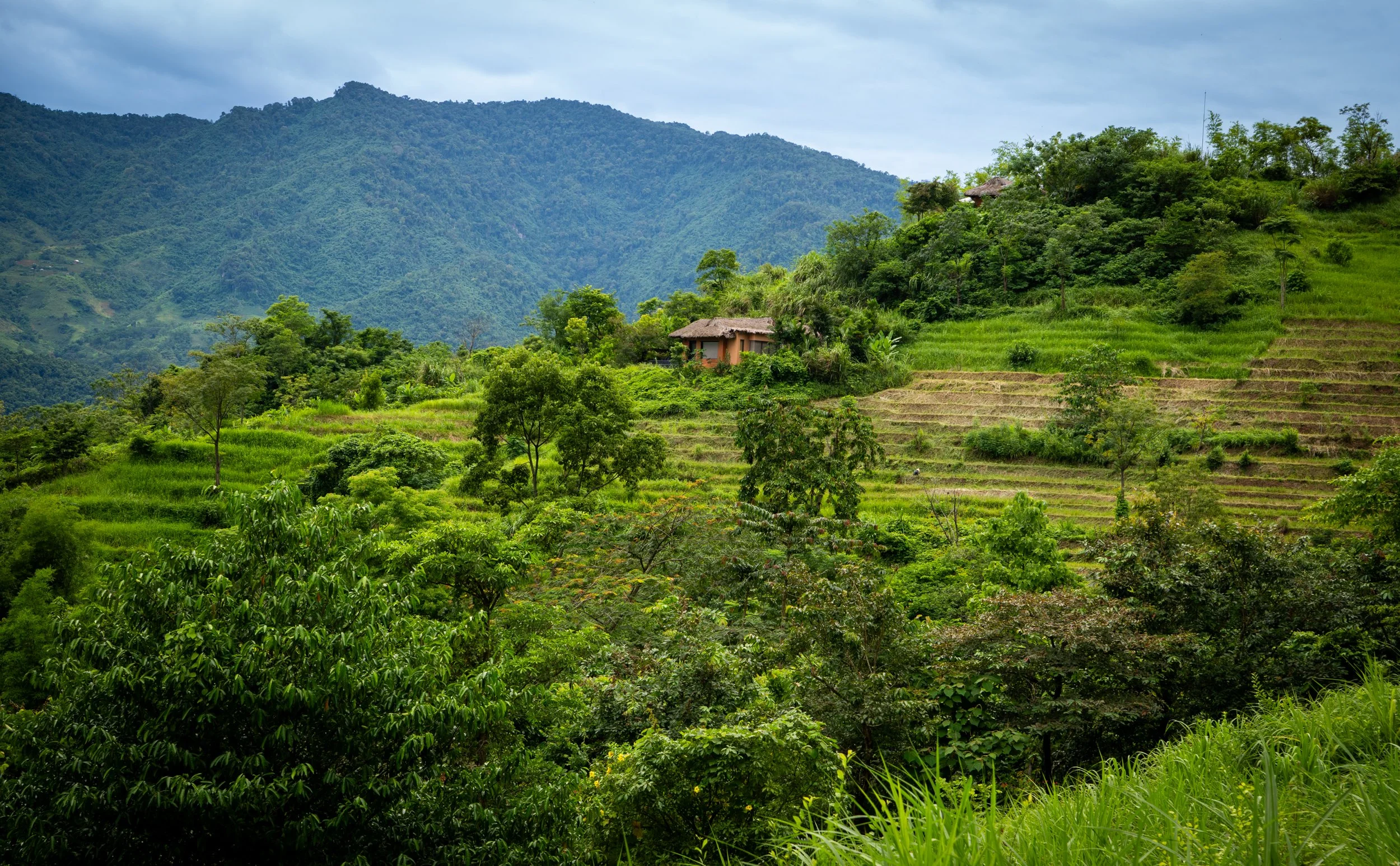
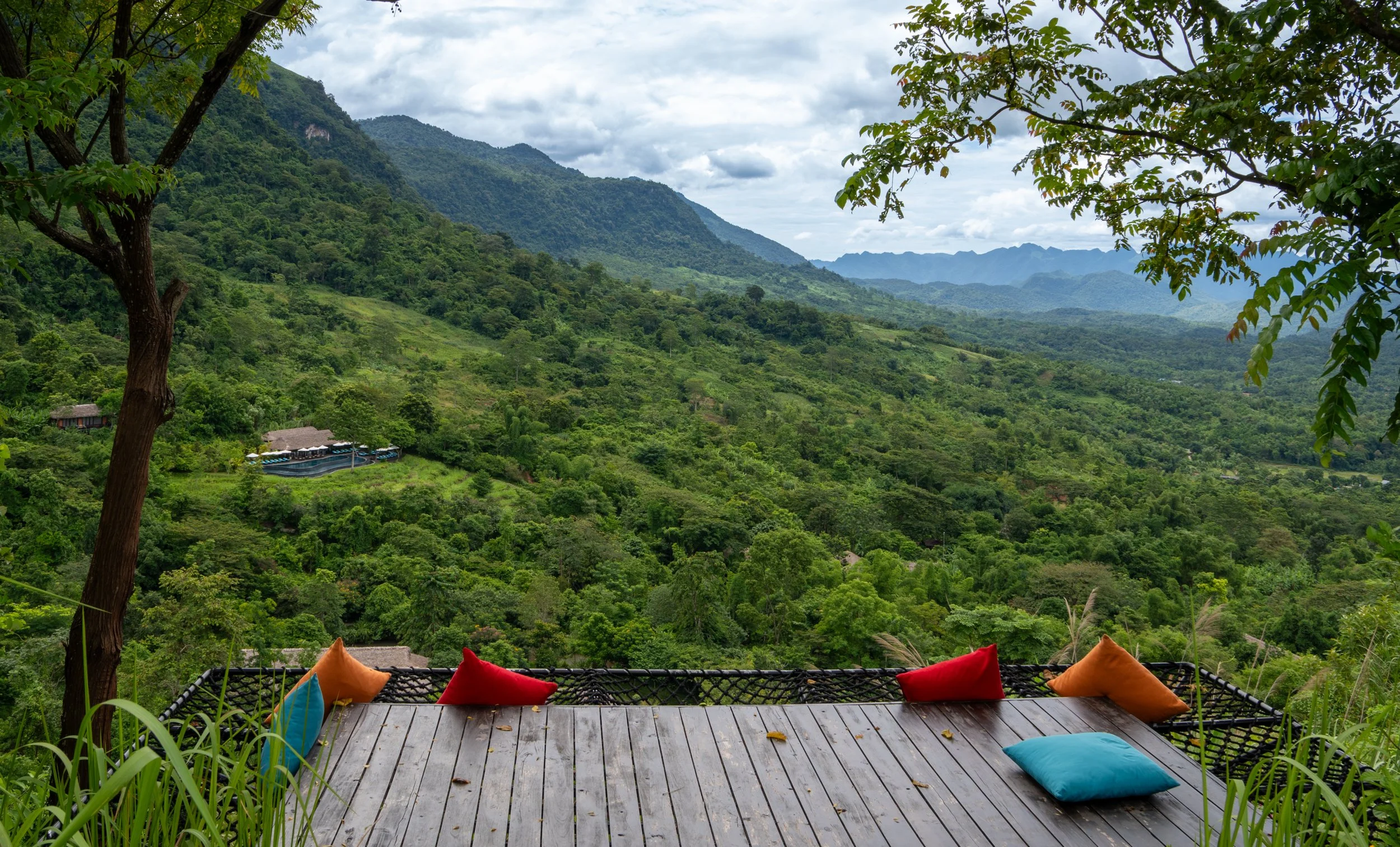
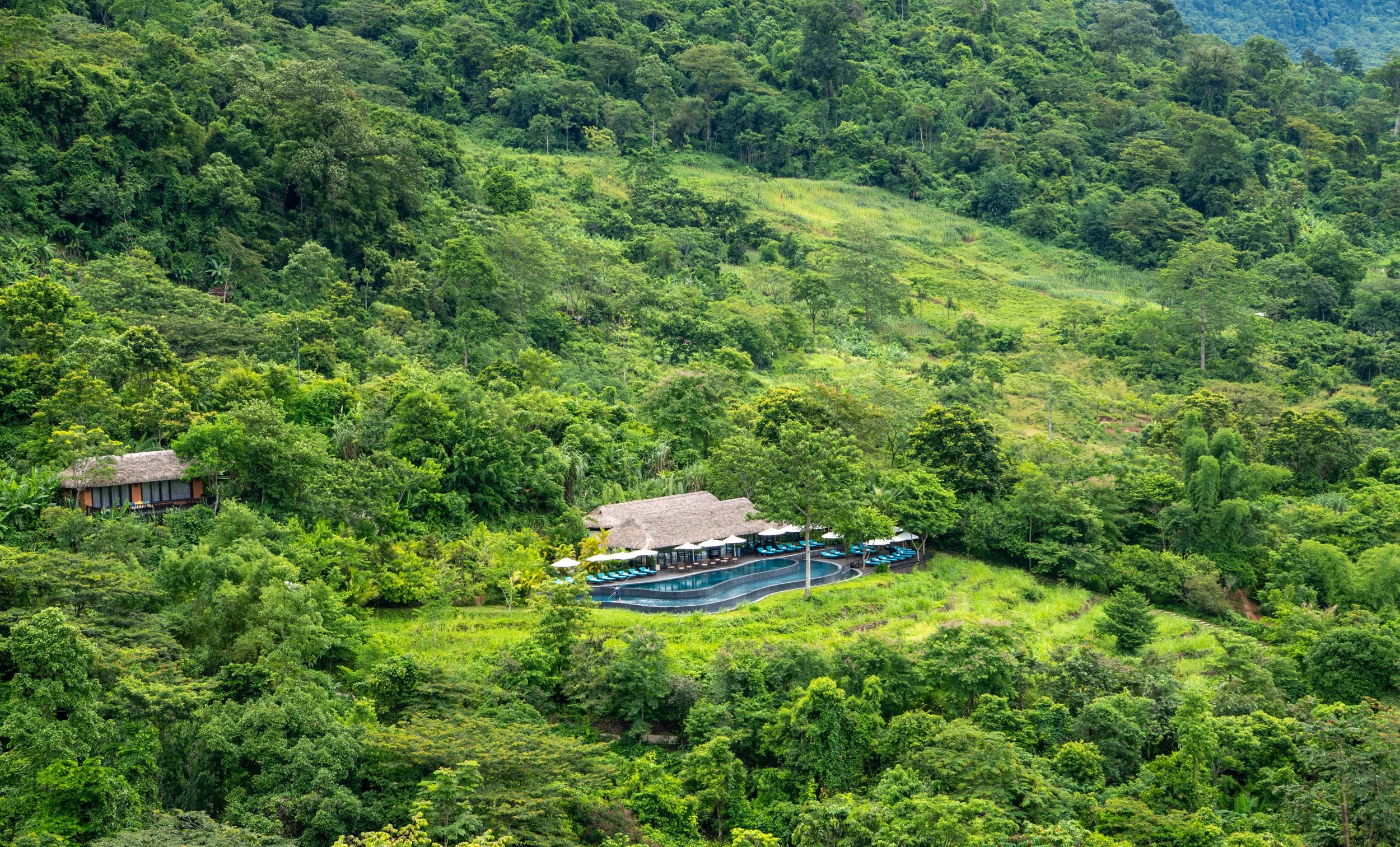
Can you spot our “villa”?
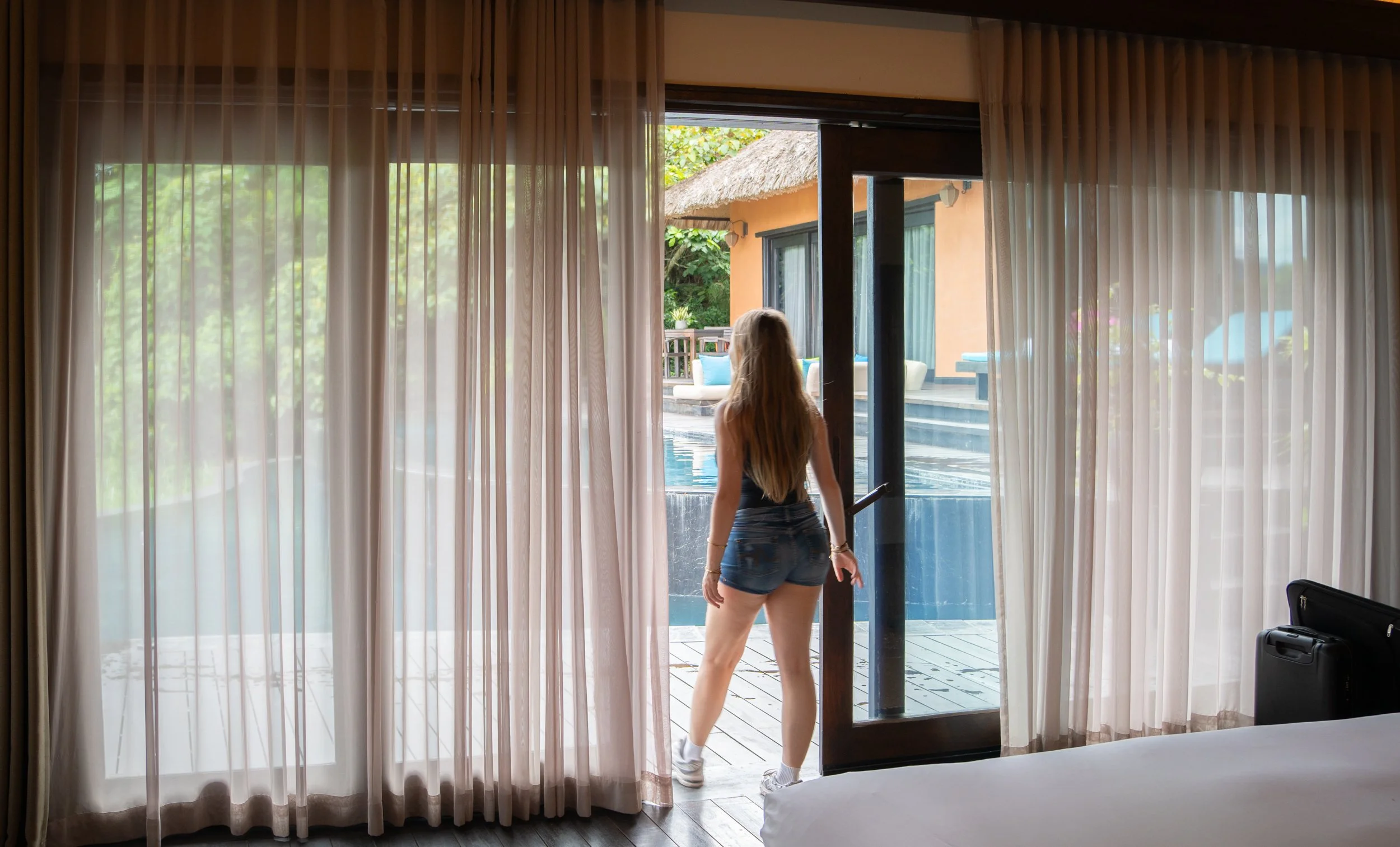
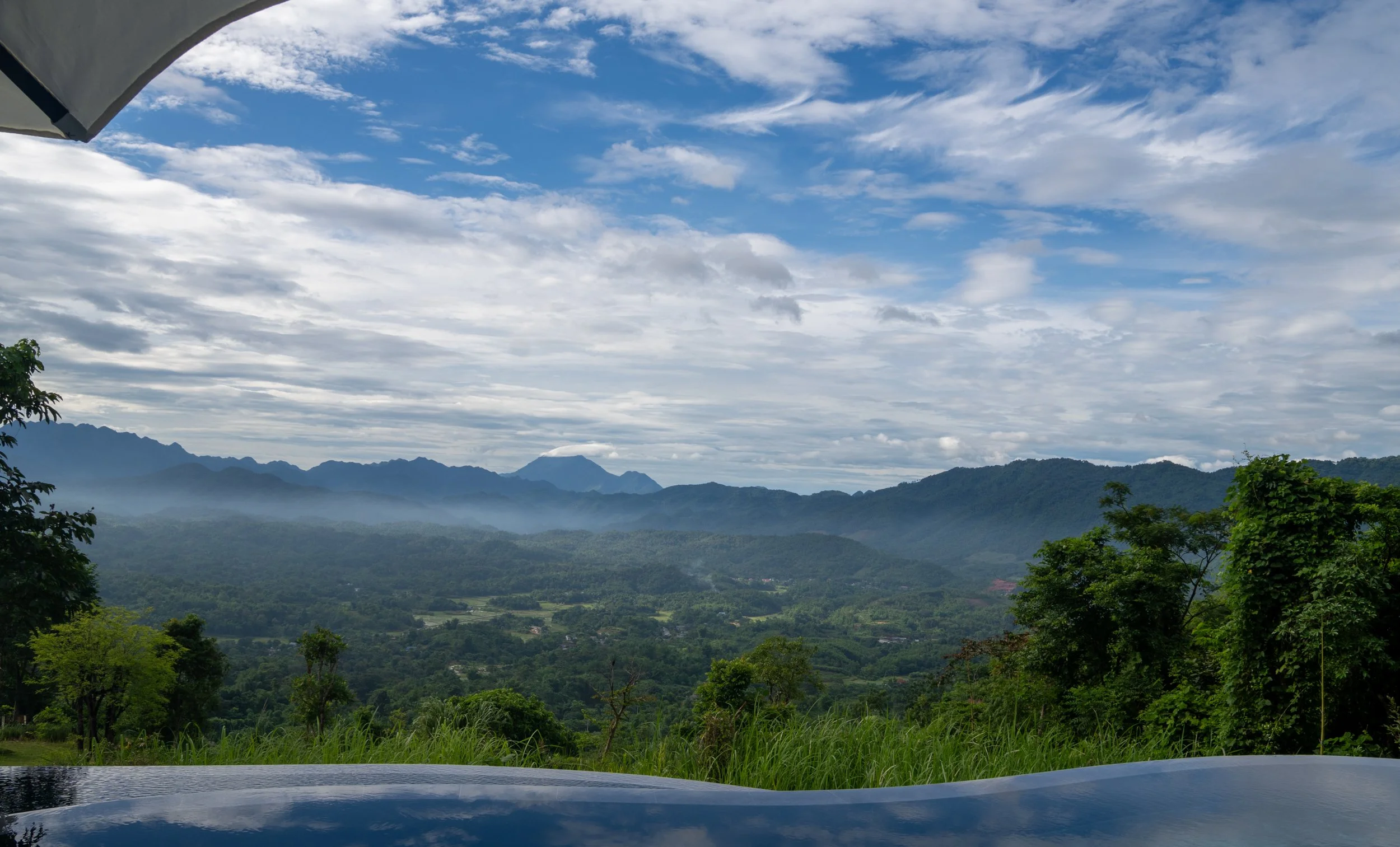
We stay with our teenage daughters in the Senna Hilltop Pool Villa 2BR. At 229 square metres, it is closer to a private residence than a hotel room. The villa has two separate bedrooms, each with its own bathroom, giving everyone genuine privacy. Between them is a comfortable living area, but—as so often happens in a place with this kind of landscape—we spent most of our time outside. The large terrace looks across the valley and terraced fields. At its centre is an 89-square-metre heated infinity pool arranged over two levels. The water seems to disappear into the mountains beyond. In the morning, mist can hang between the slopes; later, changing light brings out different shades of green in the rice fields and forest.
For a family with teenagers, the arrangement works extremely well. Our daughters have their own bedroom and bathroom, while the shared terrace and pool prevented the villa from feeling divided into separate hotel rooms. There is enough room for everyone to retreat without losing the pleasure of travelling together. Nobody has to negotiate over bathroom time. A small luxury, until four people share one.
The interiors are warm and restrained. Natural textures, timber, rattan and muted colours keep attention on the landscape outside. Both bathrooms have freestanding bathtubs and separate rain showers, but the villa never feels aggressively luxurious. There is plenty of comfort, yet little polished marble or unnecessary spectacle. Its greatest extravagance is space. The private pool changed how we used the resort. We could swim before breakfast, return during the warmest part of the afternoon or stay at the villa without feeling that we were missing anything. Teenagers do not always share their parents’ enthusiasm for a carefully planned wellness programme. A private heated pool overlooking a mountain valley creates considerably less resistance.
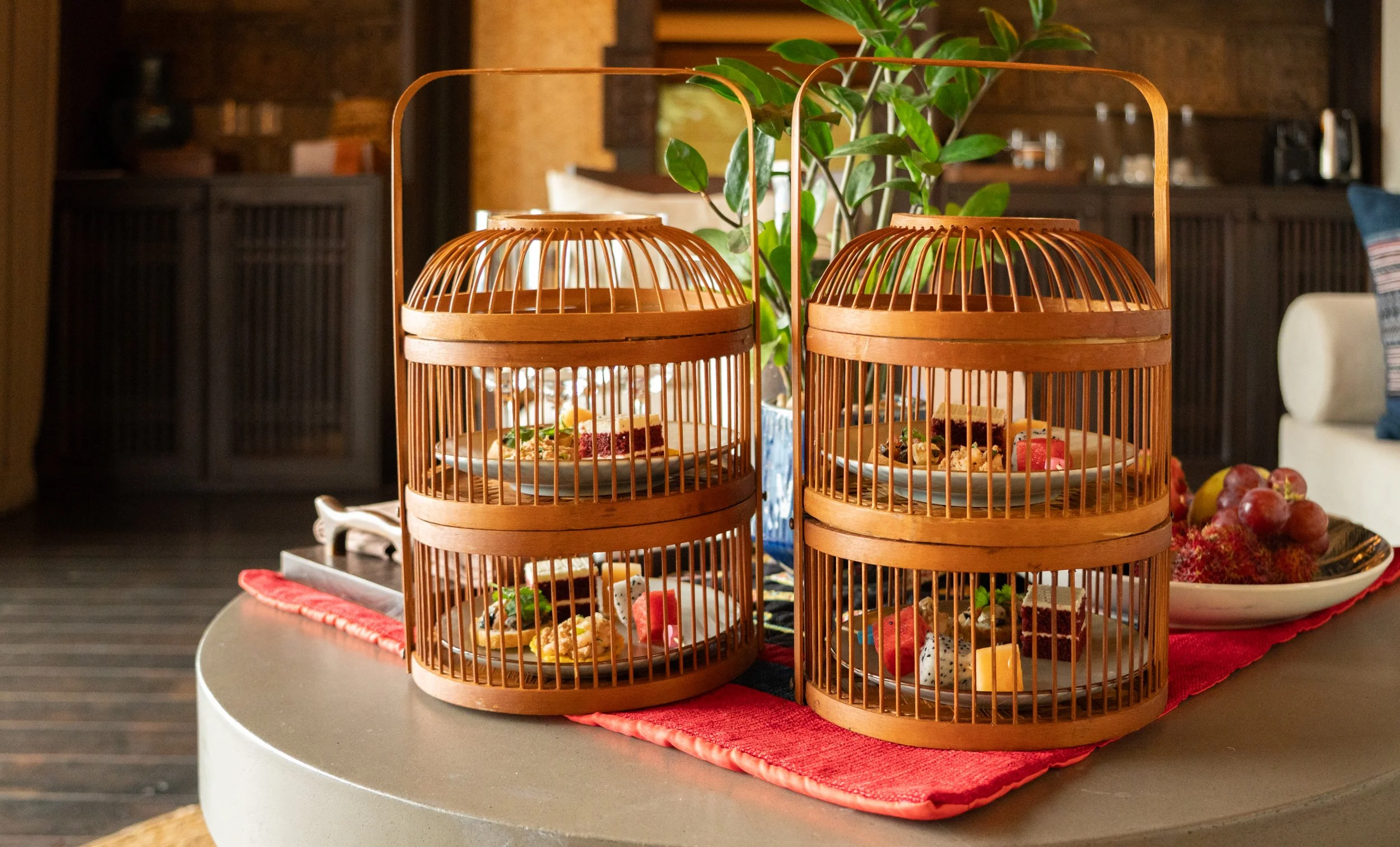
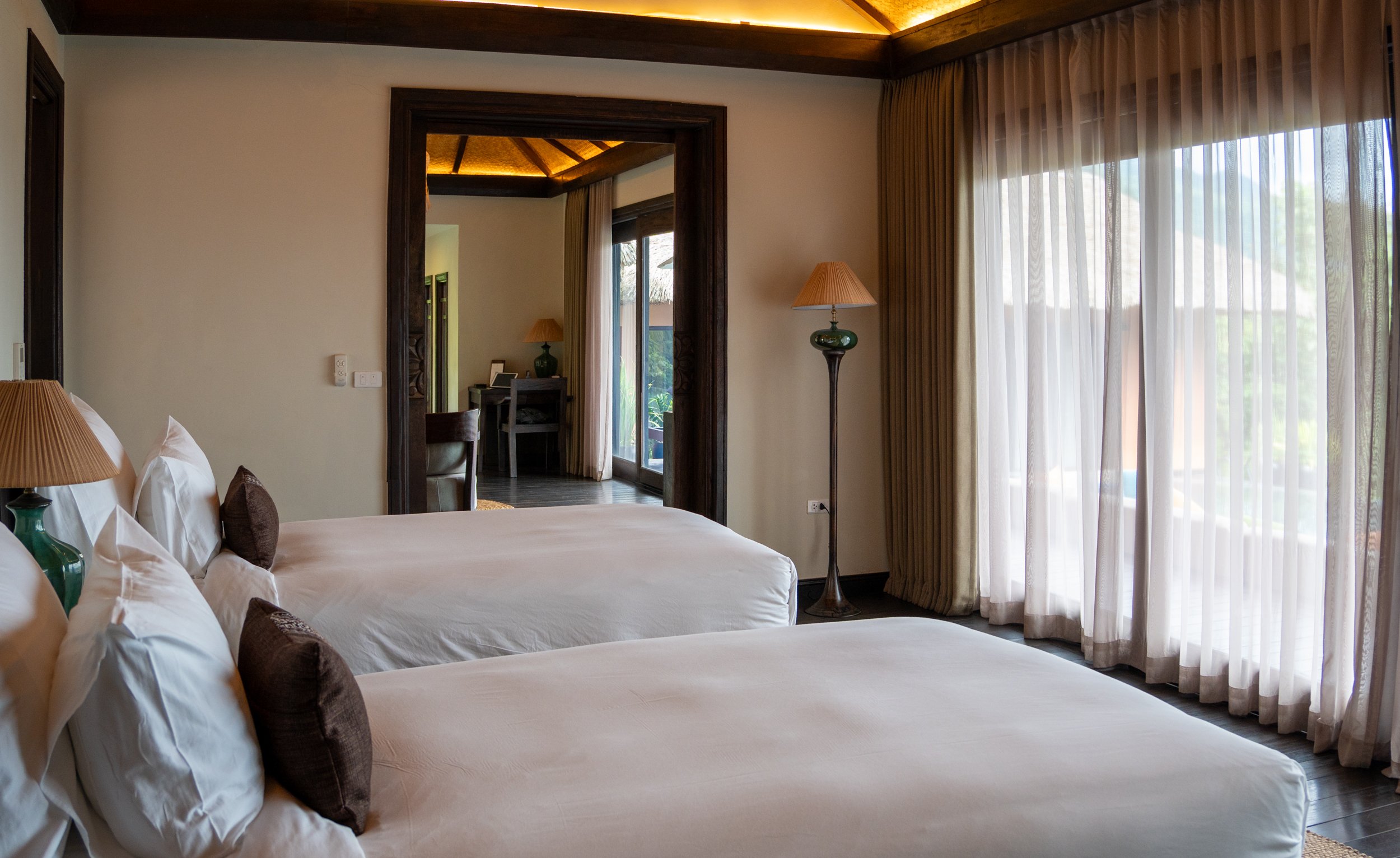

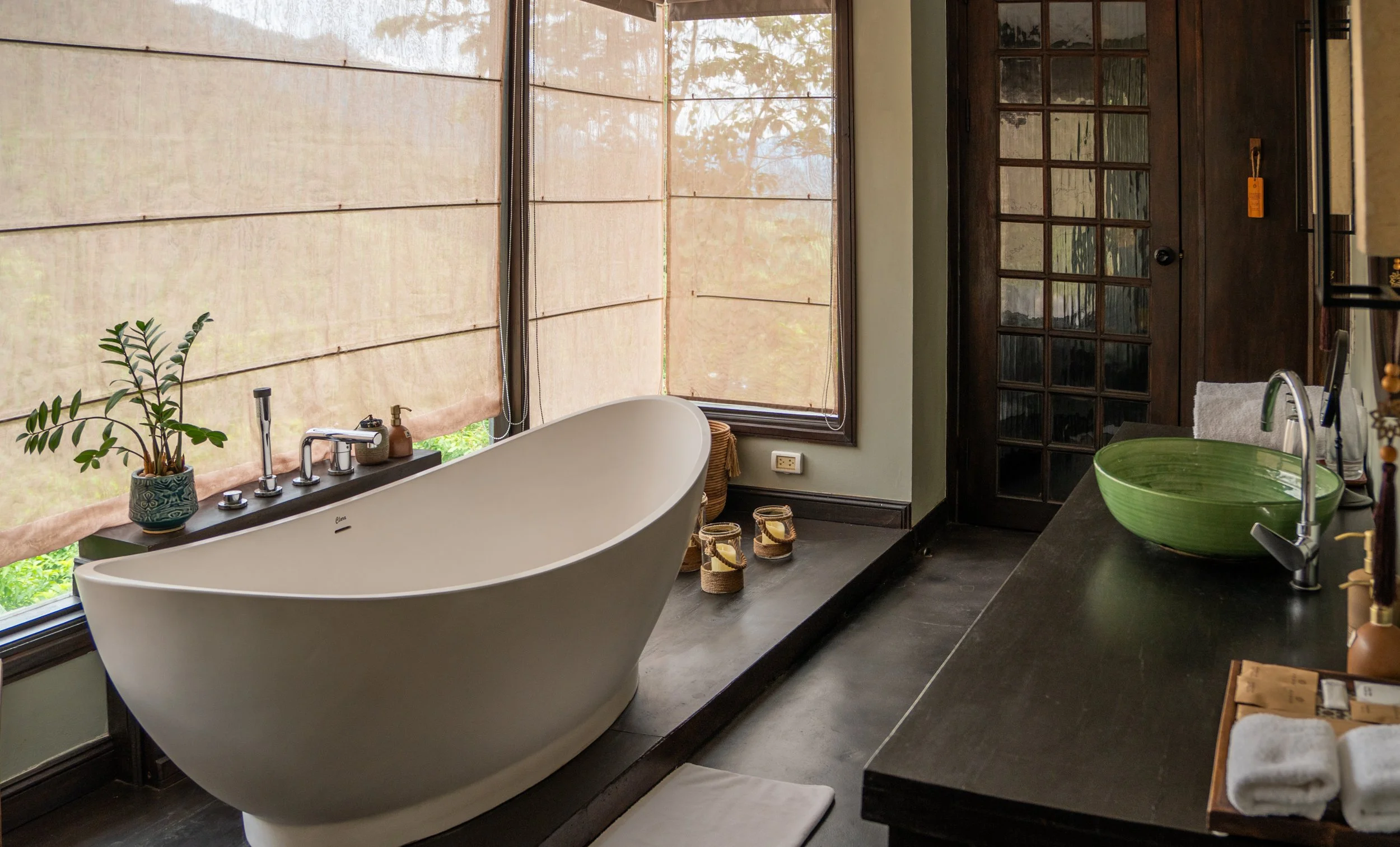
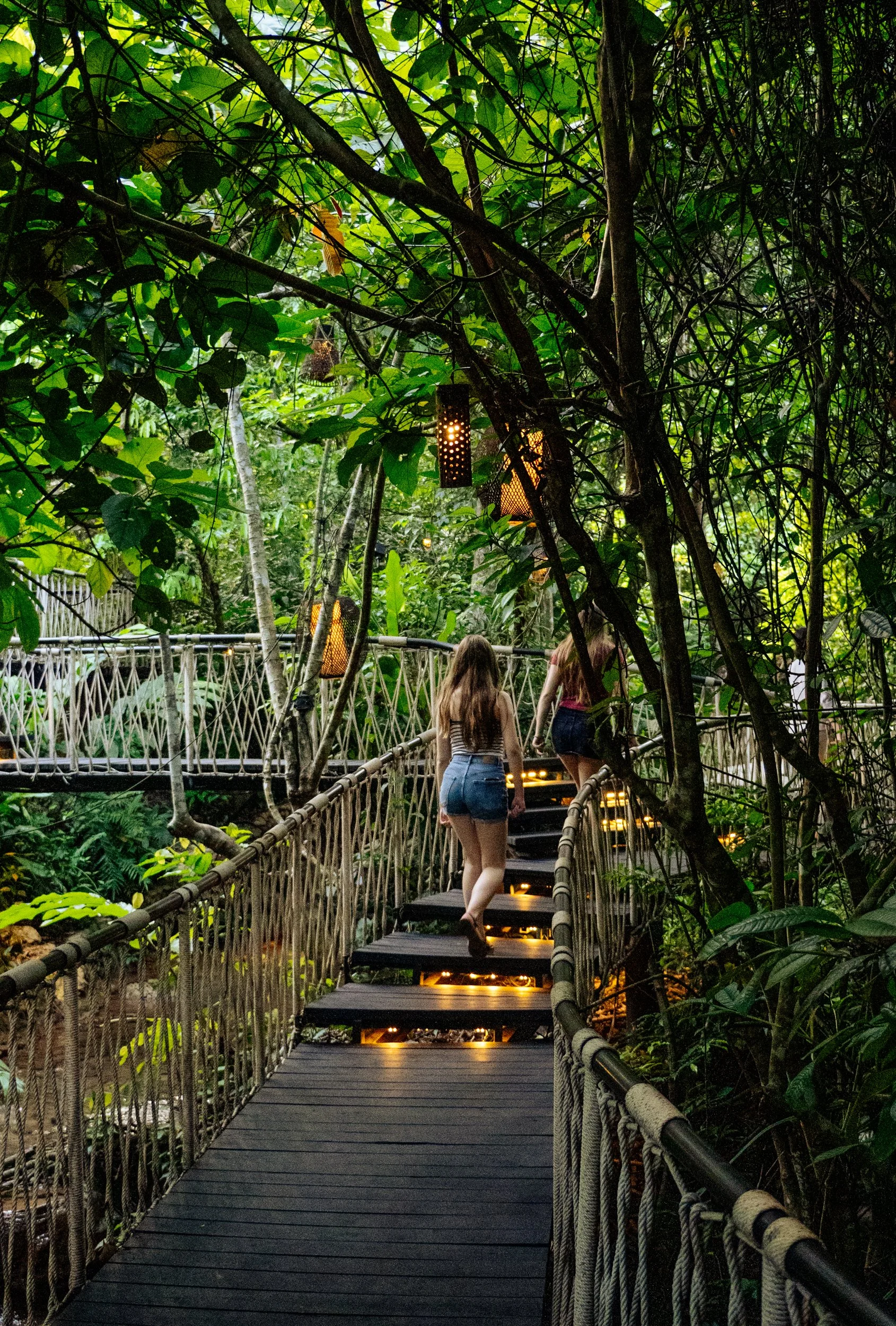
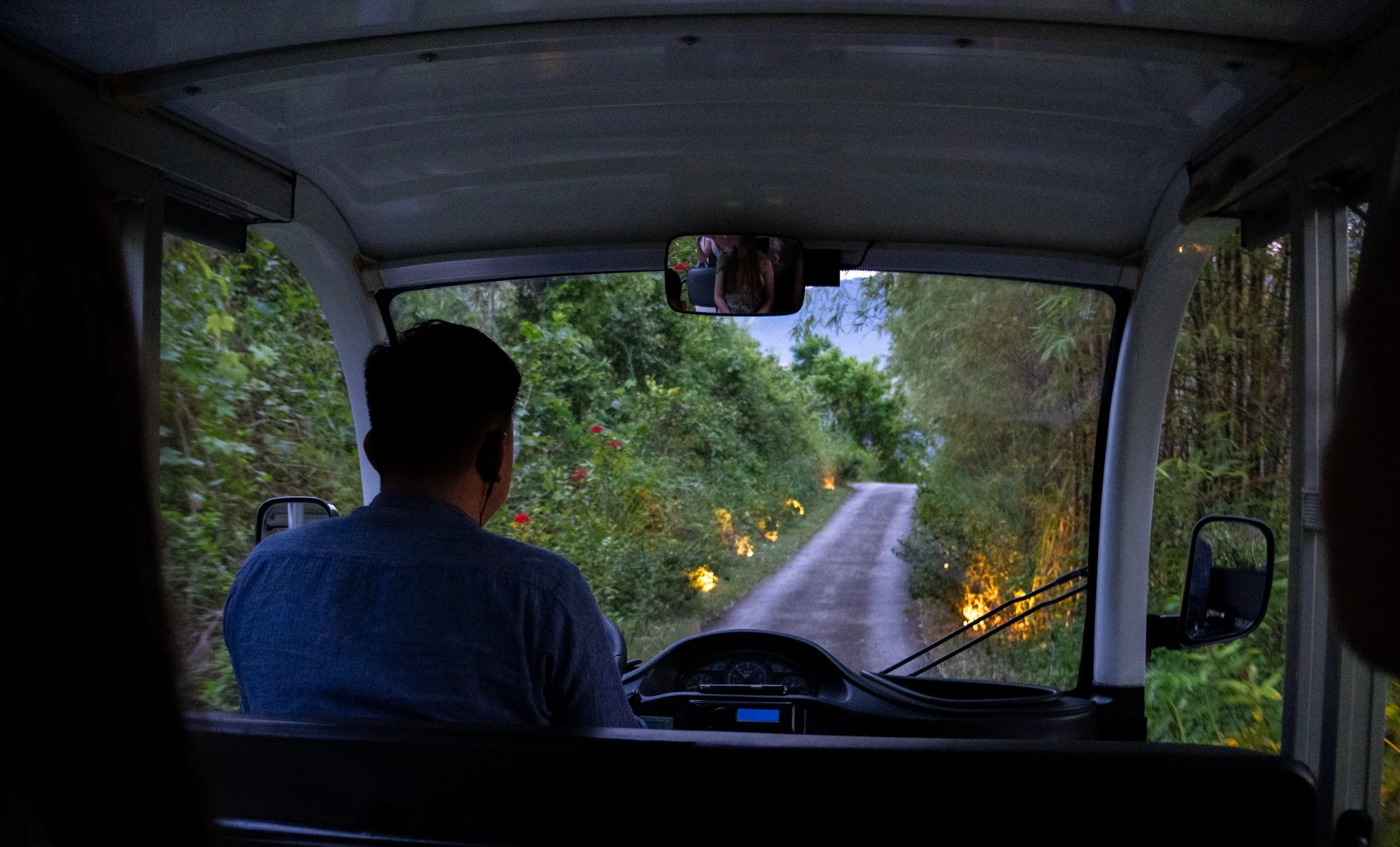
Still, Avana is worth leaving the villa for. The paths through the property reveal streams, ponds, rice terraces and viewpoints almost by accident. Walking here involves climbs and descents, although electric buggies are available when the distance or heat becomes inconvenient. The uneven terrain is part of the retreat’s character, but guests with limited mobility should discuss the location of their accommodation in advance.
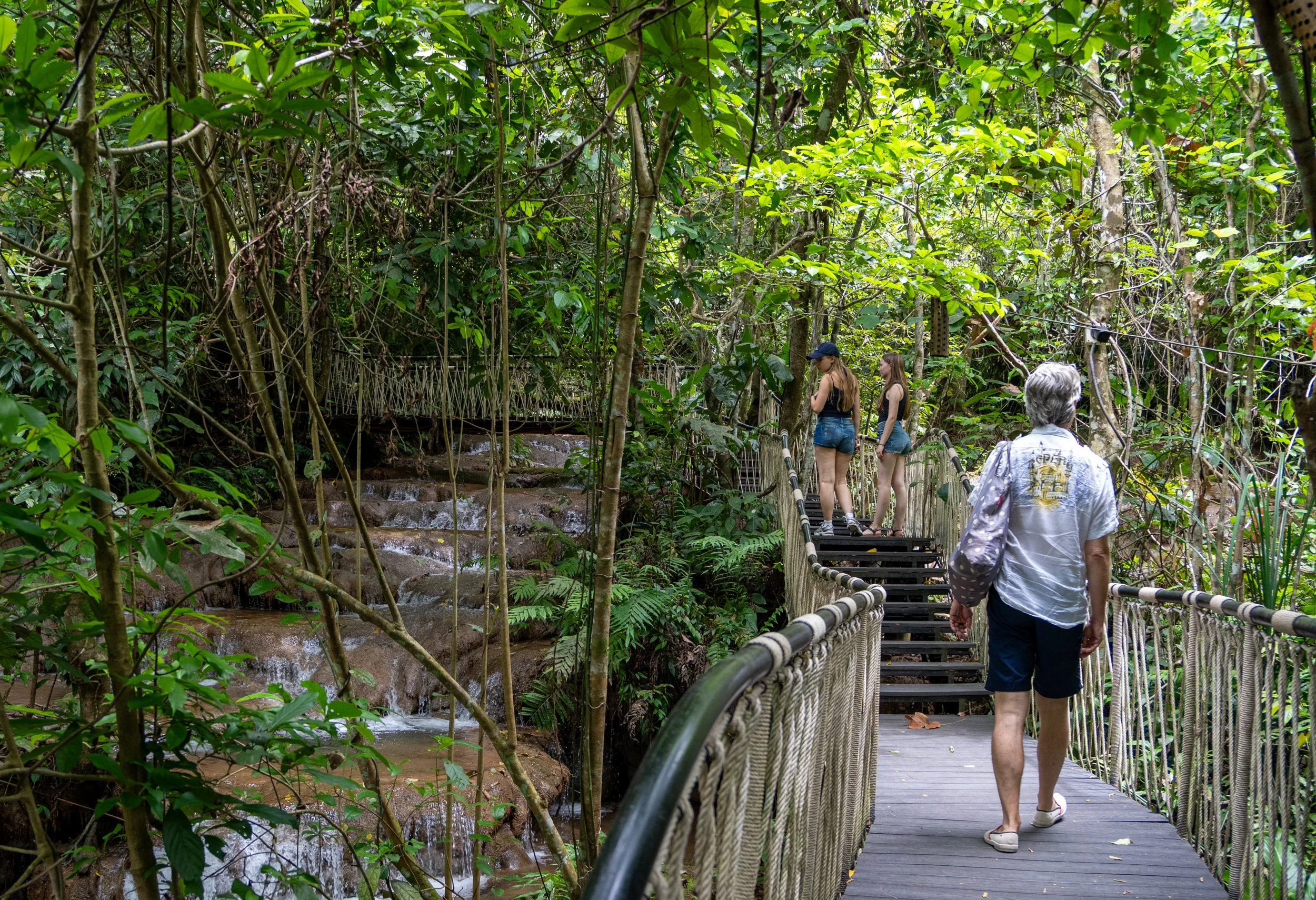
The Pùng waterfall is the physical heart of Avana. Wooden bridges and paths lead towards it through the forest, while the sound grows steadily louder. Unlike a waterfall visited during an organised excursion, this one becomes part of daily life. We passed it on walks, heard it near the spa and watched its water continue through cascades beside the restaurant. The waterfall is not merely a photogenic addition to the grounds. Avana’s own story begins with it: the buildings were positioned around the existing watercourse and the surrounding landscape. That decision gives the retreat an authenticity many newly constructed nature resorts try—and fail—to manufacture.
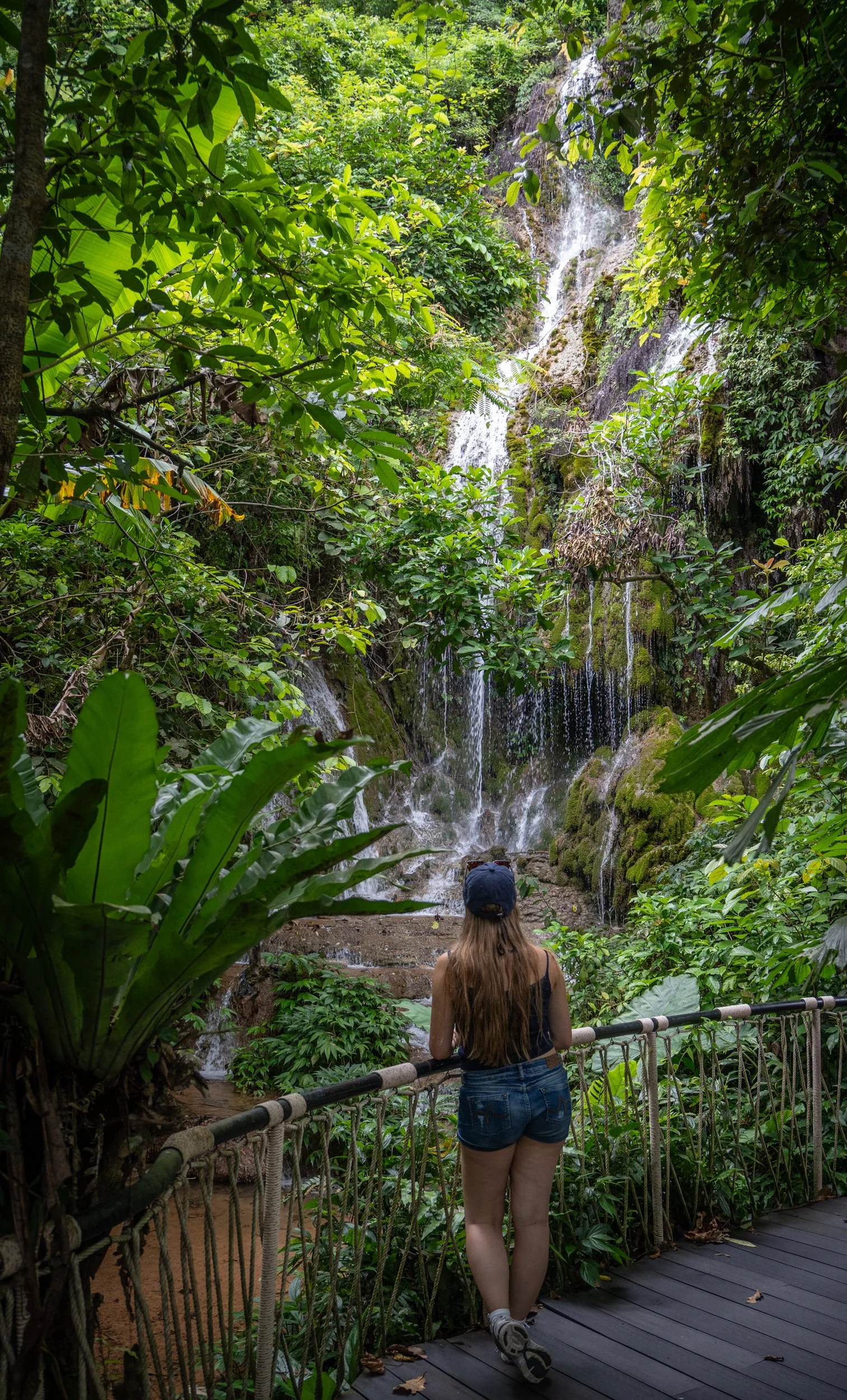
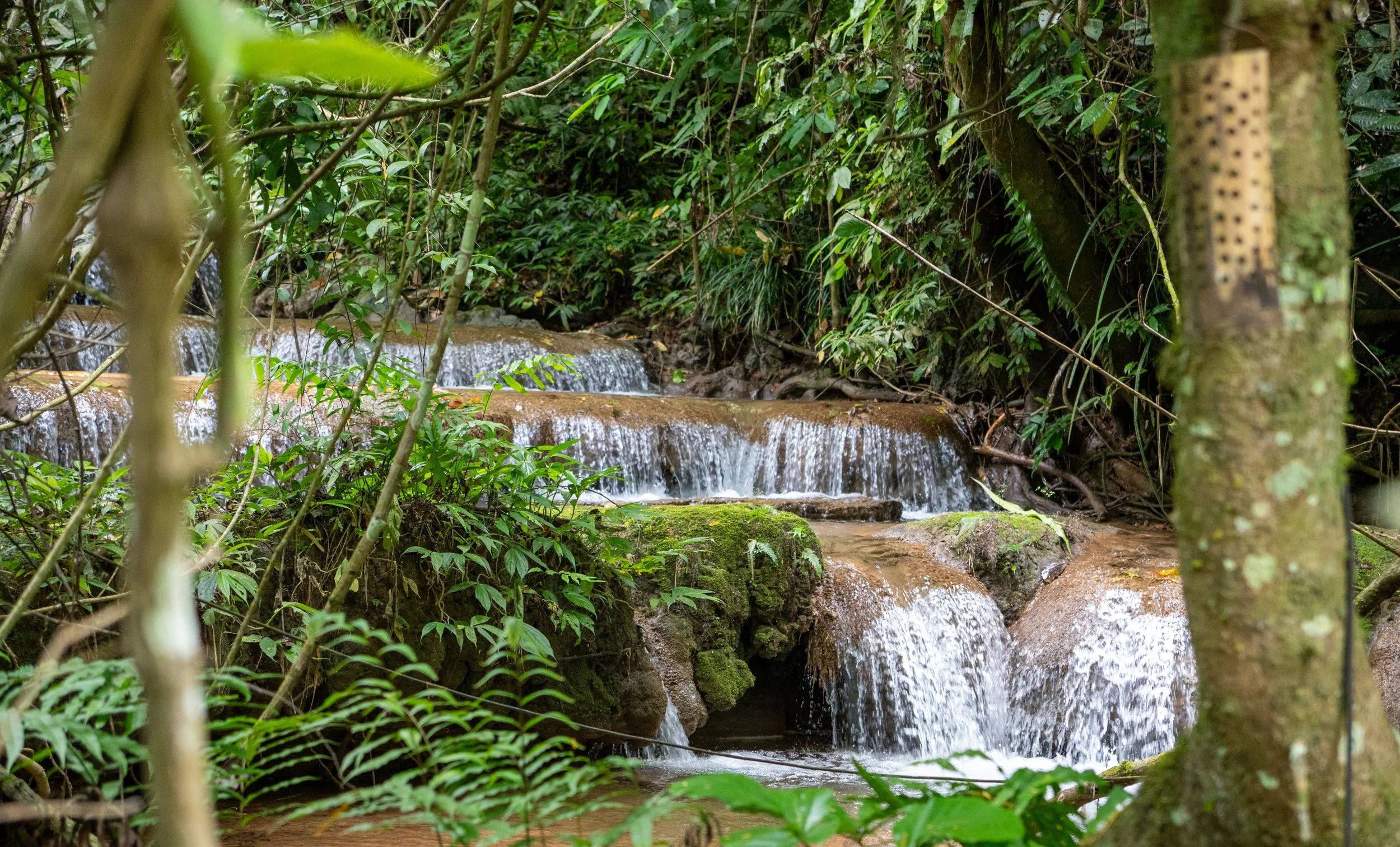
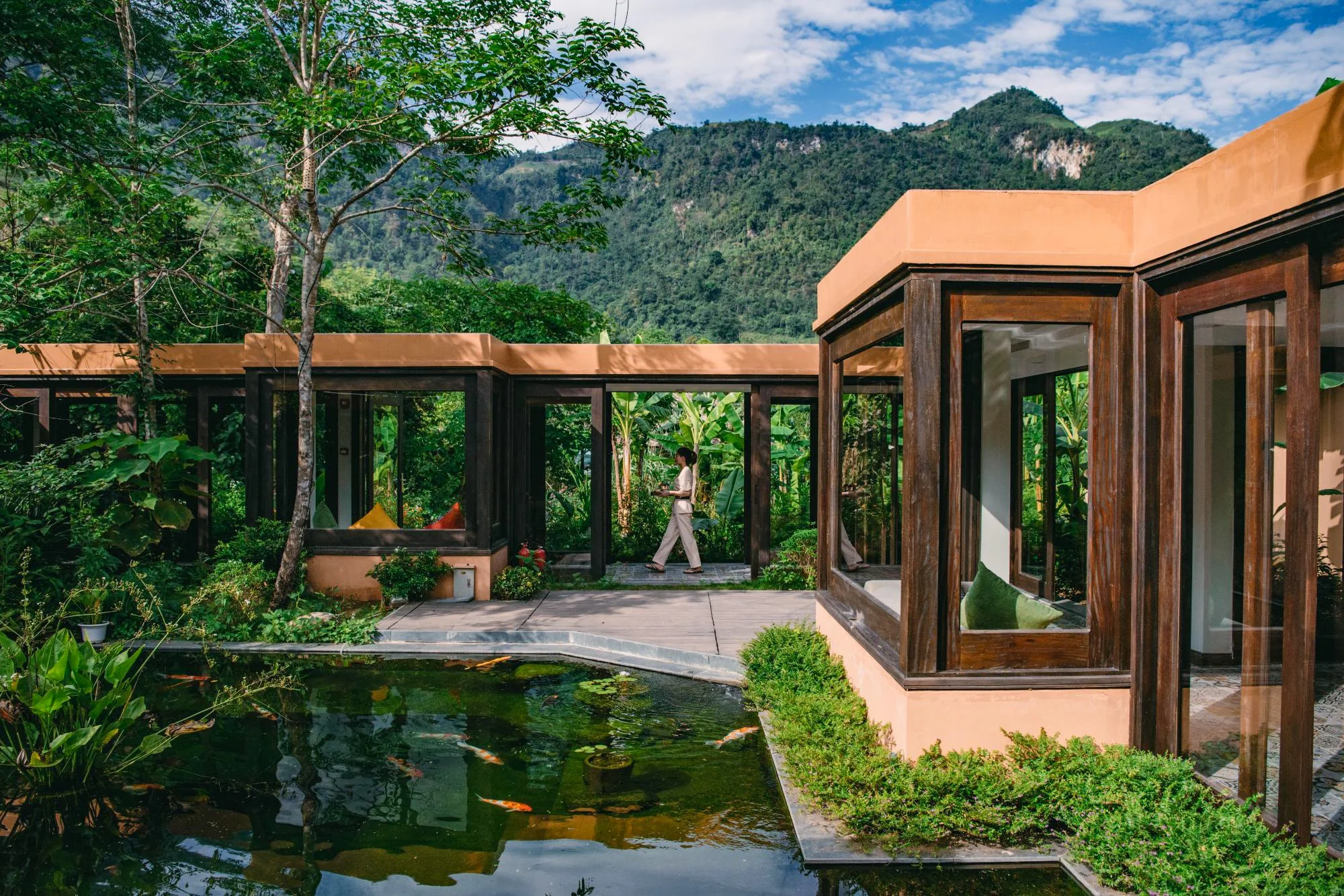
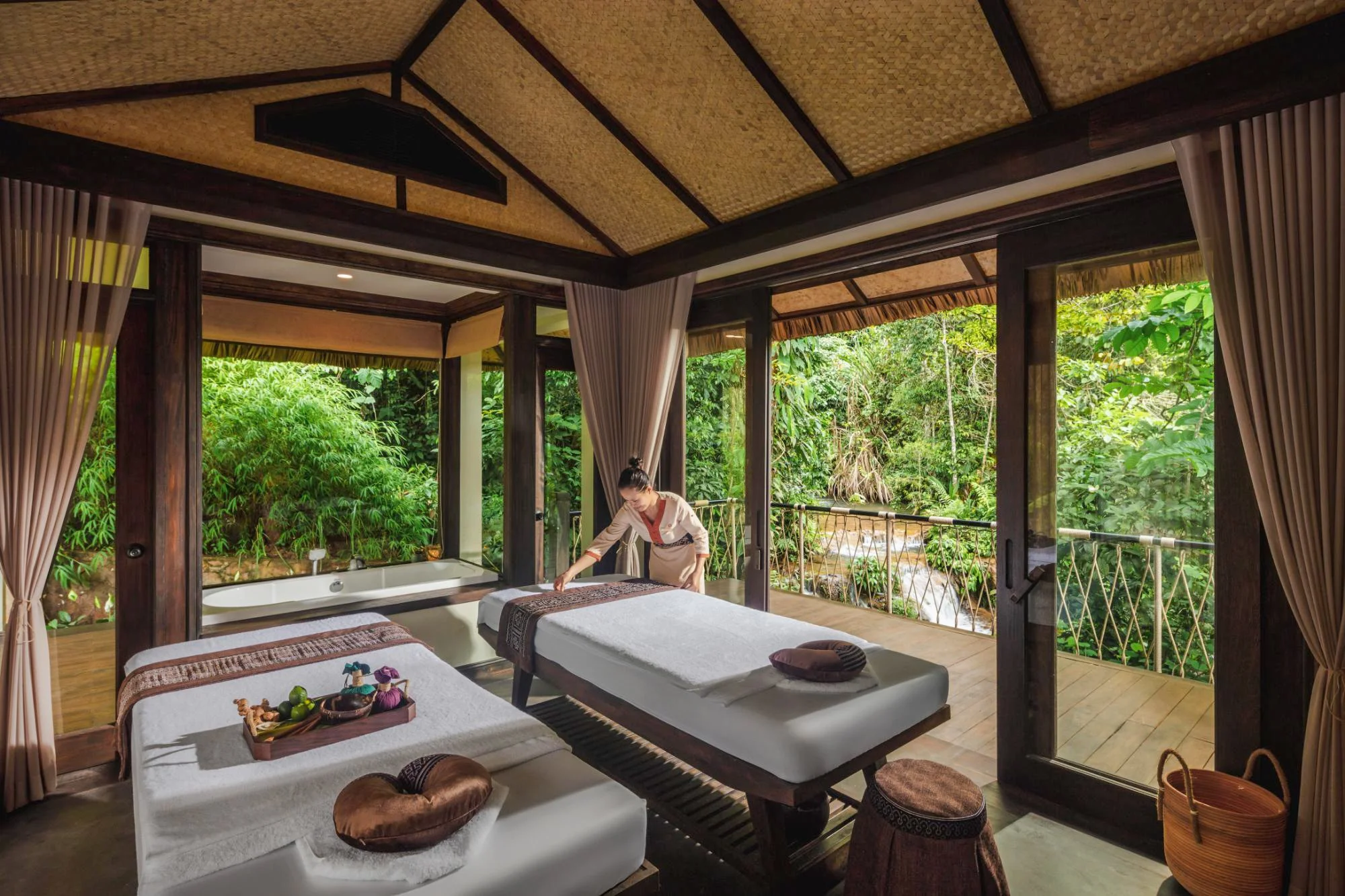
Nowhere is this relationship between architecture and landscape more convincing than at Orchid Spa. The spa is hidden in the forest close to the waterfall. Approaching it is already part of the experience: paths, stone, timber and water gradually lead away from the more open parts of the resort. The spa is breathtakingly designed. Treatment spaces appear embedded in the vegetation instead of placed beside it. The materials are quiet and natural, while openings frame the forest and allow the sound of moving water to enter. There is no need for recorded rainforest sounds here. The actual waterfall provides them.
Many resort spas create an artificial bubble separated from their surroundings. Orchid Spa does the opposite. It makes the landscape impossible to ignore. Even before a treatment begins, the combination of humid forest air, flowing water and subdued architecture changes your state of mind. The design is luxurious, but its effect comes from restraint. Nothing needs to compete with the setting.
Our stay includes a complimentary massage every day. That proves to be much more than a generous booking benefit. The daily treatment created a rhythm: breakfast, walking or swimming, perhaps a workshop, and then another visit to the spa. Because the massage is already included in our arrangement, there is no recurring decision about whether it was worth booking. We simply go.
Daily massages can sound excessive before arriving. At Avana they make perfect sense. Each visit slowes us down a little further, and the spa’s location means that the walk there and back became part of the treatment. By the end of the stay, Orchid Spa no longer feels like an occasional facility. It is part of our day in the same way as breakfast or swimming. The massages included with our booking are linked to our specific villa arrangement; inclusions may differ between rates and packages, so this is worth checking when reserving. If the same benefit is available, use it. Missing a daily massage here in order to sit in a car on the way to a minor attraction would be a peculiar choice.
Avana offers enough activities to give every day some shape without turning the stay into a compulsory programme. Some workshops are complimentary on scheduled days, while private sessions, guided excursions and special dining experiences generally need to be reserved and may cost extra. The programme changes, so exact days and times should be checked after arrival. The singing-bowl meditation session is one of the quieter activities. Our breath work session took place in a cottage surrounded by nature. For a family more accustomed to active travel, it was an unusual pause. Nobody has to perform, succeed or understand a complicated philosophy.
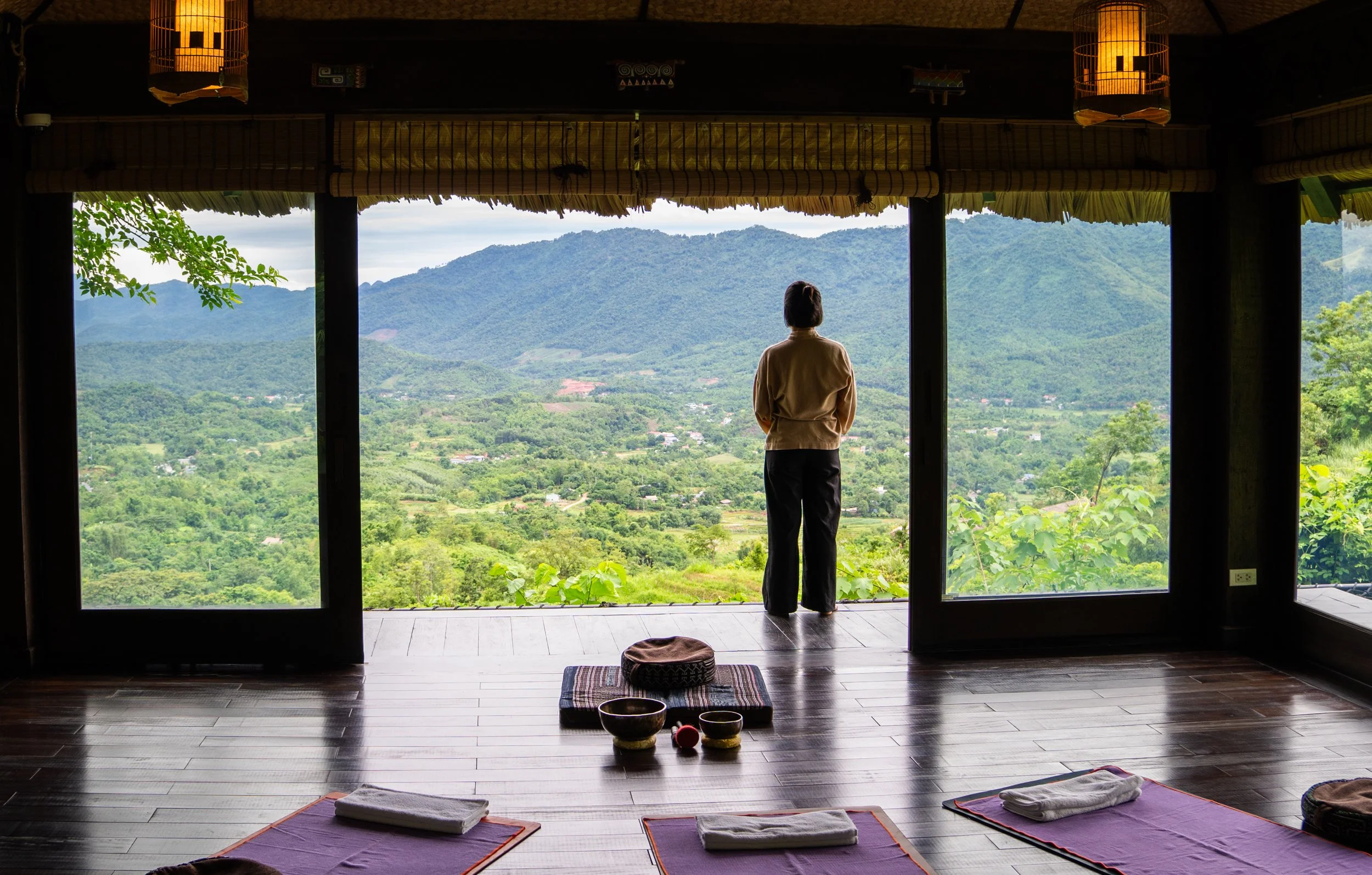
A private breach work session
Yoga and more conventional meditation sessions are also offered. Private lessons can be arranged for guests who want greater individual attention, while scheduled group sessions provide a less demanding introduction. The surroundings do much of the work: practising yoga with views of forest and mountains feels fundamentally different from doing the same exercises in an enclosed hotel gym.
Our other workshop is traditional H’mong batik painting. This is more active and gives us a closer look at a textile technique that appears throughout the region. H’mong batik is created by applying heated beeswax to fabric in carefully controlled lines and patterns. The wax resists the dye. After the cloth has been repeatedly dyed with indigo and the wax is removed, the protected design remains visible against the deep-blue material.
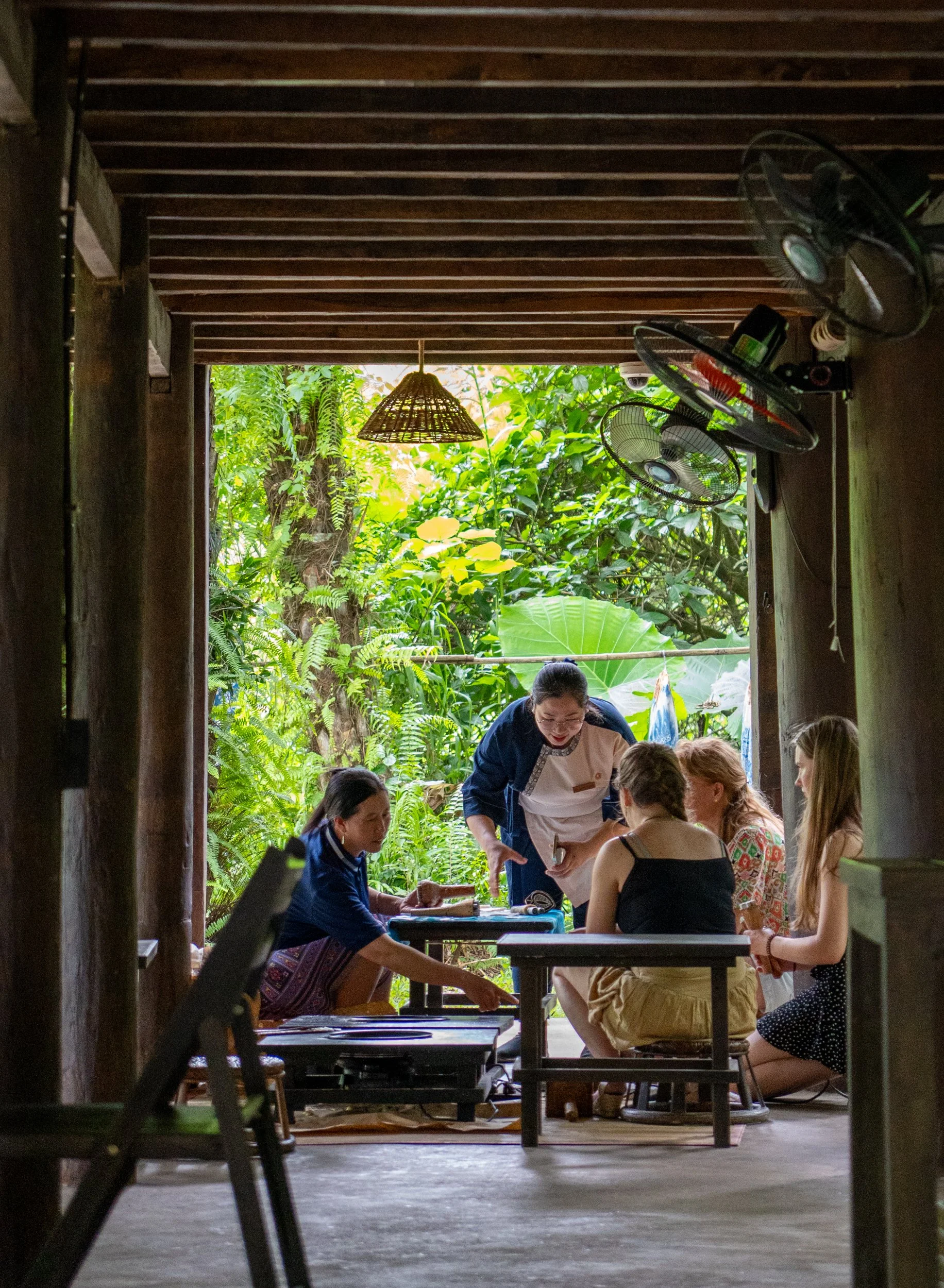
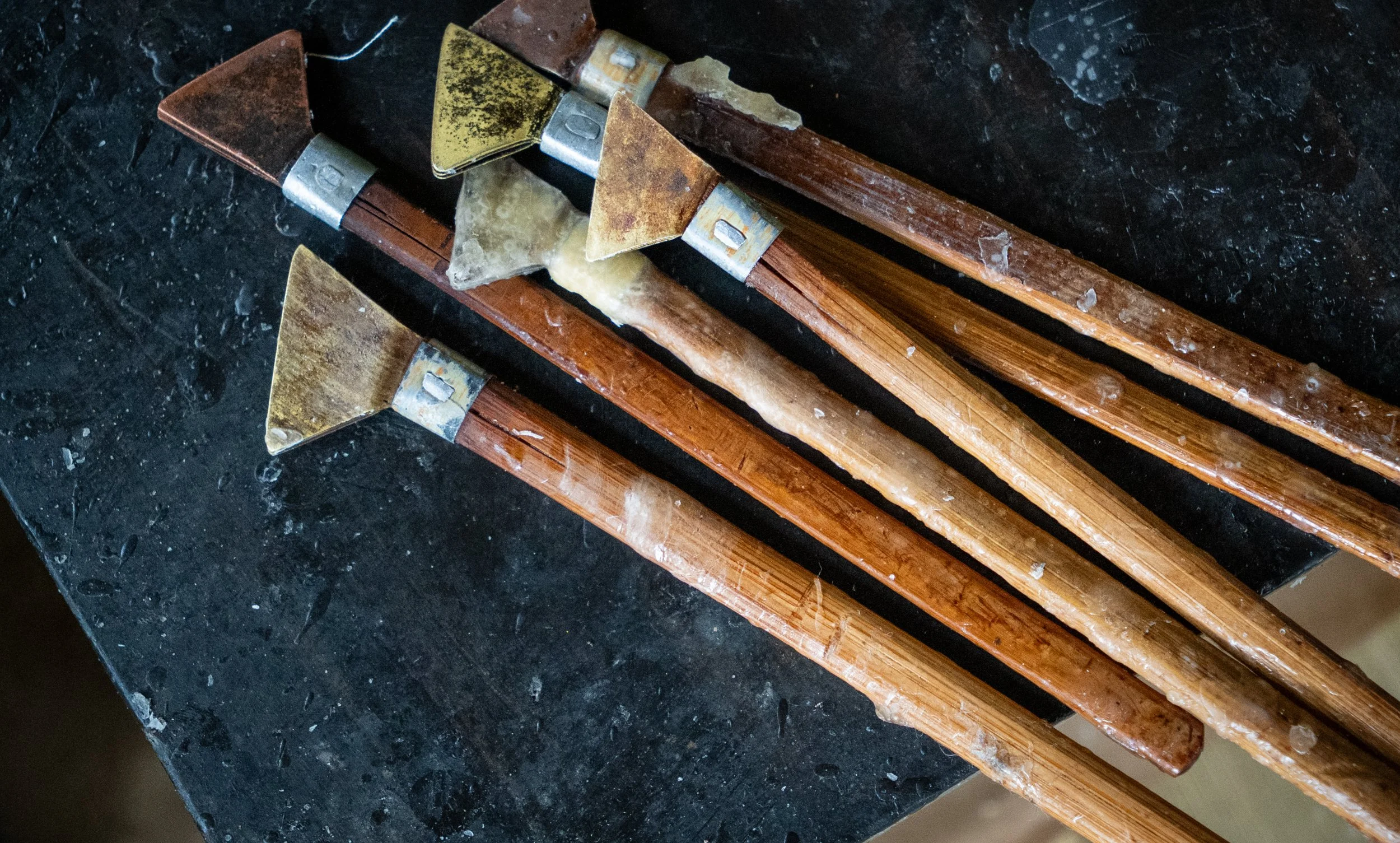
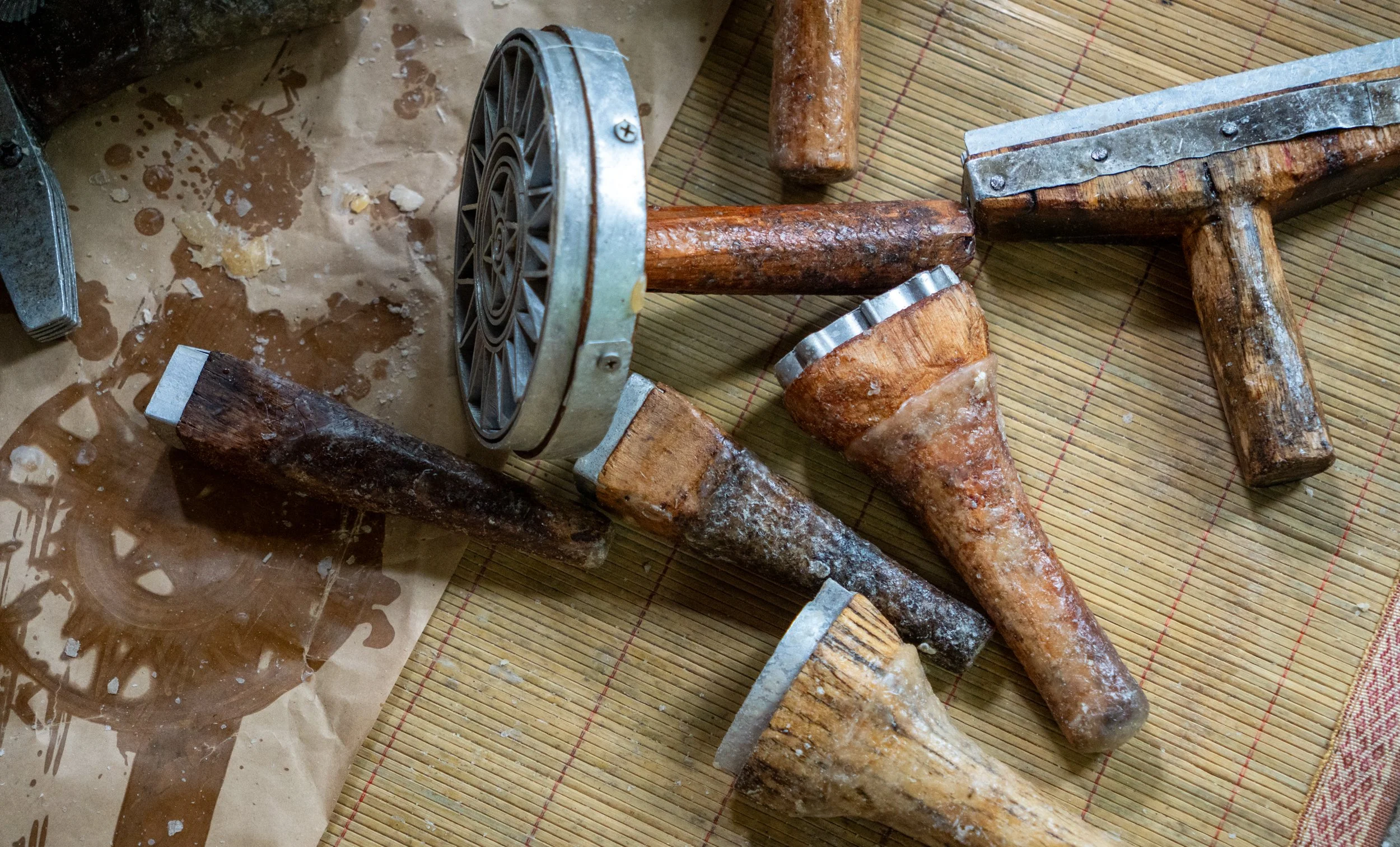
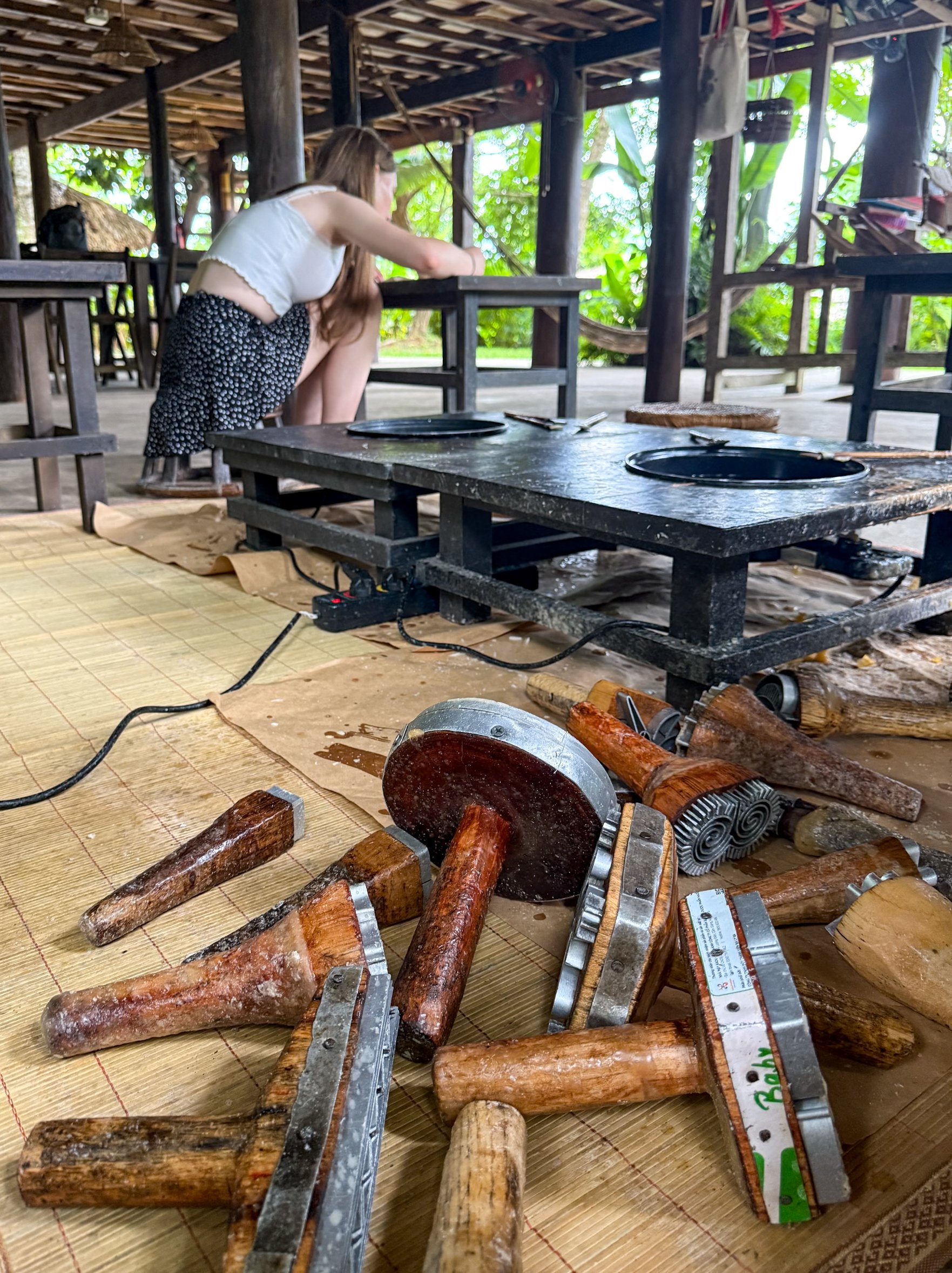
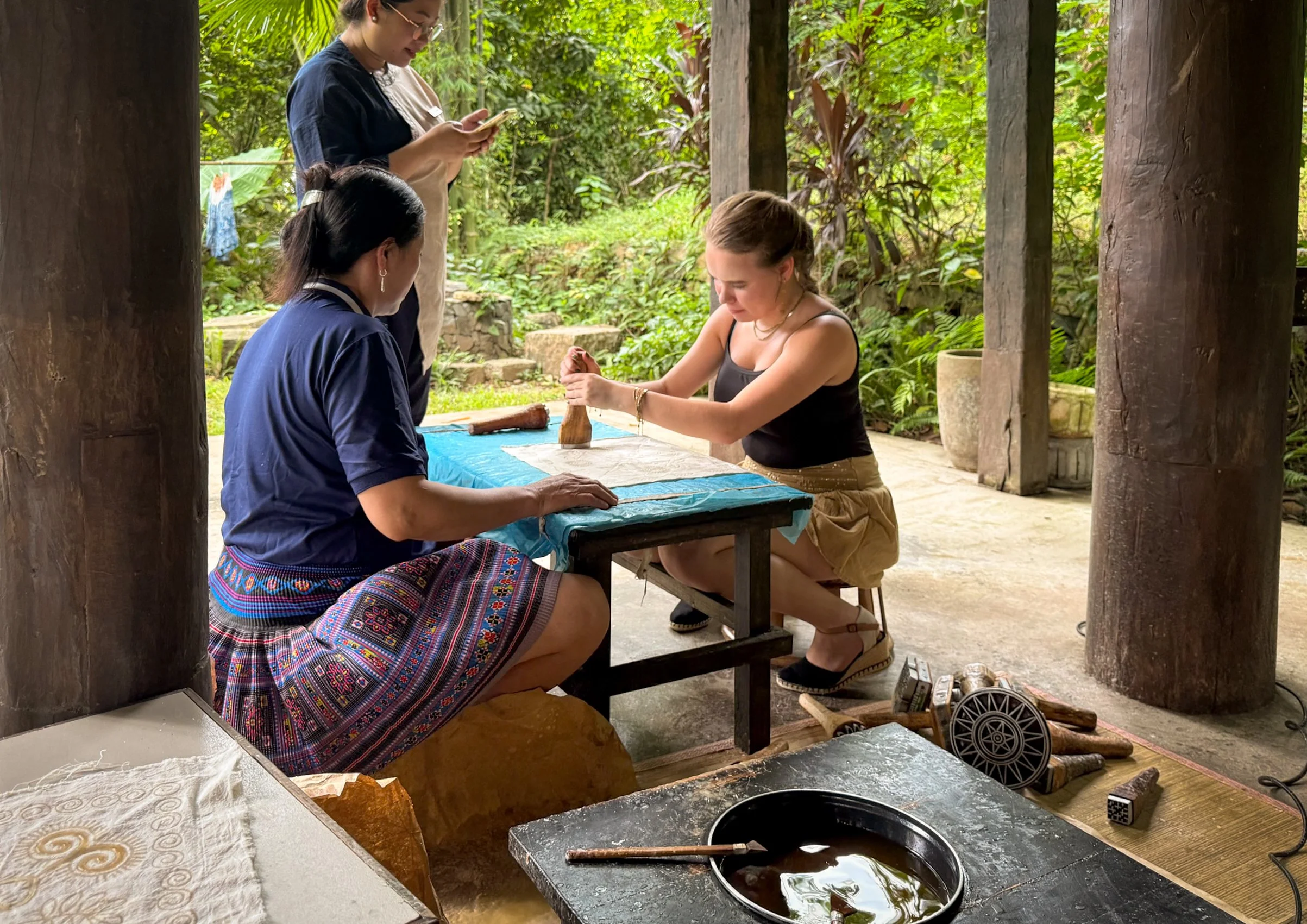
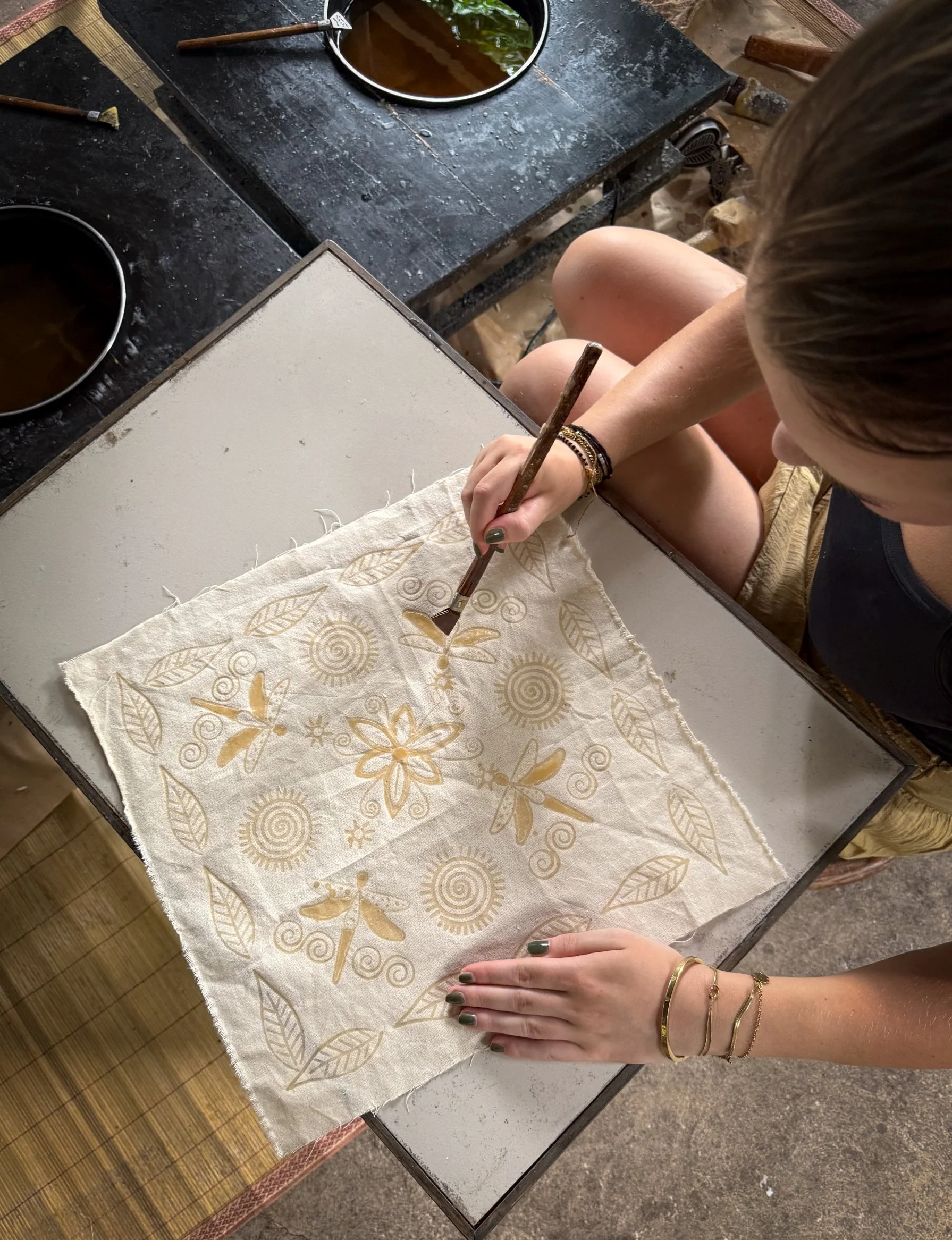
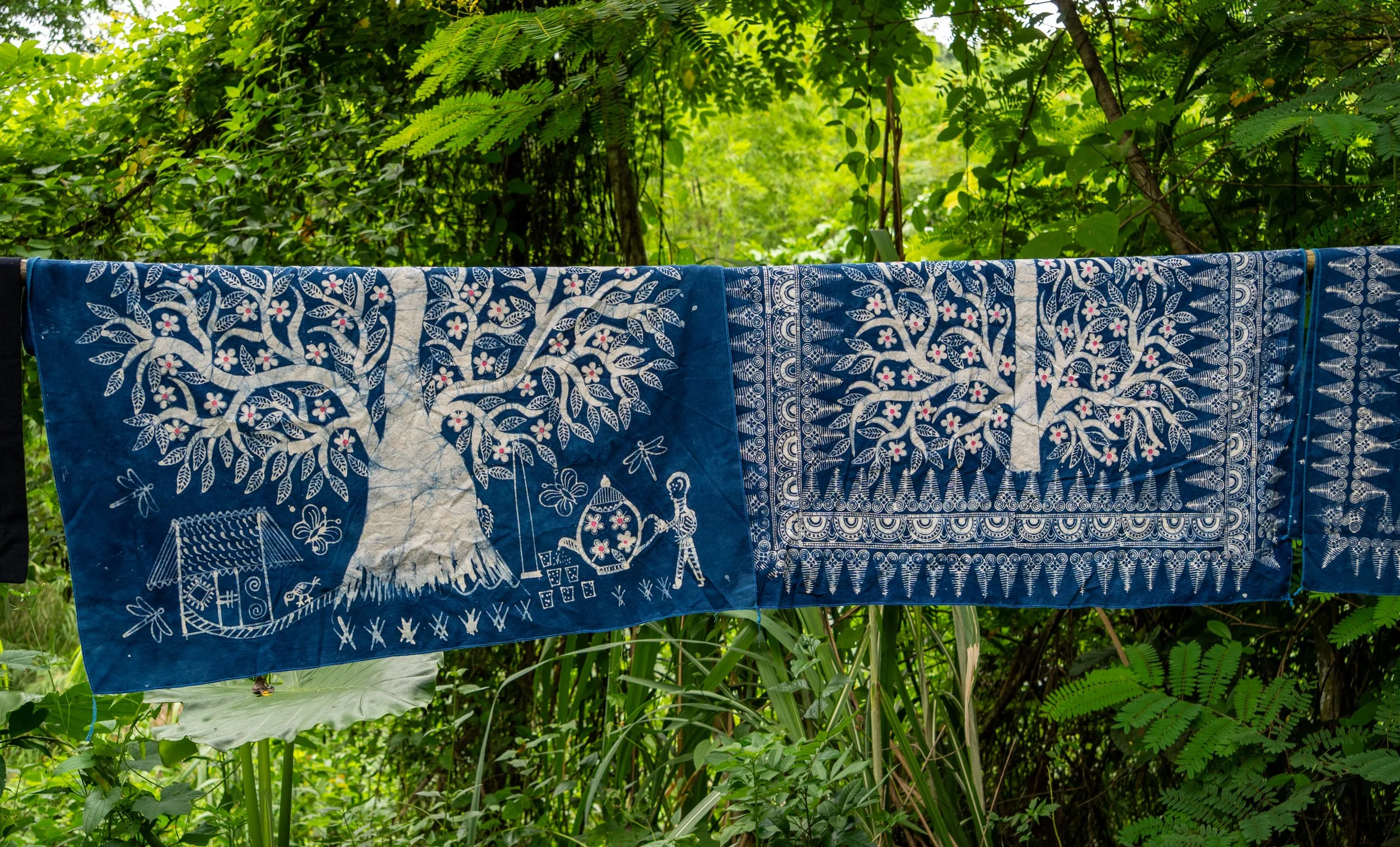
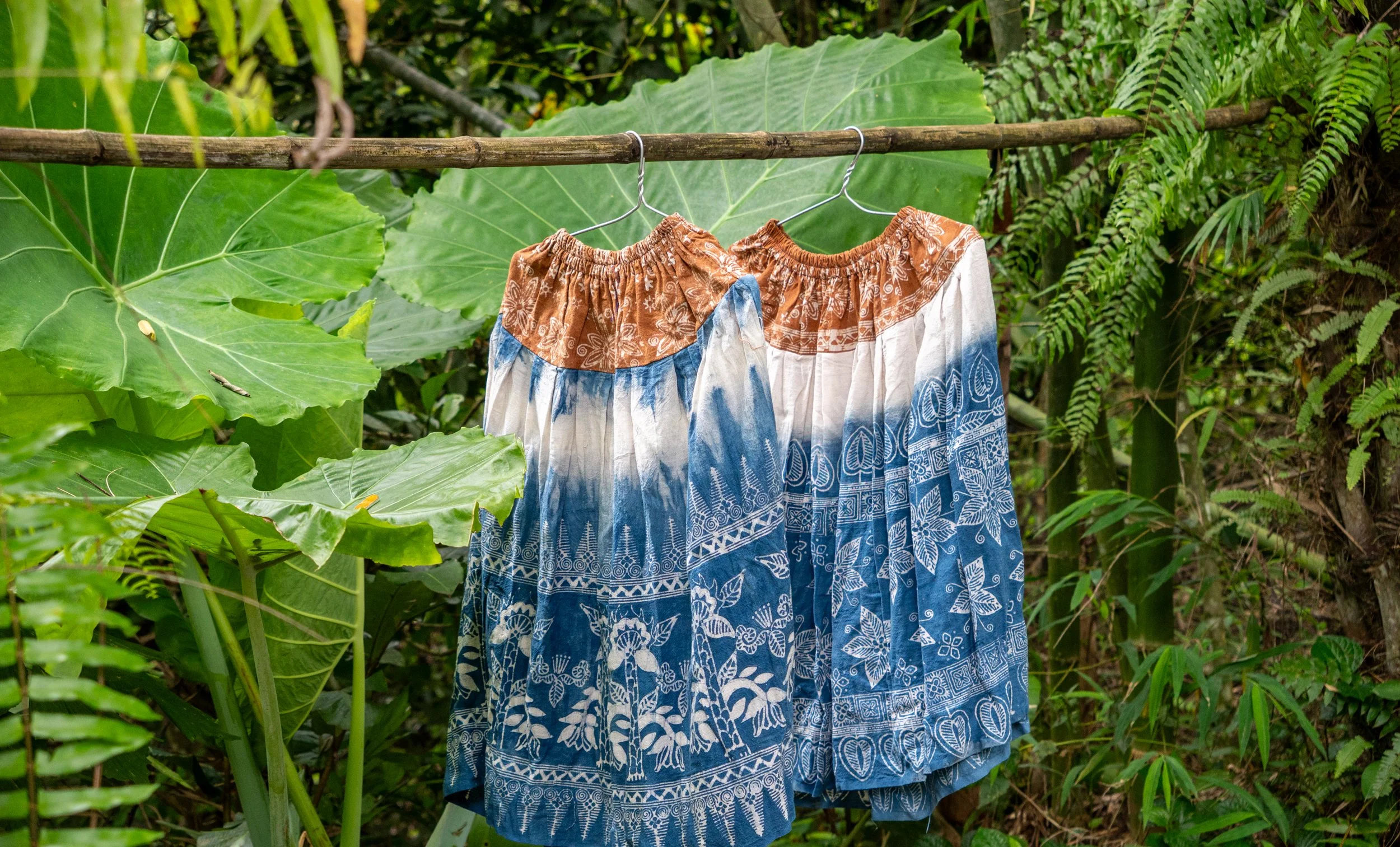
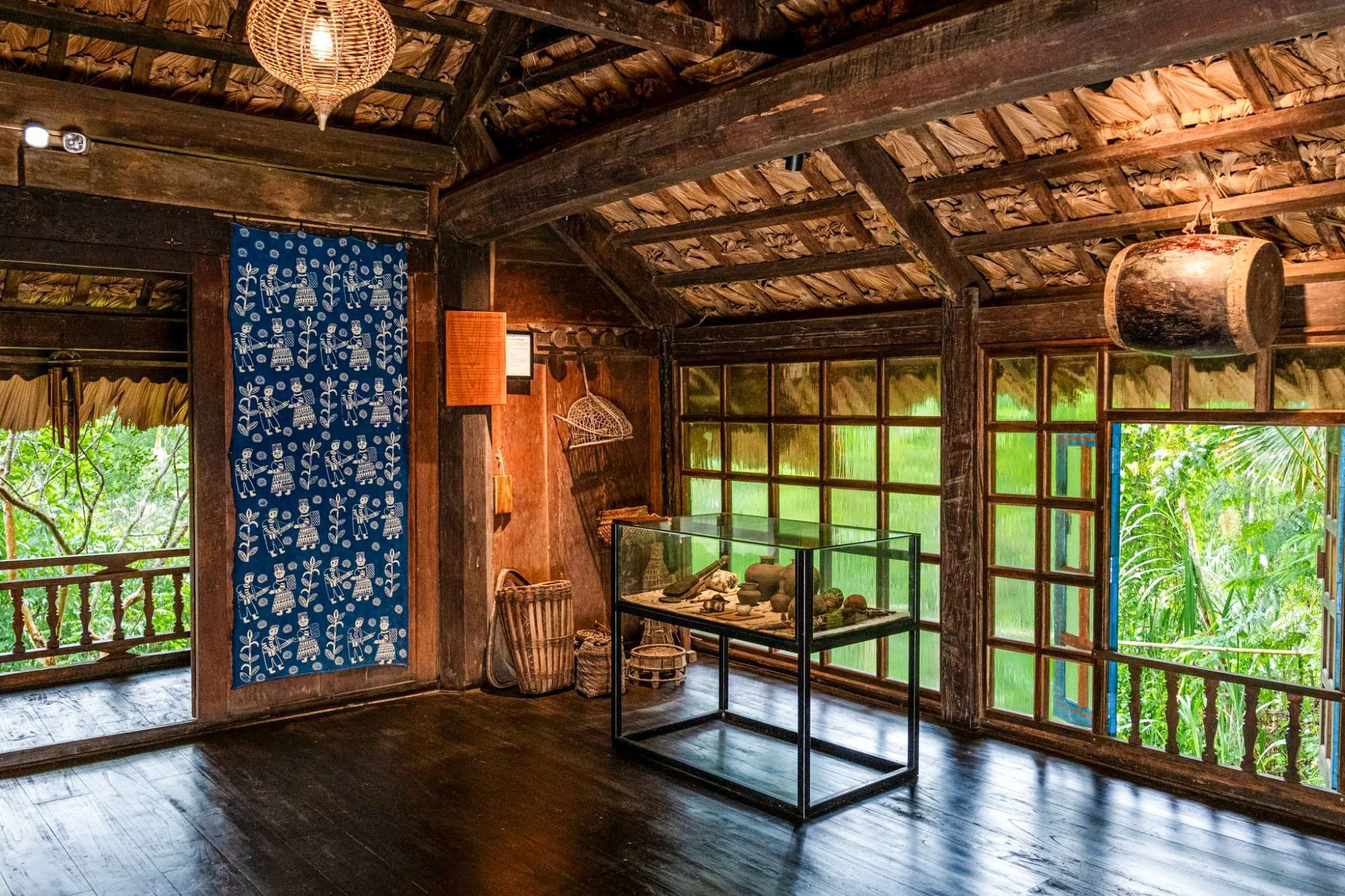
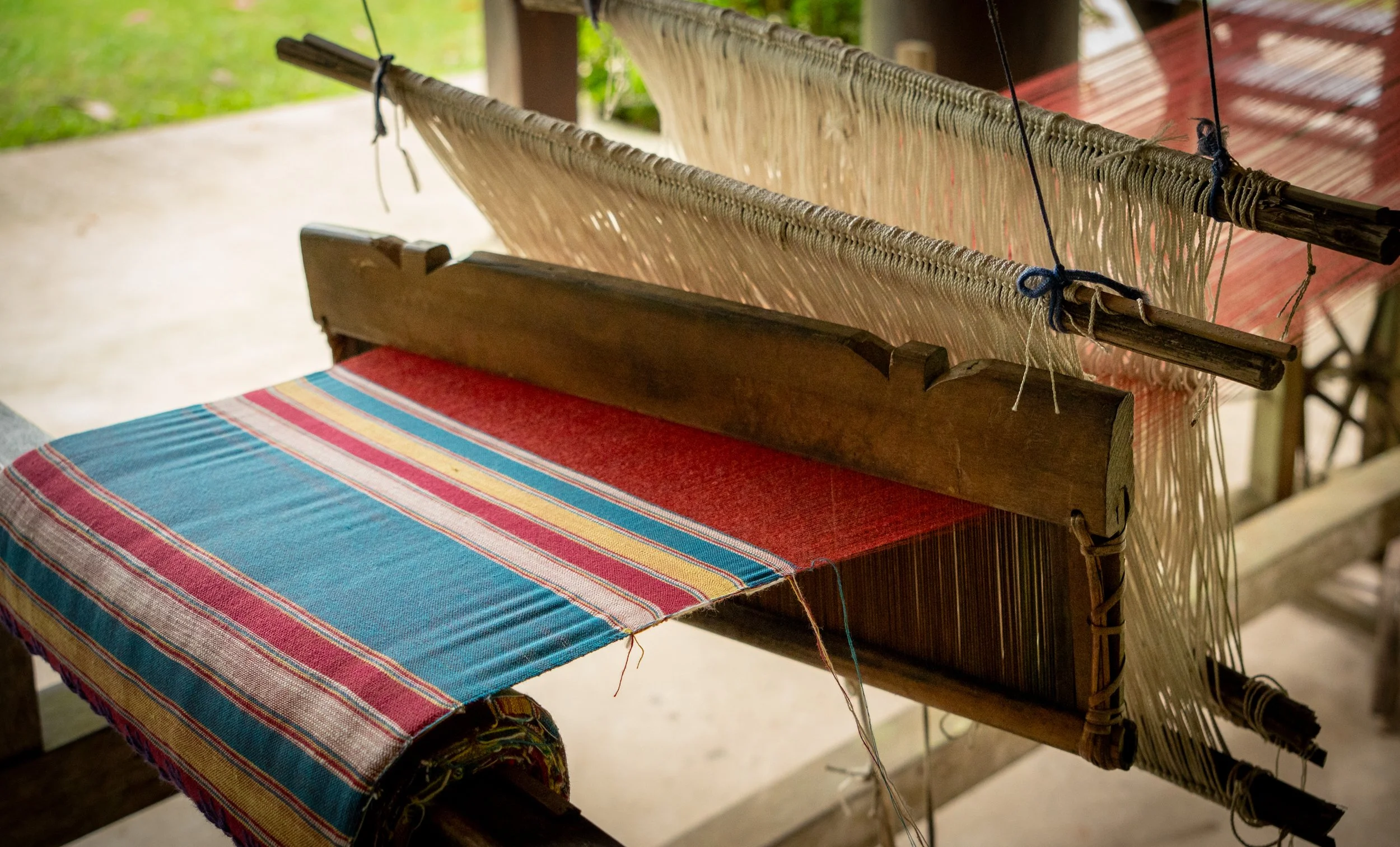
The motifs are not merely decorative. They often refer to natural forms and daily life: seeds, ferns, rice flowers, snail shells and geometric ideas about the earth and sky. Textile patterns have long carried cultural meaning within H’mong communities, particularly where knowledge and identity were passed between generations through objects and craft rather than written records. Drawing with wax proved far more difficult than it first appeared. The material has to be hot enough to flow, but controlled enough to make a clear line. Hesitation becomes visible immediately. The workshop therefore produced a mixture of concentration, uneven patterns and laughter. It is particularly enjoyable with our daughters because everyone could make something of their own and take it home.
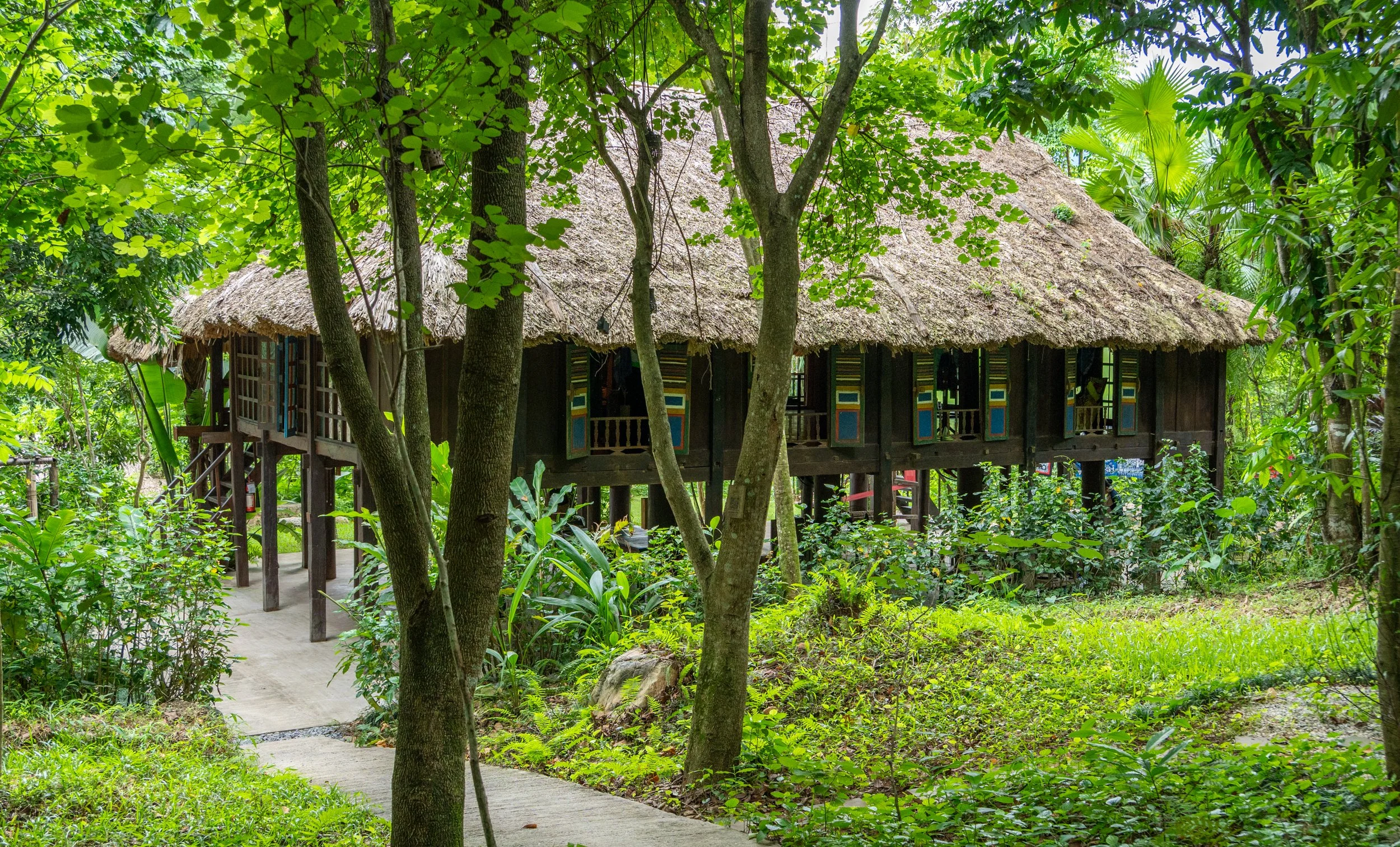
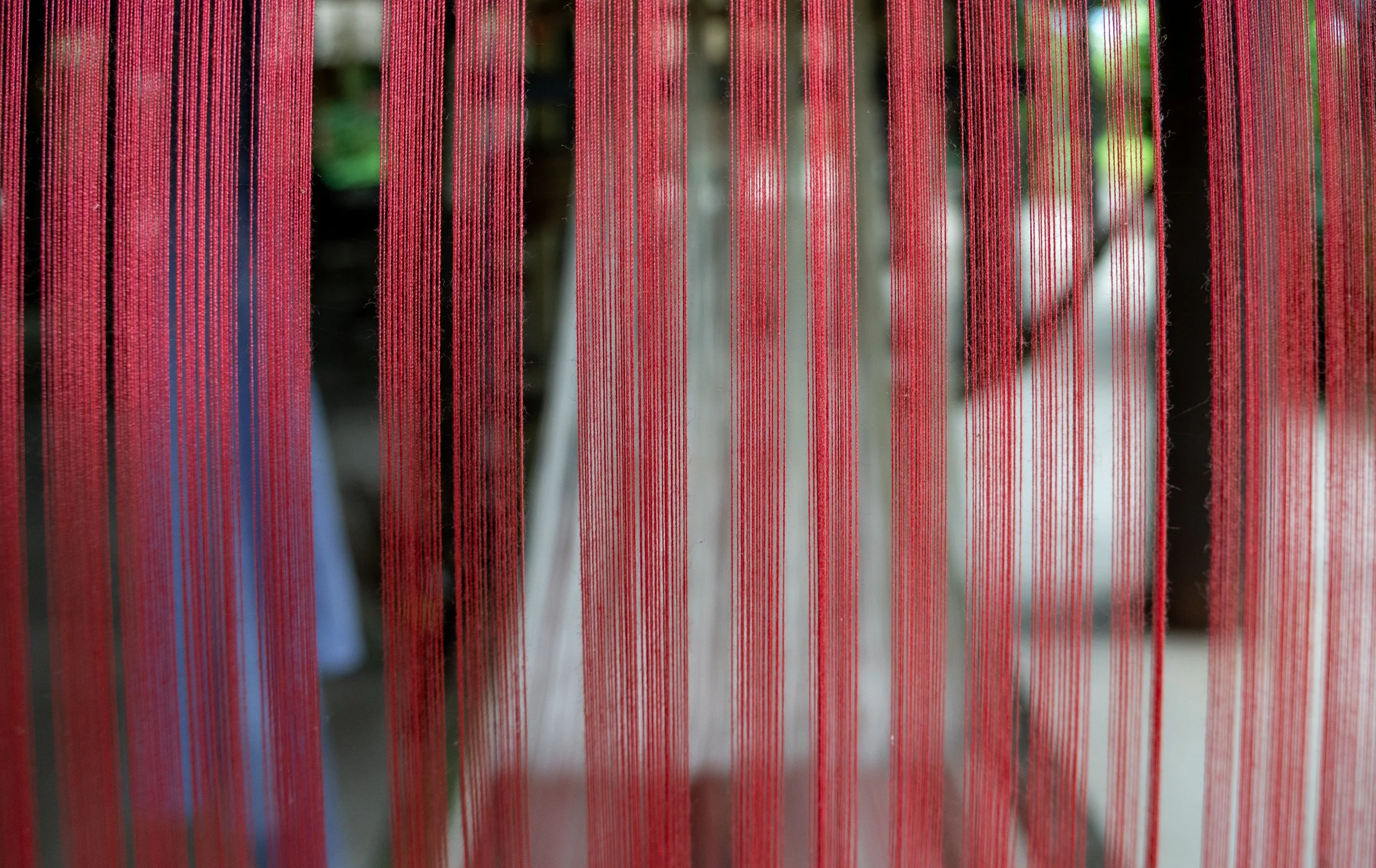
Other craft activities include Thai loom-weaving demonstrations and rattan-weaving workshops. These take place in or around the resort’s Stilt House Museum, a traditional house dating from 1970 that was relocated and reconstructed at Avana. The museum contains domestic objects and materials associated with local life. It is modest in scale, but useful for understanding the architectural and decorative references found throughout the resort.
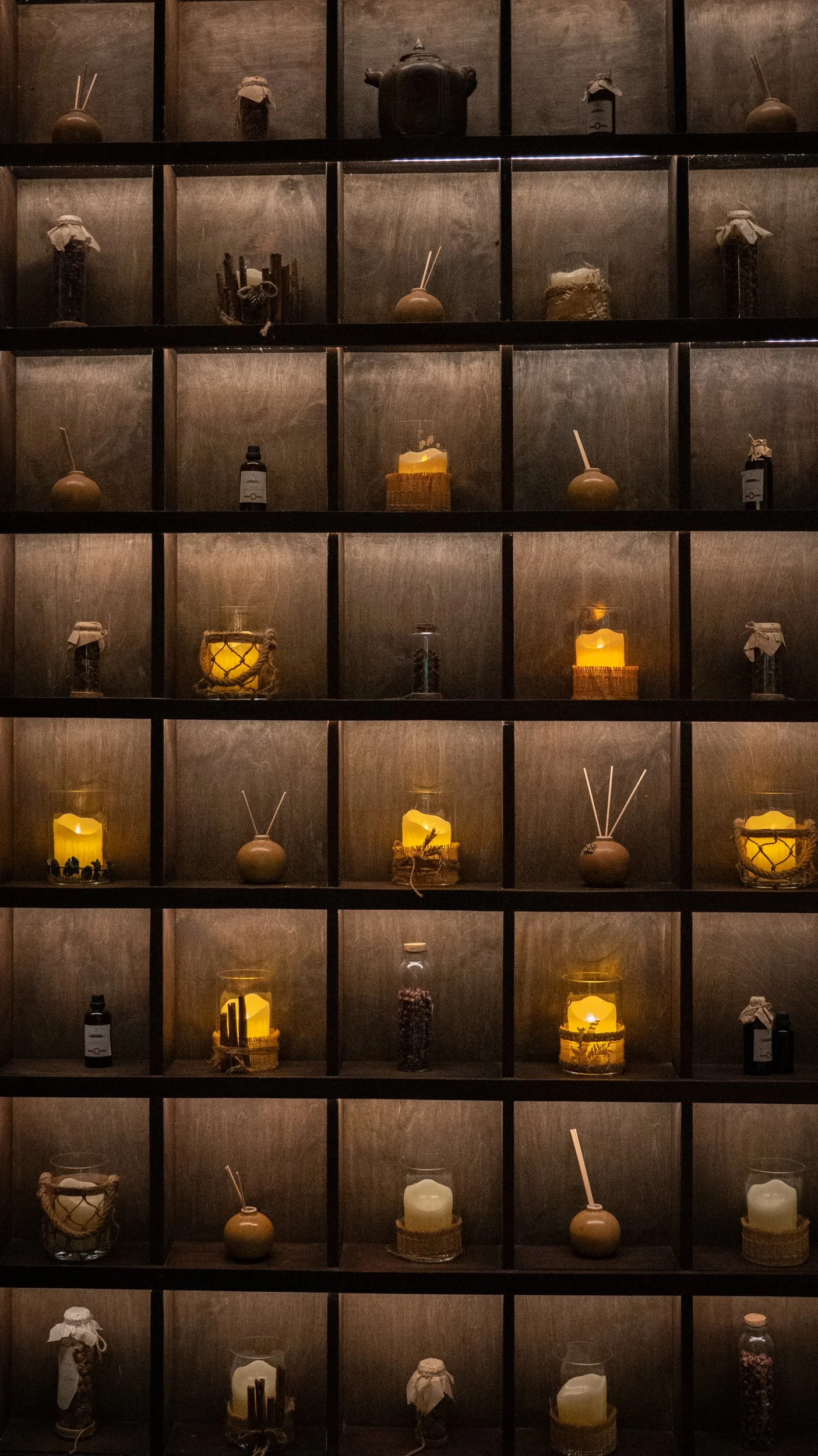
A scented-candle workshop offers a less culturally specific but accessible alternative. Guests make their own candle while learning about fragrance combinations and the production process. It is an easy indoor activity if the weather turns or if family members want something creative without the precision demanded by batik painting.
Outdoors, the resort offers guided walks and longer treks through the surrounding mountains and villages. The lighter village walk concentrates on local landscapes and daily life. More demanding routes climb towards higher viewpoints over the valley. These excursions need to be booked in advance and are the most logical choice for guests who do want to leave the grounds for a few hours.
We did not feel any urgency to add such an excursion. The resort itself already provided the forest paths, terraced fields and mountain views we had come for. A guided walk can add contact with the surrounding communities and give geographical context, but it is not necessary to prevent boredom.
Fishing with a simple bamboo pole is available at one of the ponds. It is a deliberately slow activity: watch the float, wait and accept that very little may happen. That makes it surprisingly compatible with the atmosphere of the retreat. It can also expose differences in patience between parents and teenagers rather efficiently.
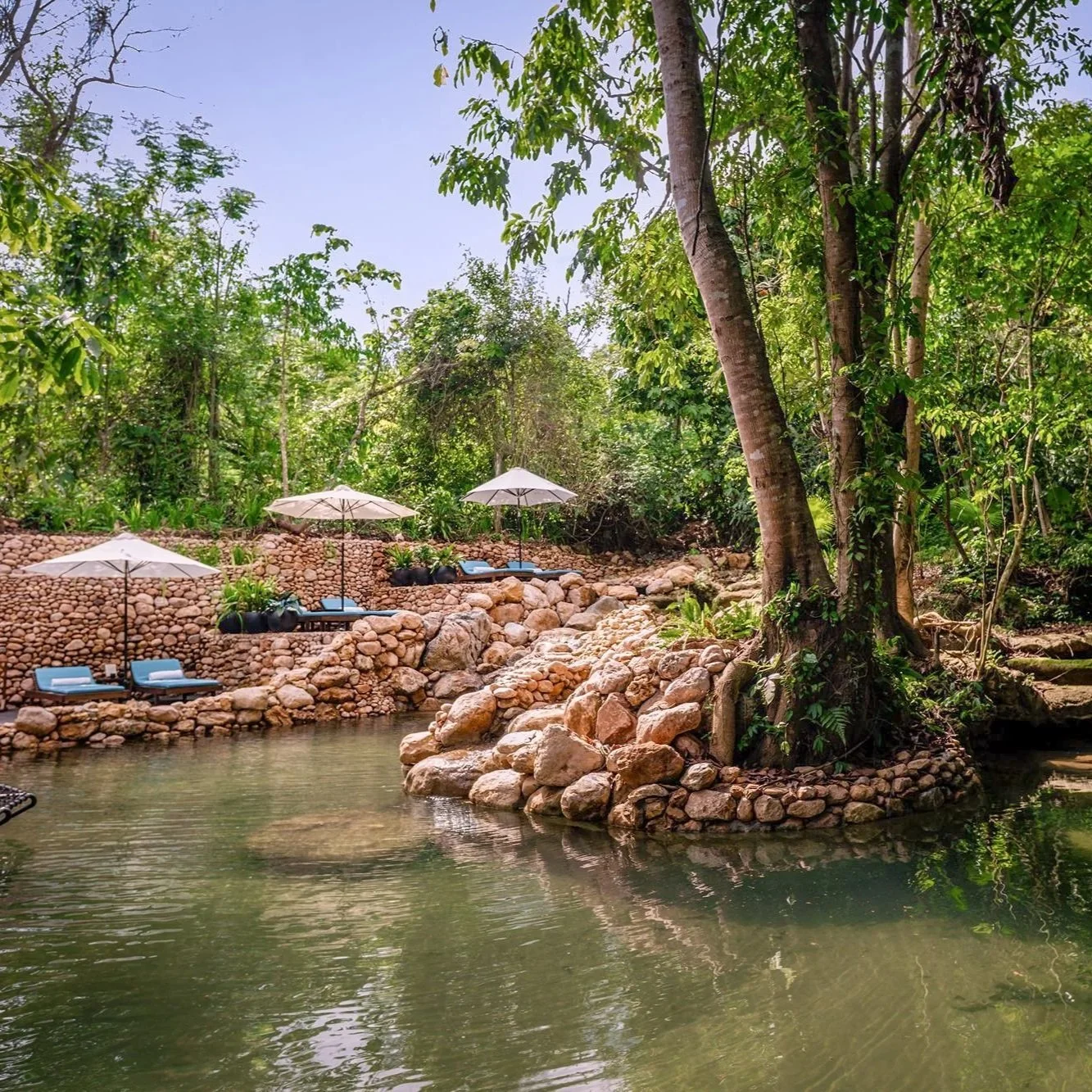
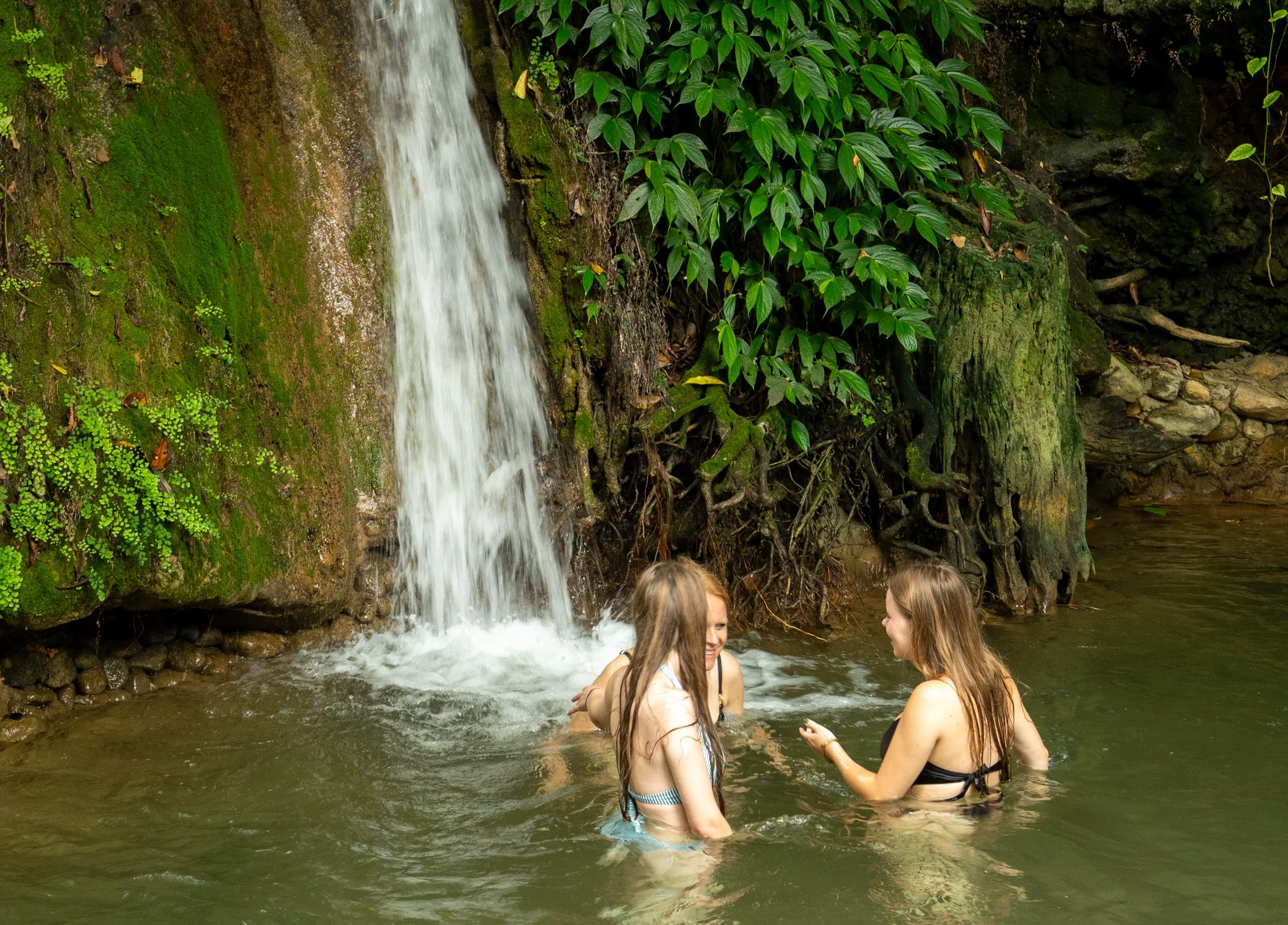
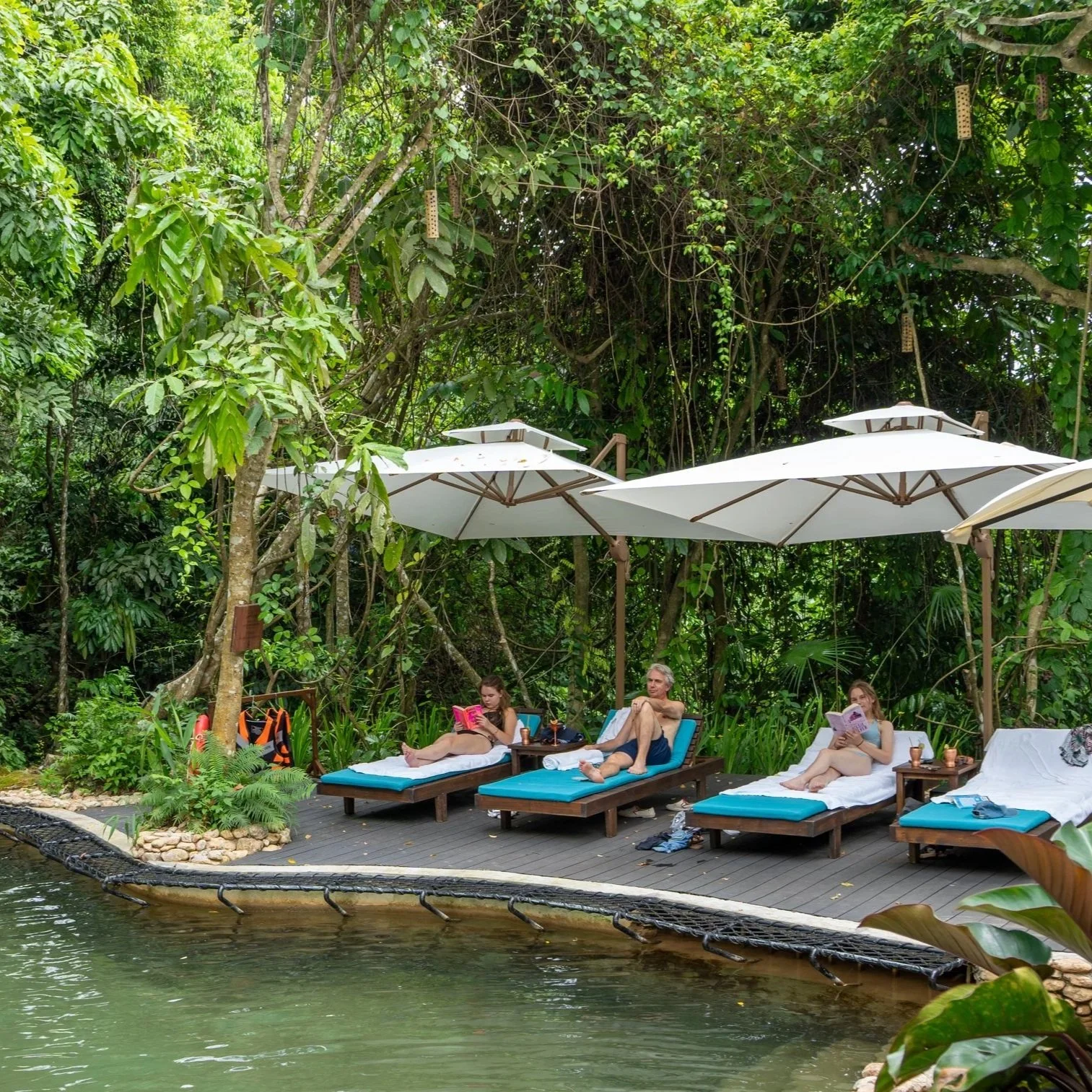
Avana has a large communal infinity pool in addition to the private pools attached to the Senna villas. The shared pool looks across the mountains and provides a livelier alternative when spending an entire afternoon in private becomes too isolated. Families without a pool villa therefore still have access to one of the resort’s strongest views. Another natural feature is the Hidden Spring Lagoon, where guests can enter the cool spring water when conditions permit. Access depends on rainfall and the upstream water level, so it should not be treated as a guaranteed facility. During dry periods the flow can become too low, while age restrictions apply to children entering the water.
Outdoor cinema evenings are occasionally organised on the grass near Green Chili Restaurant. Beanbags, a large screen and the mountain darkness turn a familiar family activity into something more memorable. Availability depends on the resort’s schedule and weather, but it is particularly well suited to families with older children. Guests can also arrange picnic lunches, sometimes combined with a walk or trek. These use local dishes and ingredients and allow lunch to become part of the landscape rather than another restaurant meal. A more elaborate private dinner can be organised beside the waterfall or inside the old stilt house. These experiences are designed for special occasions and need advance reservation.
The waterfall dinner is primarily romantic and therefore perhaps less essential during a family stay. The setting, however, is undeniably remarkable: a private table reached through the forest, with the cascade and candlelight as the backdrop. Dining in the stilt house places more emphasis on local food, domestic objects and regional history.
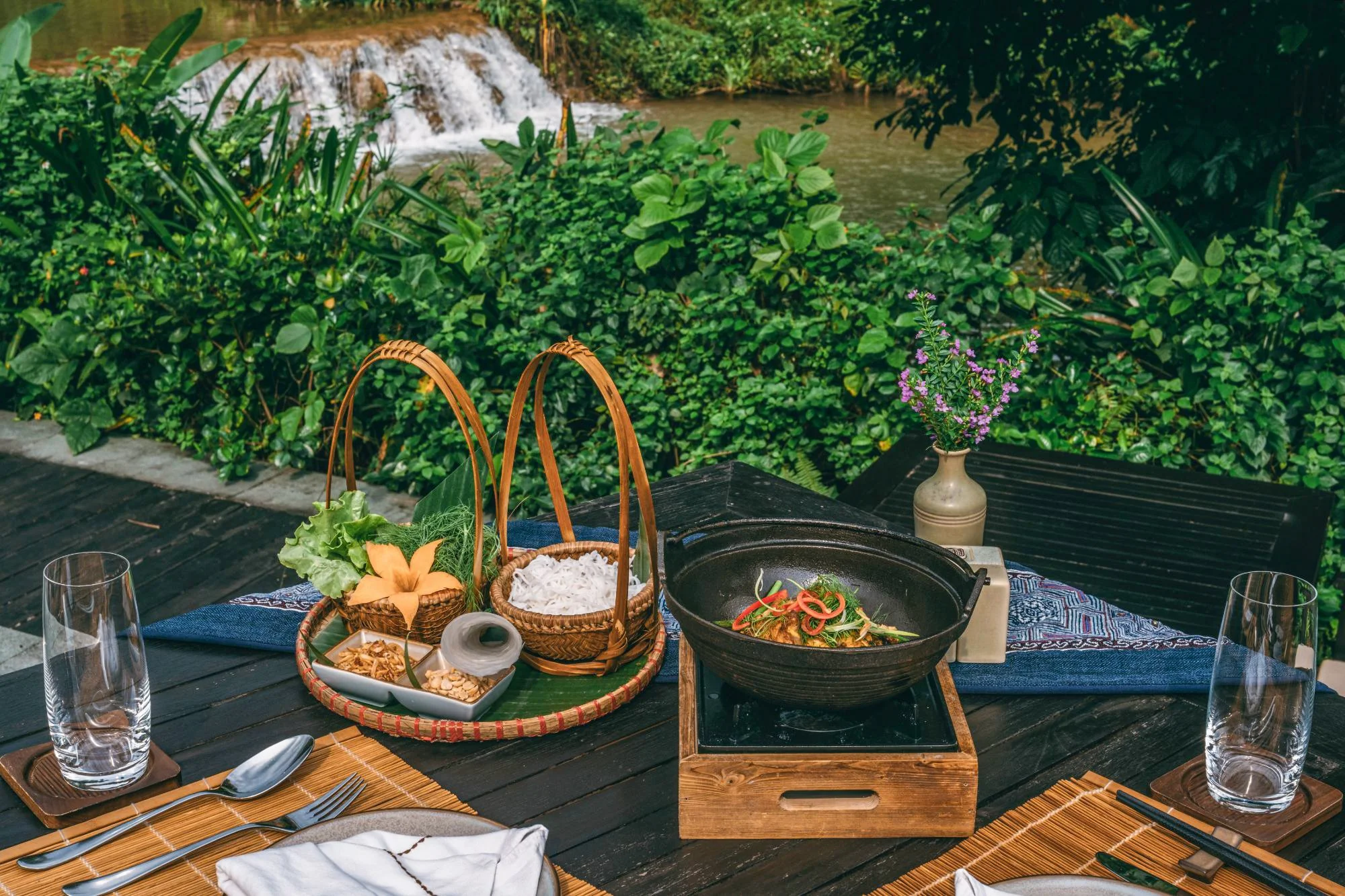
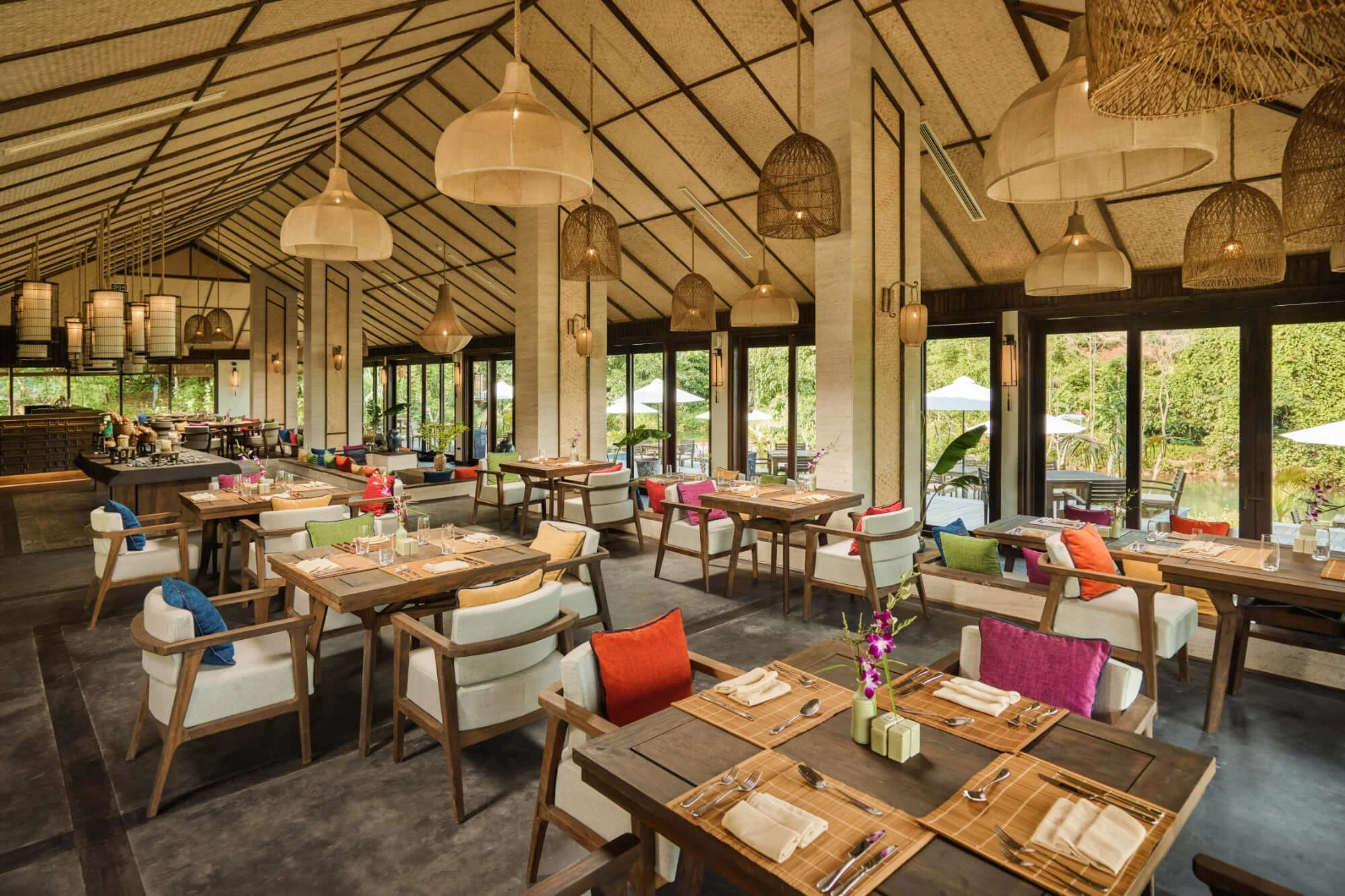
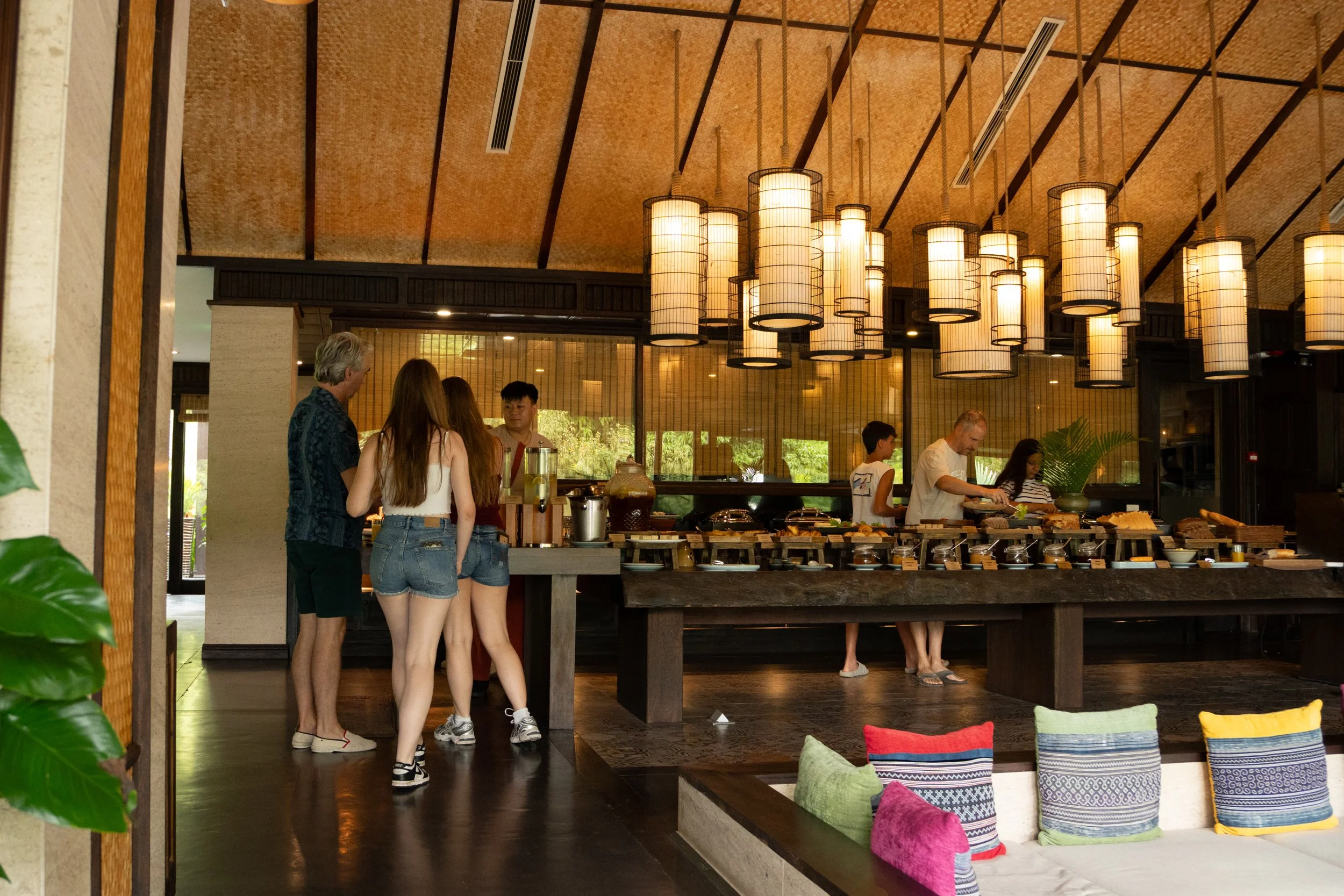
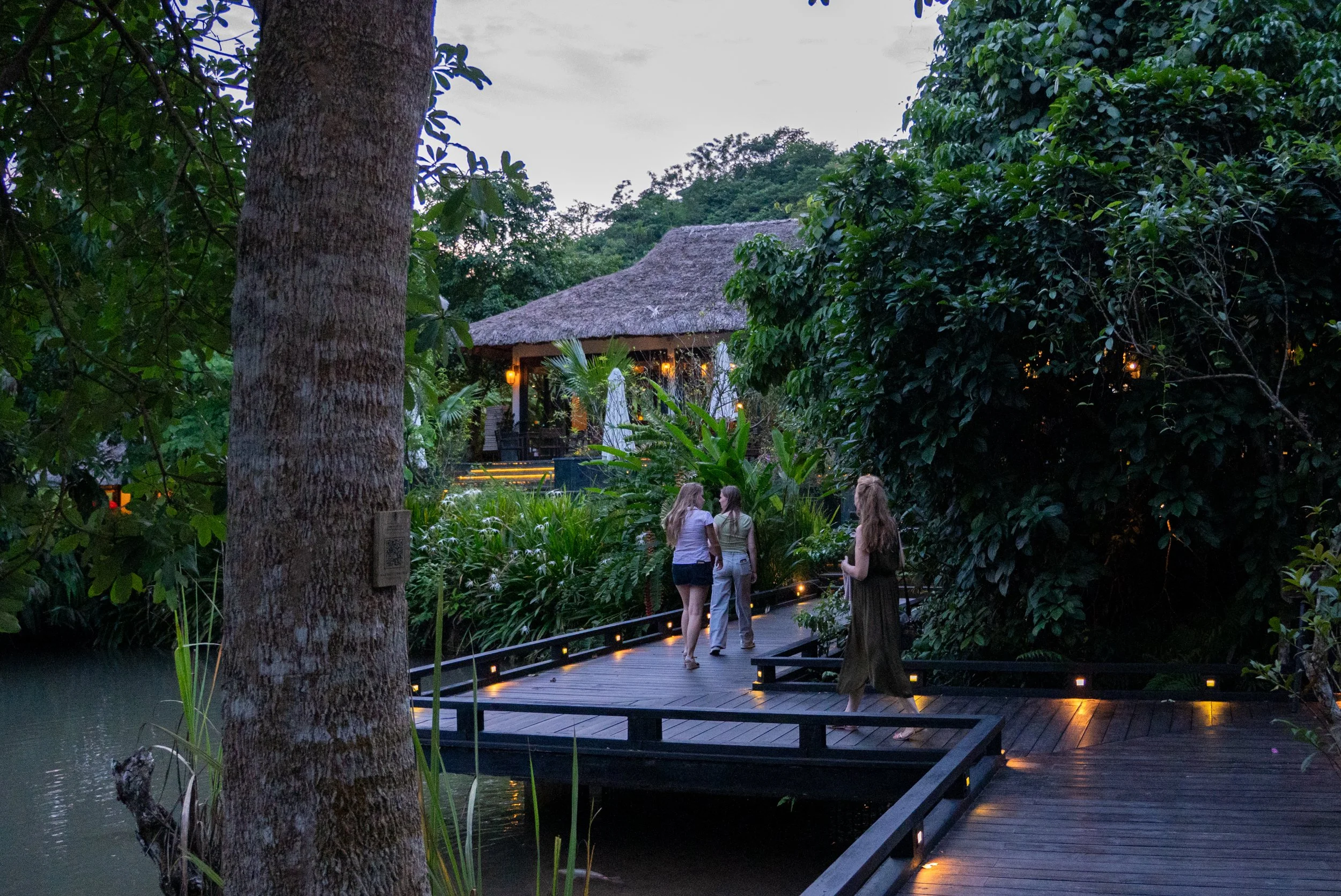
For us, the regular meals are already a highlight. The main Green Chili Restaurant is positioned beside terraced fields and a series of cascading ponds fed by water from the waterfall. Breakfast, lunch and dinner unfold against a constantly changing background of mist, sunlight and mountains. Ducks move around the ponds, koi swim below the terraces and the sound of water remains present without dominating the room. The kitchen uses Vietnamese flavours and regional ingredients but does not confine itself to a narrowly local menu. That range worked well over several days, particularly when travelling as a family. We can explore dishes from north-western Vietnam while still finding something for different appetites and moods. Ingredients tasted fresh, presentation was careful without becoming theatrical and we eat extremely well throughout our stay.
Remote resorts have a captive audience, which sometimes produces limited menus and unambitious cooking at inflated prices. Avana avoids that trap. Eating remains something to look forward to rather than an unavoidable part of staying far from other restaurants. The surroundings certainly helps, but the food does not depend on the view for its appeal. Avana describes sustainability as central to the resort, a claim that should always be examined critically in a luxury property with heated private pools, air conditioning and guests travelling long distances. No high-end resort exists without an environmental cost. Still, some choices here are more substantive than the familiar request to reuse towels.
The buildings occupy only part of the land, while a large area has been replanted. The resort says that most employees come from surrounding communities and that its restaurants source ingredients through local suppliers. It also uses workshops, its traditional stilt house and regional materials to maintain a connection with Thai and H’mong culture. These measures do not remove the contradictions of luxury tourism, but they are more meaningful than decorative “eco” language.
The retreat’s isolation is both its greatest strength and its clearest limitation. This is not the place for travellers who want to walk into a lively village each evening or collect several famous sights in a day. Reaching Avana takes time, and once there the resort becomes the destination.
That is exactly how it should be approached. Do not stay here for one night between excursions. The value lies in having enough time to stop thinking about what comes next. Swim. Walk to the waterfall. Paint batik. Try singing-bowl meditation. Fish for half an hour. Eat slowly. Return to Orchid Spa for the day’s massage. Then do less.
Avana Retreat succeeds because its most impressive features are connected. The waterfall feeds the streams and ponds. Those waterways shape the paths, restaurant and spa. Local building traditions inform the villas, while workshops explain some of the patterns and materials found inside them.
WOW
# The Senna Hilltop Pool Villa 2BR combines genuine family space with an extraordinary private pool and valley view.
# Orchid Spa is breathtakingly integrated into the forest, and our daily complimentary massages became a defining part of the stay.
# The waterfall, workshops, pools, meditation, food and mountain setting make Avana a destination in itself; there is no need to go anywhere else.