Ninh Binh is one of those places where the landscape seems almost implausibly arranged. Limestone mountains rise vertically from flat rice fields, rivers disappear into caves and pagodas occupy ledges and forested slopes. Narrow roads wind through villages, lotus ponds and fields that are still worked much as they have been for generations. The wider region forms part of the UNESCO-listed Trang An Landscape Complex, a protected area where exceptional karst geology is combined with archaeological evidence of human habitation extending far into prehistory. It encompasses the ancient capital of Hoa Lu, the waterways of Trang An and the Tam Coc–Bich Dong landscape, although the immediate attraction is simpler: Ninh Binh is extraordinarily beautiful.
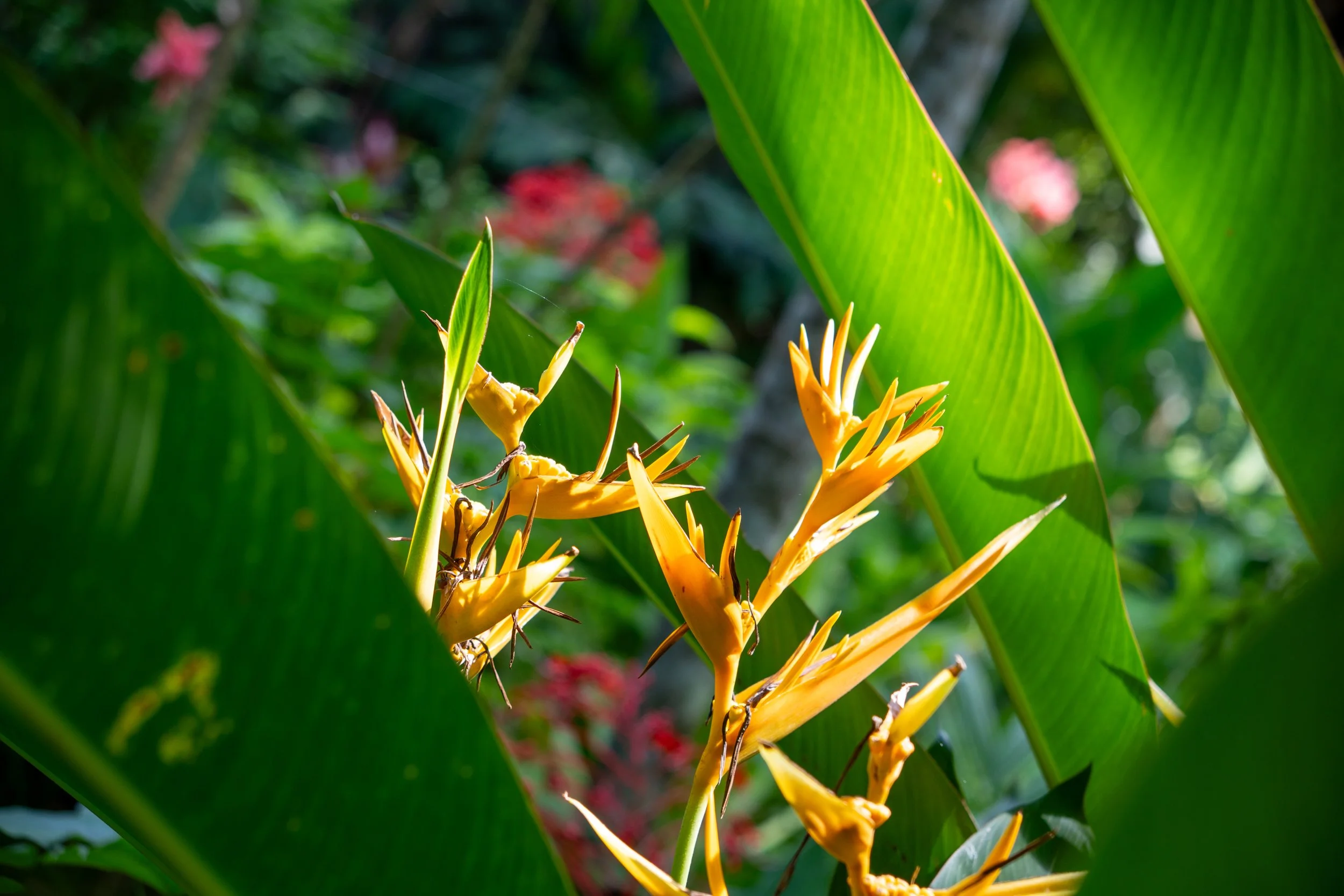
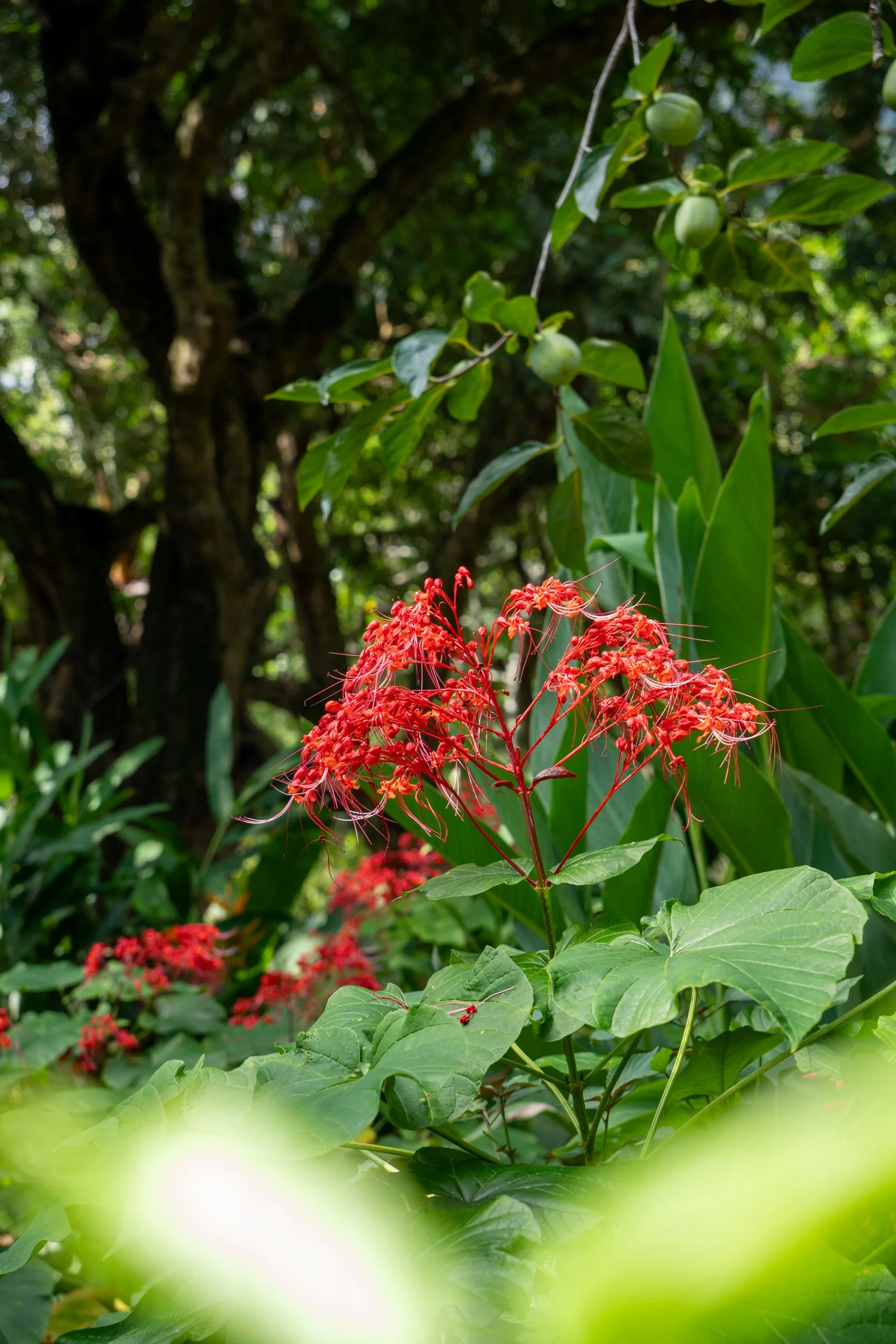
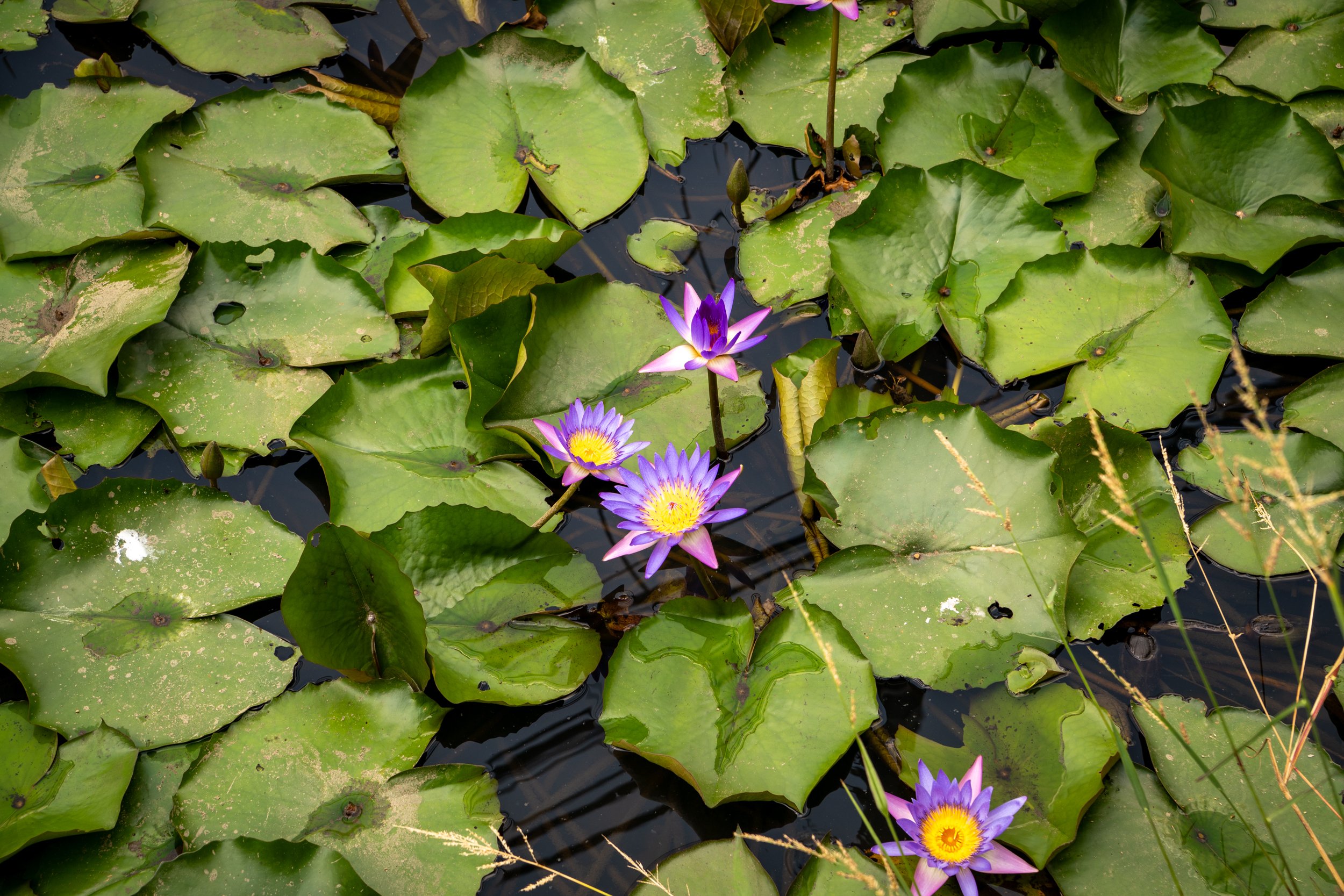
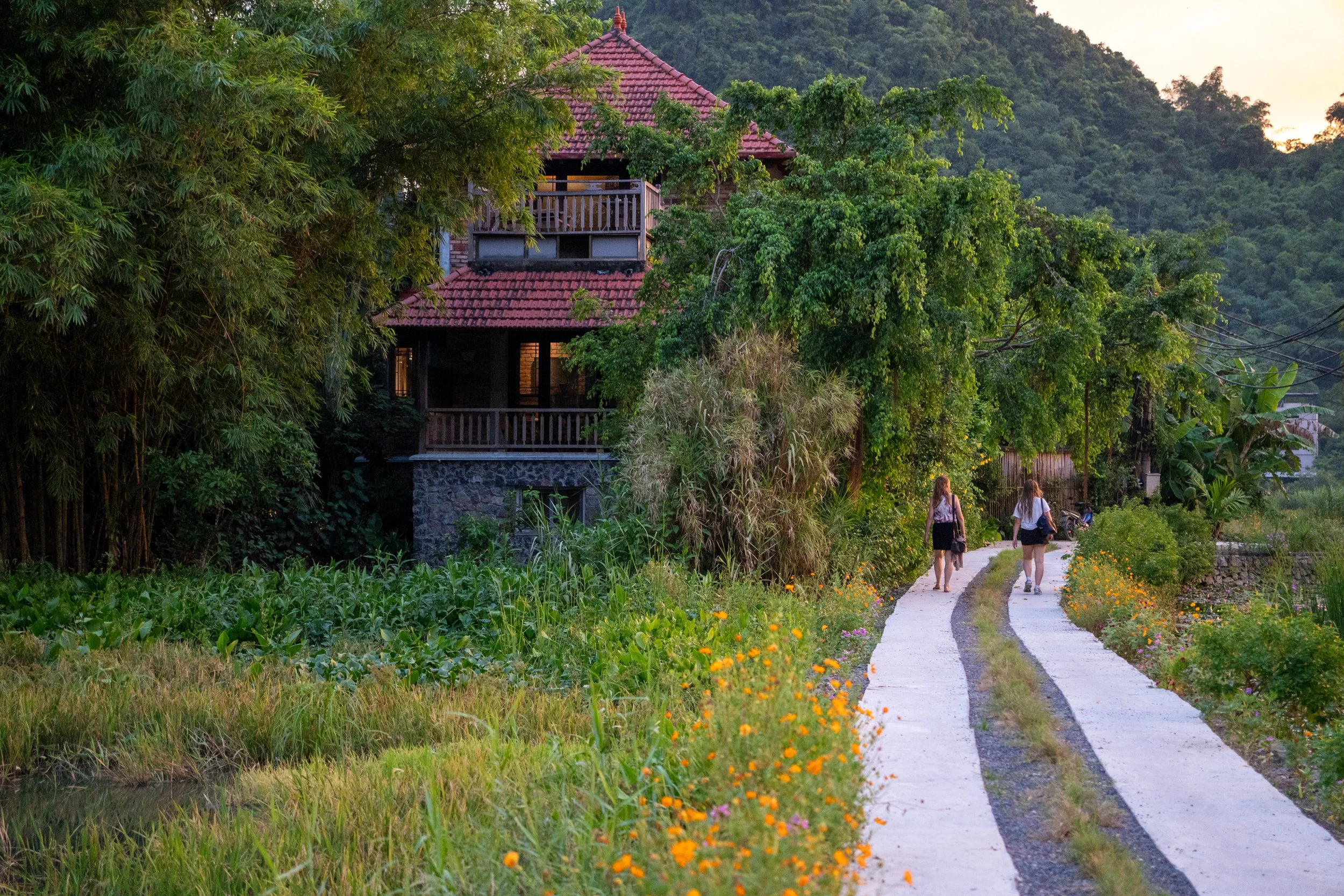
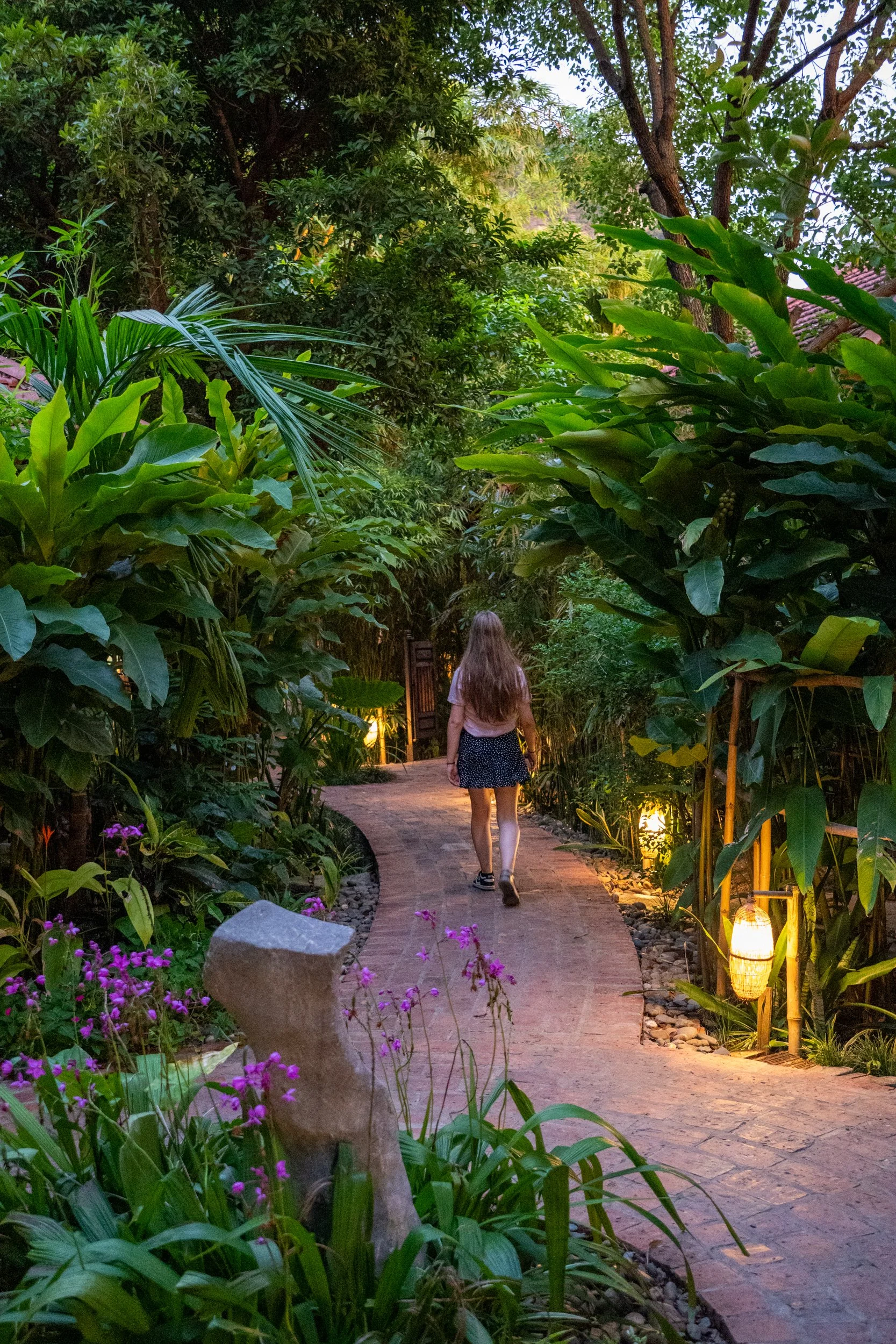
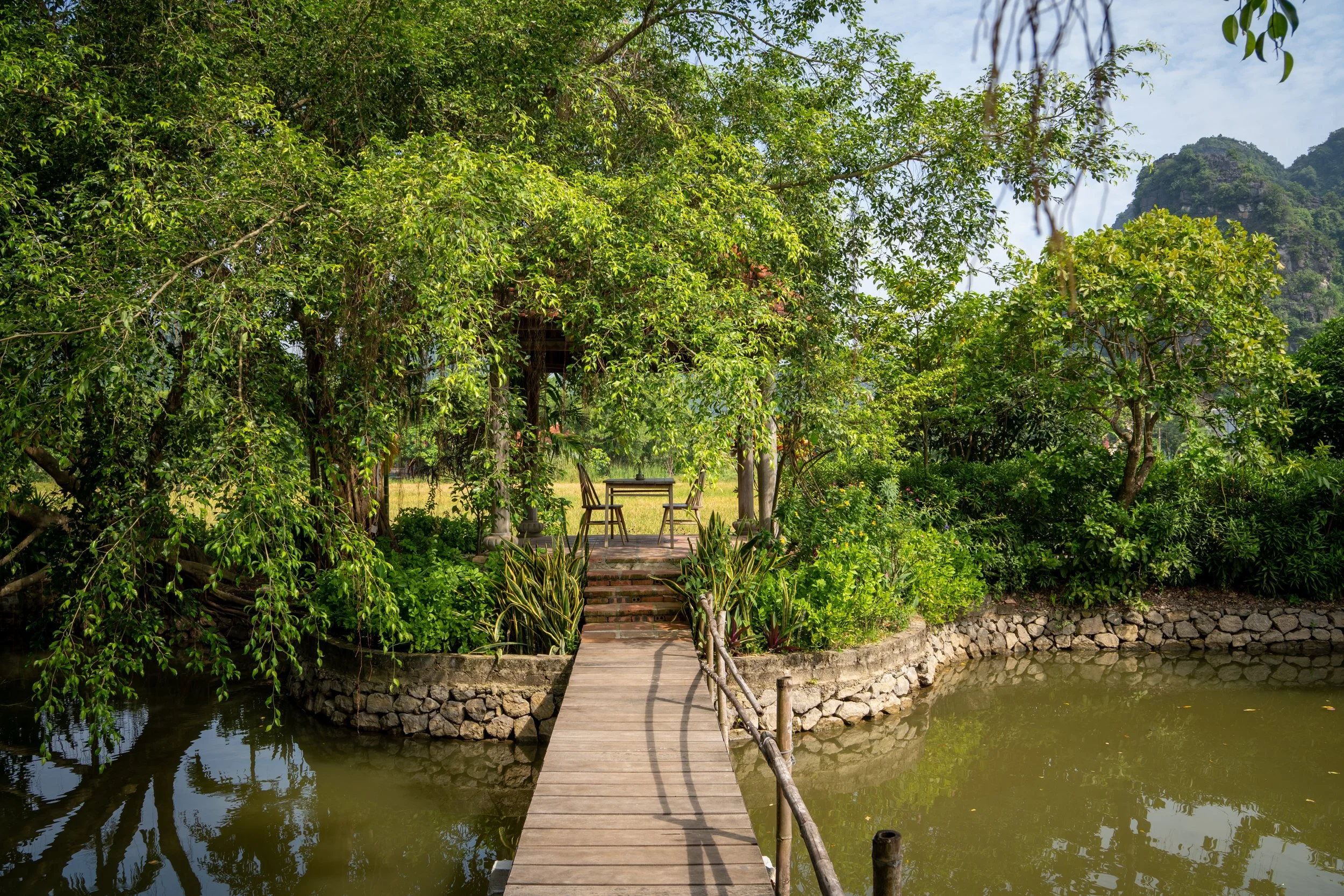
Tam Coc Garden Resort is hidden among the rice fields at the edge of this landscape. It does not feel like a conventional hotel separated from its surroundings by walls and ornamental gardens. Stone paths, ponds, fruit trees and low buildings merge almost imperceptibly into the fields, with limestone peaks rising behind them. Farmers and water buffalo remain part of the view, while the soundscape consists mainly of birds, insects and the occasional scooter in the distance. At dusk, the light fades across the paddies and the mountains gradually become dark silhouettes.
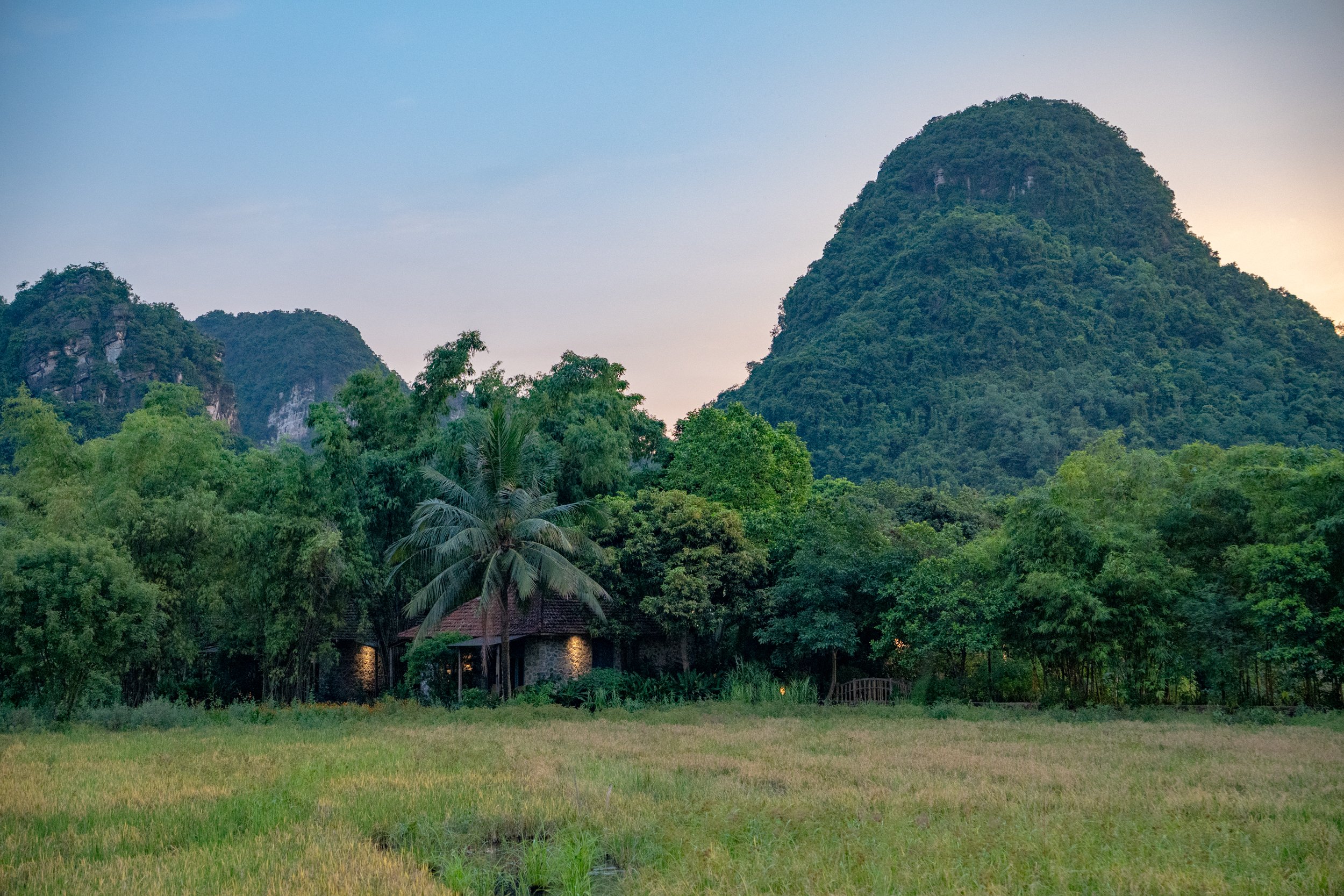
The hidden Tam Coc Garden
The resort is some distance from the busy centre of Tam Coc village, which turns out to be an advantage. Tour buses, karaoke bars, souvenir shops and most day visitors remain elsewhere, while the gardens become almost completely quiet in the evening. The location feels secluded without being isolated: the principal attractions of Ninh Binh can still be reached by bicycle, scooter, Grab or car, but returning to the resort always produces a sense of leaving the commotion behind.
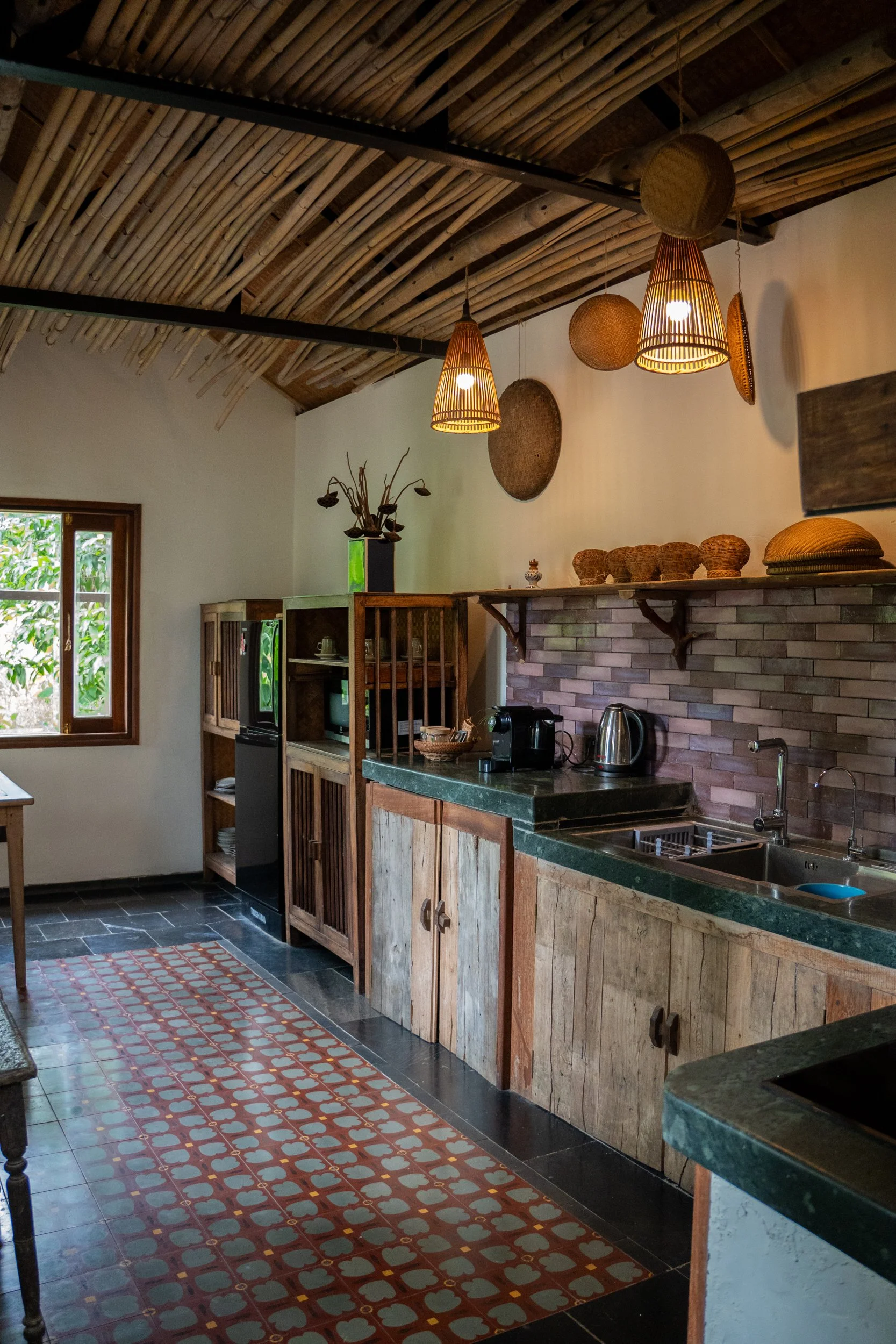
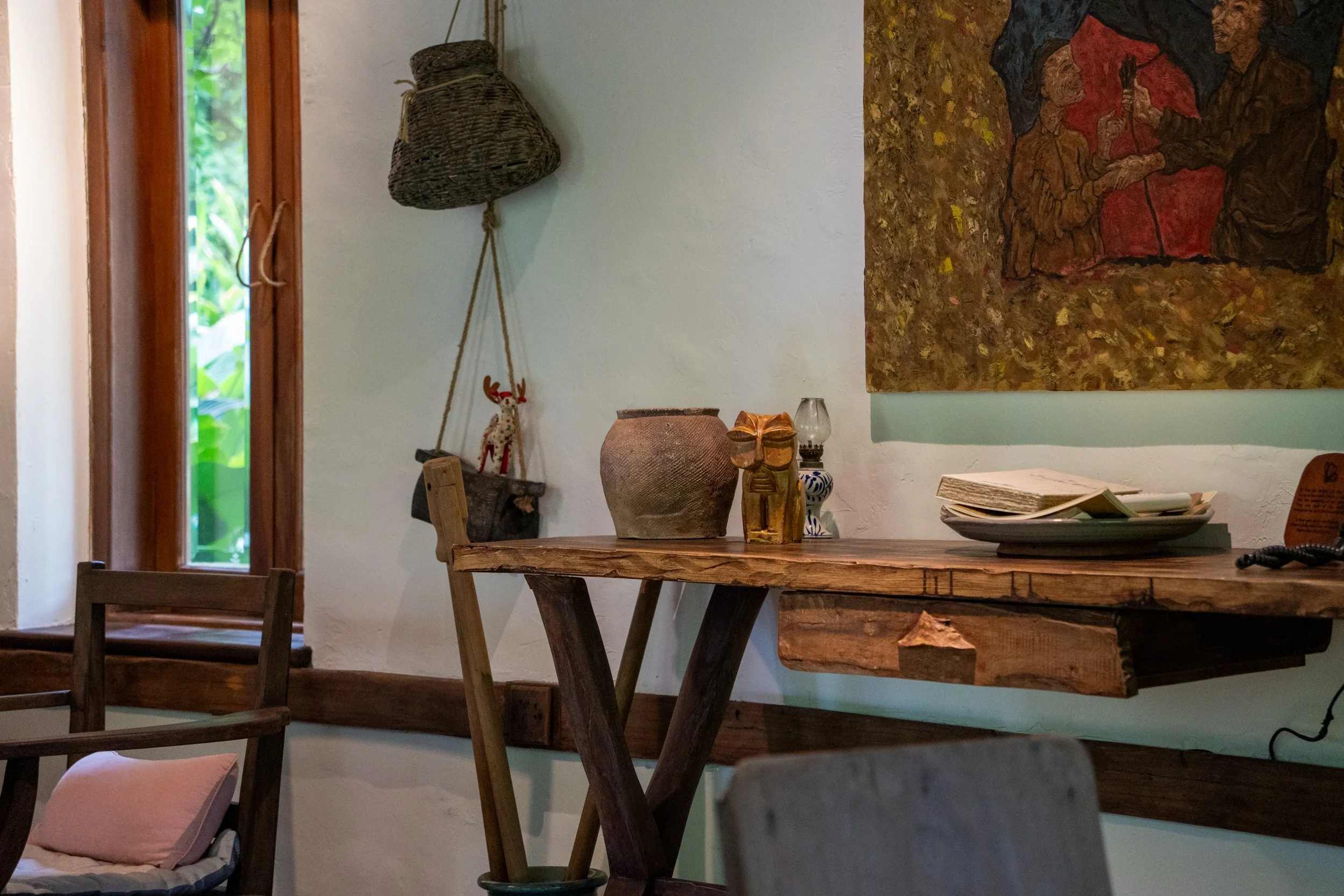
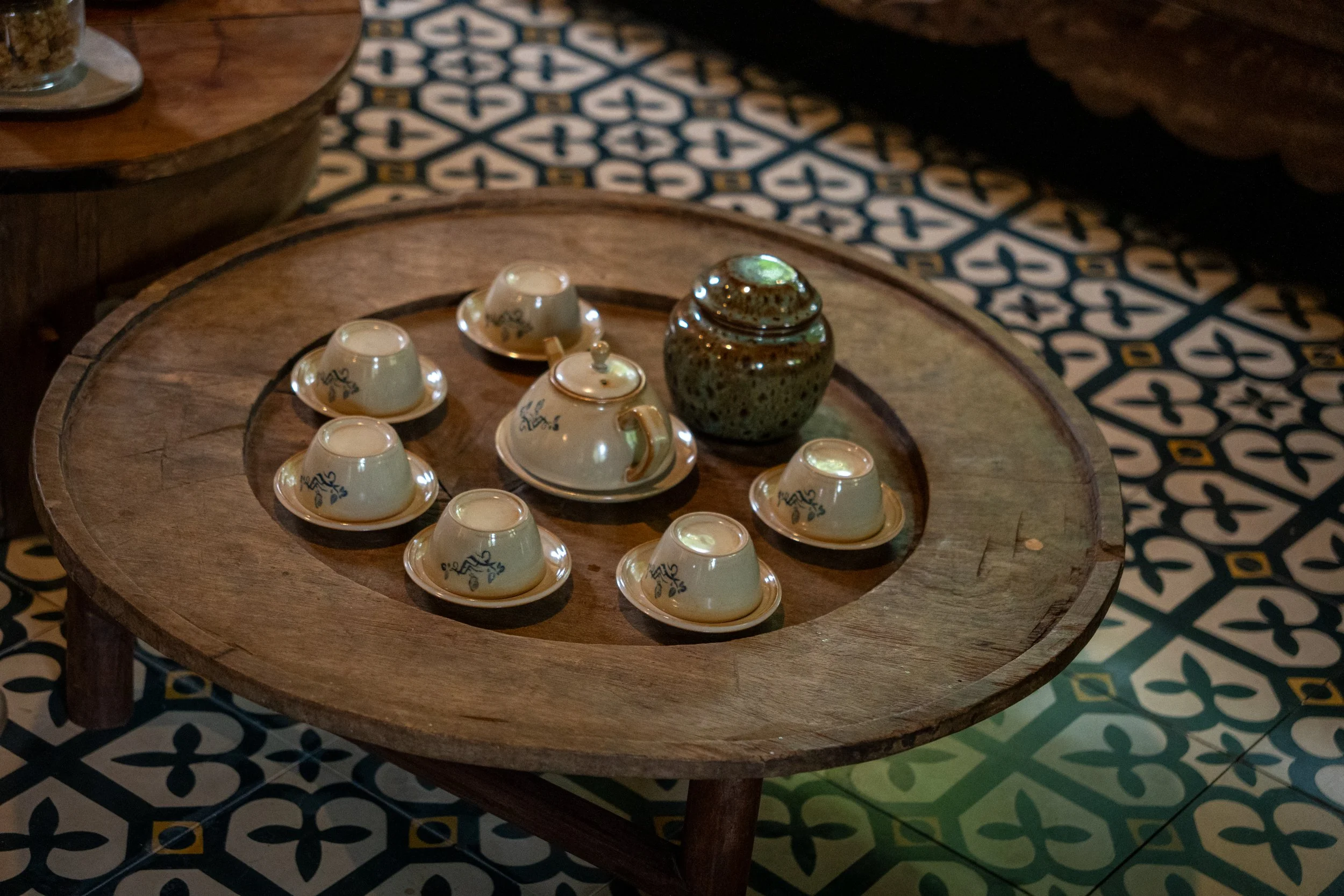
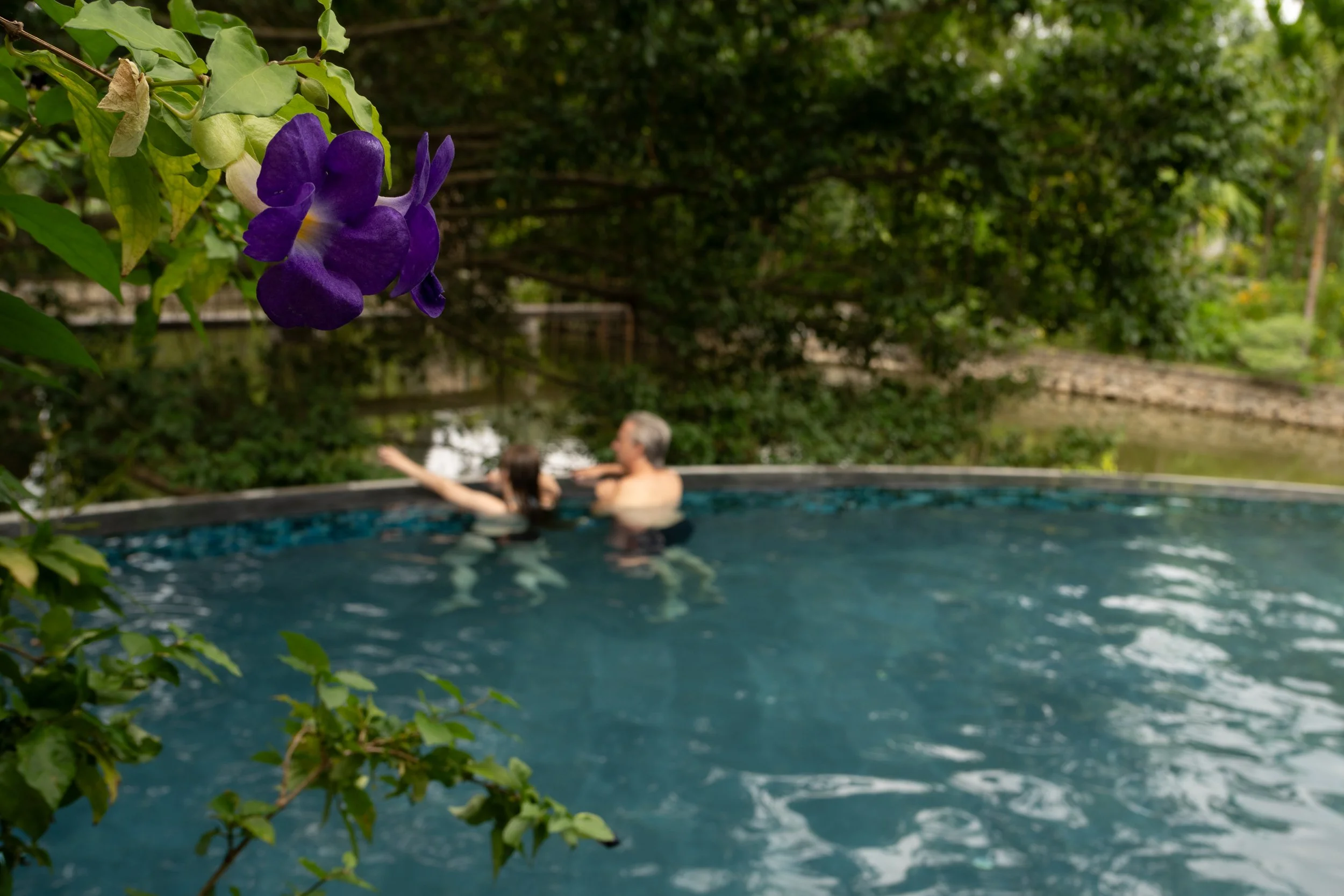
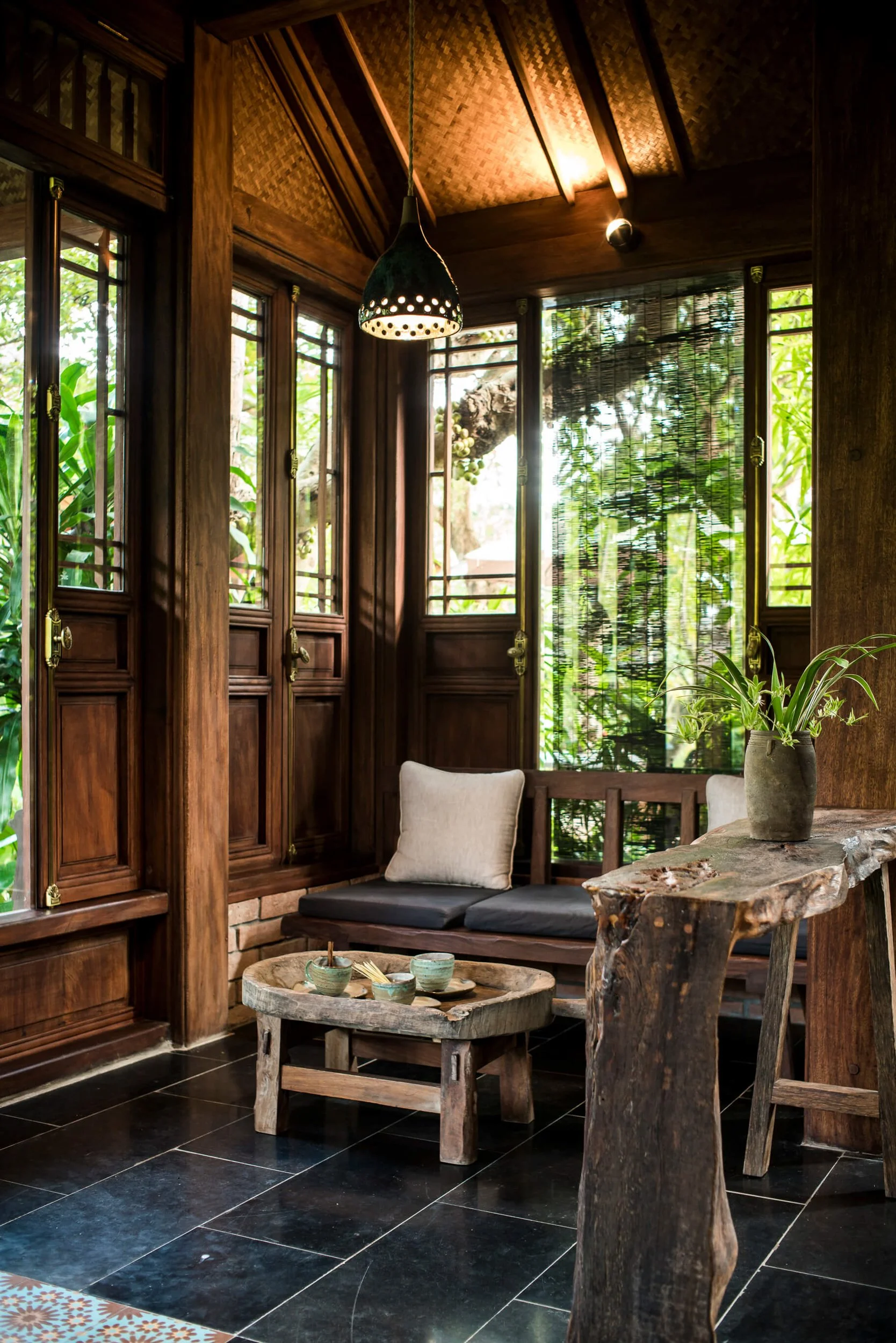
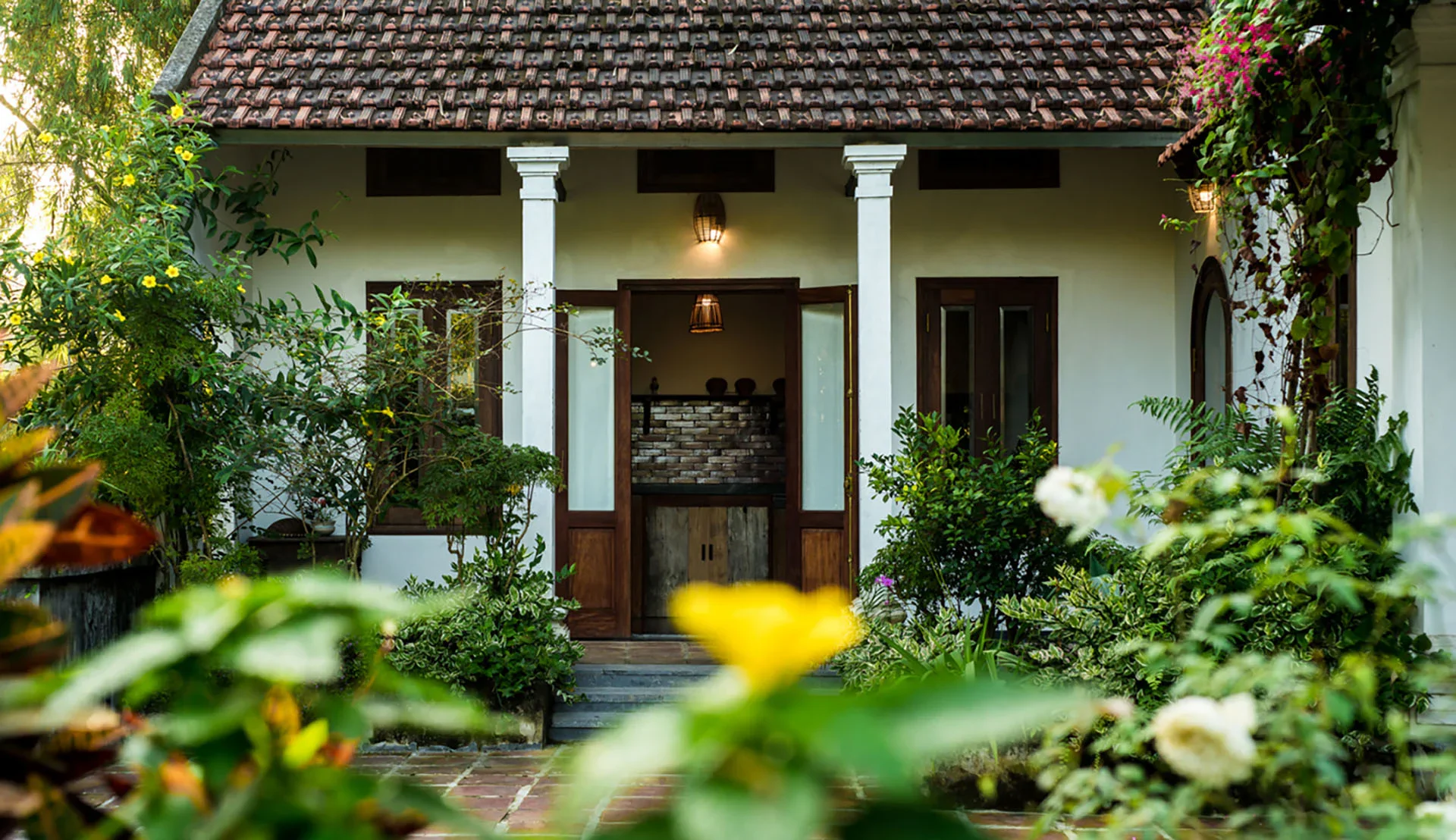
We stay with our teenage daughters in a detached villa with its own swimming pool and lake full of fish. As children grow older, space becomes increasingly important, and the villa gives us something closer to a private home than a collection of hotel rooms. Its architecture draws on northern Vietnamese and French colonial influences, using stone, timber, patterned tiles, linen and handcrafted details rather than the shiny surfaces found in many new luxury hotels. The subdued colours connect the interior to the gardens and rice fields instead of enclosing guests in a sealed, air-conditioned world.
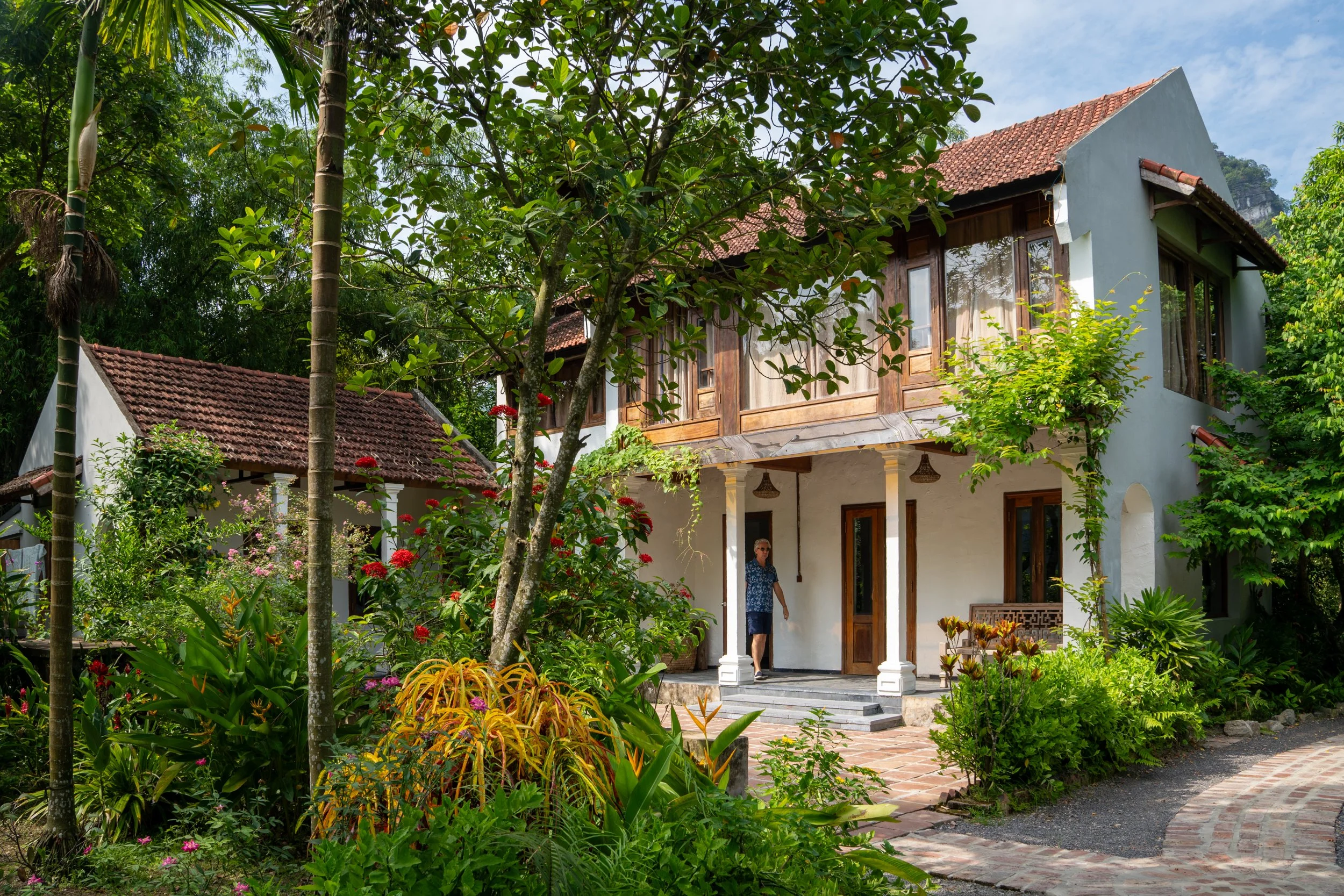
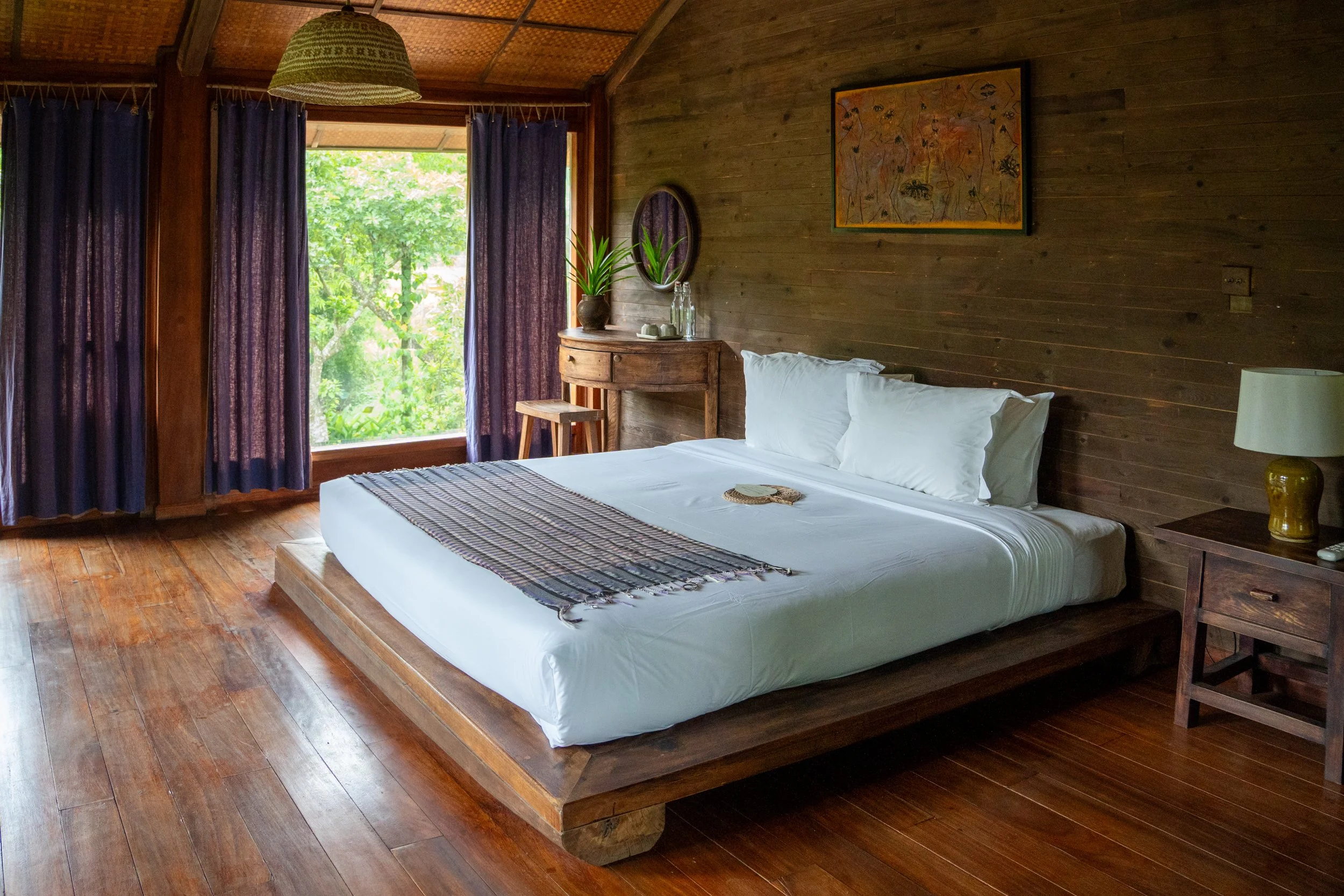
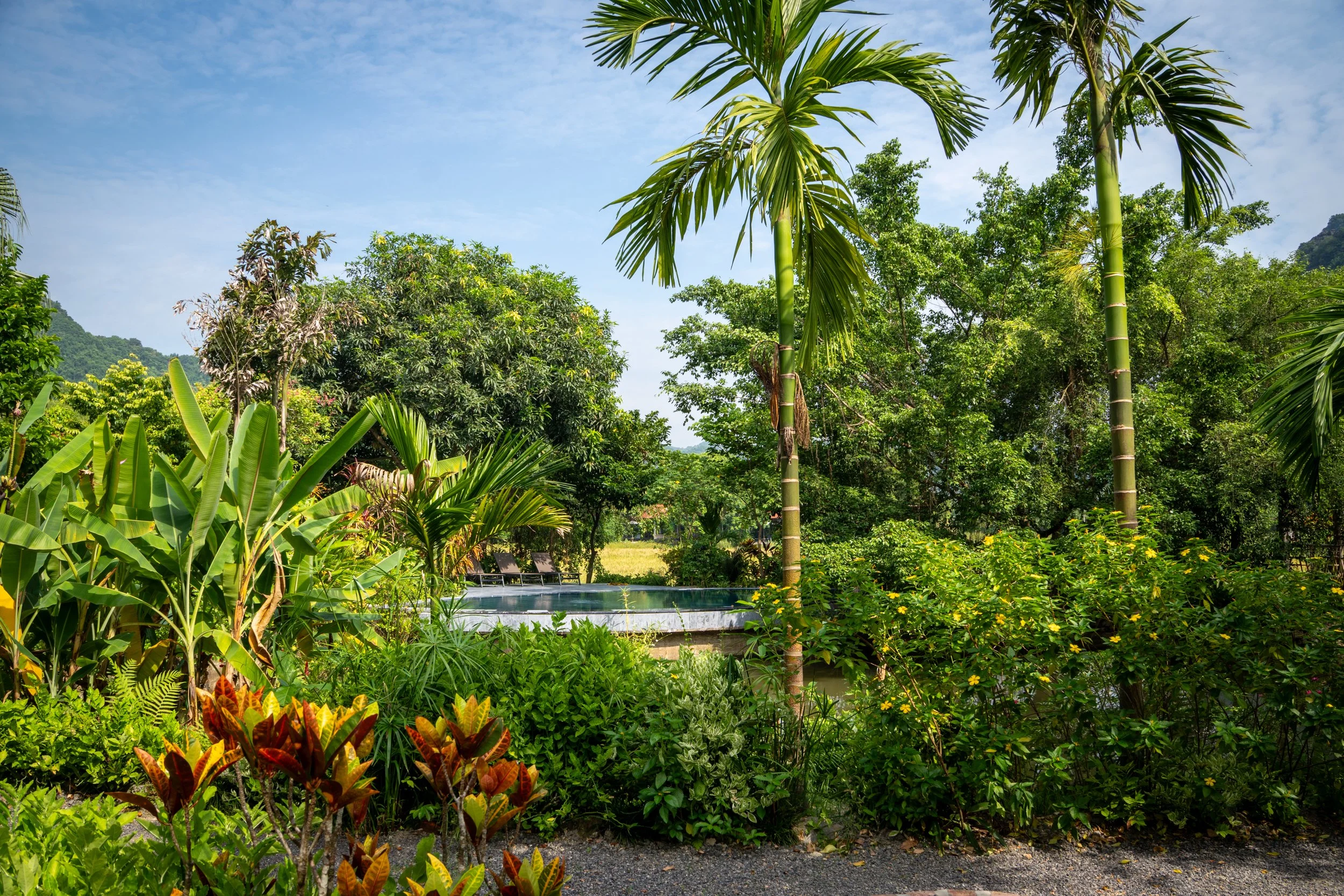
The private pool becomes the centre of our stay. After an early excursion, we could return before the hottest part of the afternoon, swim and do very little without feeling that we are wasting the day. Views of the surrounding vegetation and limestone mountains makes staying at the villa an experience in itself.
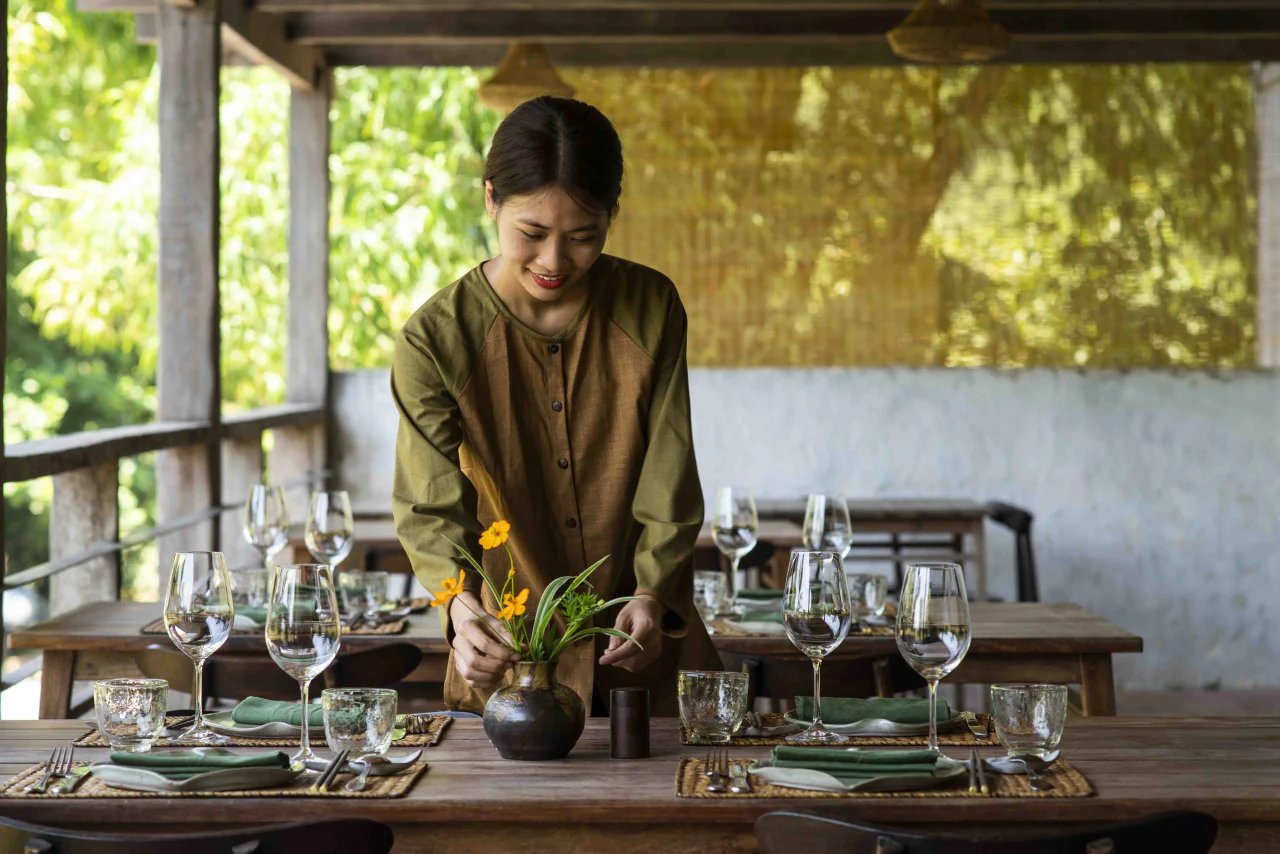
Tam Coc Garden is large enough to offer privacy and small enough for the staff to recognise individual guests. The service is consistently warm, patient and personal. Requests are handled without fuss, conversations feels natural rather than rehearsed and the staff seems genuinely pleased to share their surroundings. Luxury here is expressed less through formality or elaborate rituals than through people noticing what is needed and quietly arranging it.
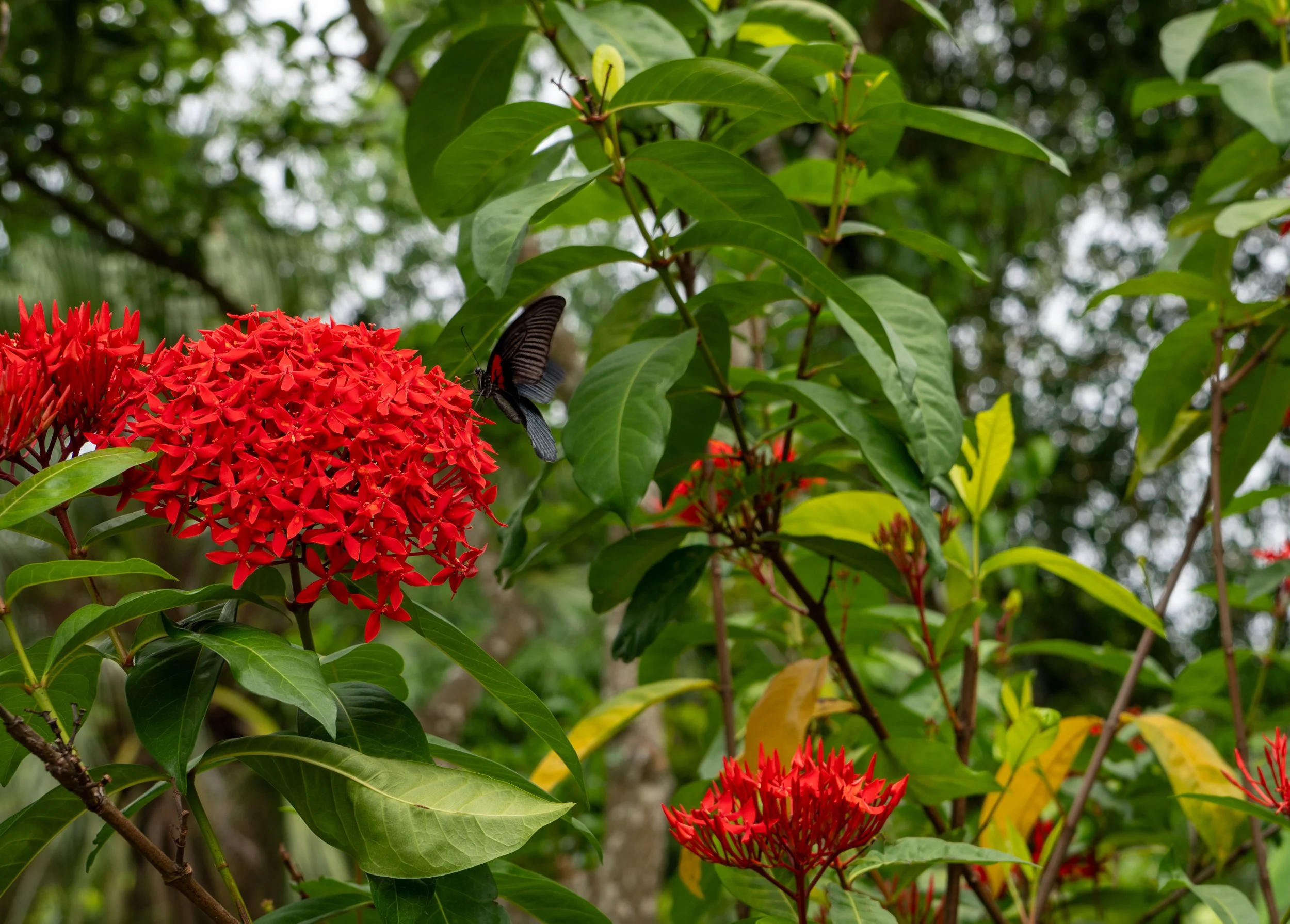
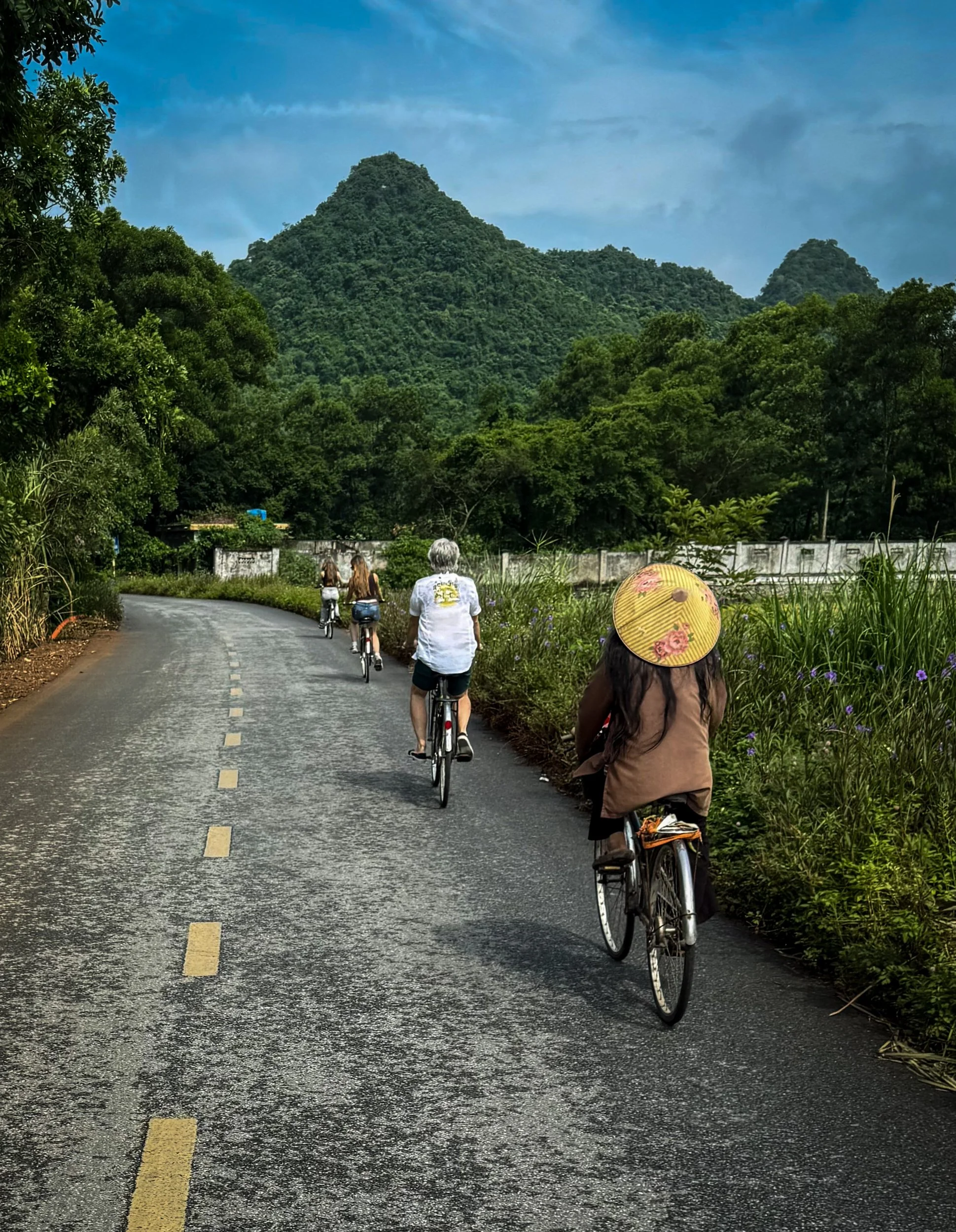
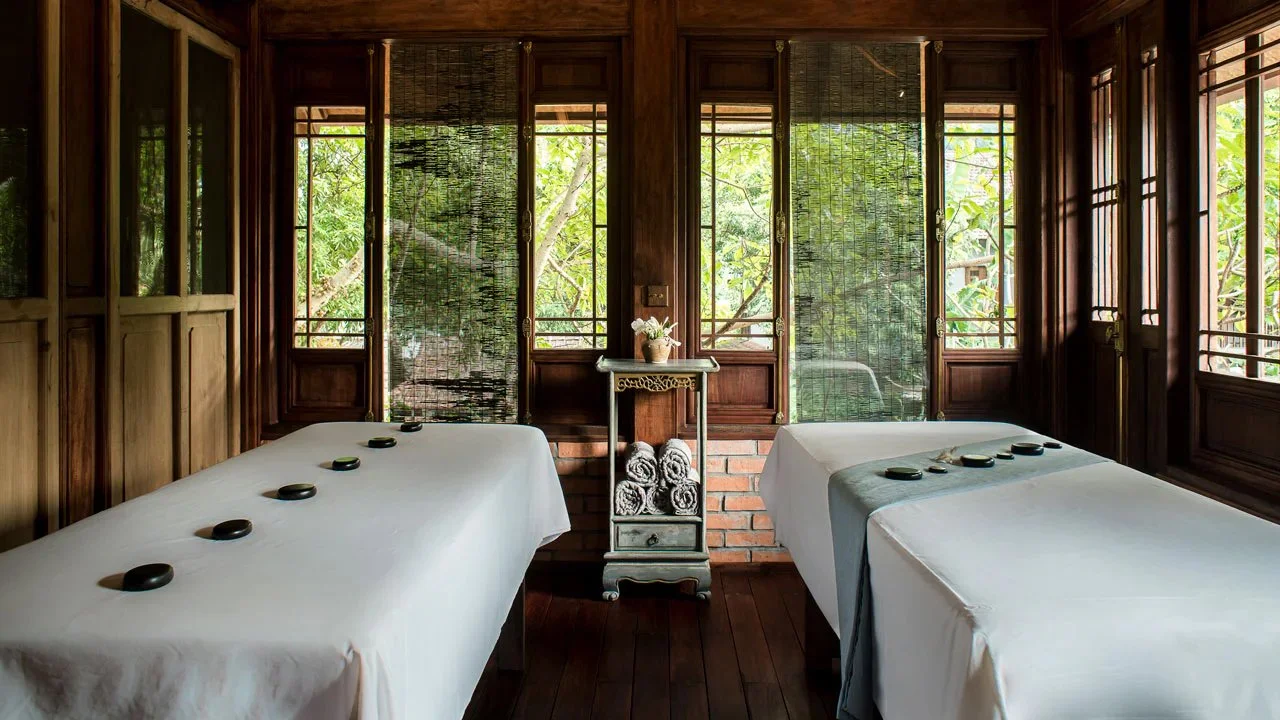
The grounds reward slow exploration. Gardens are planted with flowers, herbs and fruit trees, while paths connect the rooms, restaurant, swimming pool, spa and surrounding rice fields. Complimentary bicycles are available, and cycling is one of the easiest ways to explore the nearby countryside. Most roads immediately around the resort are relatively flat, although heat, potholes, gravel and unpredictable local traffic still require attention.
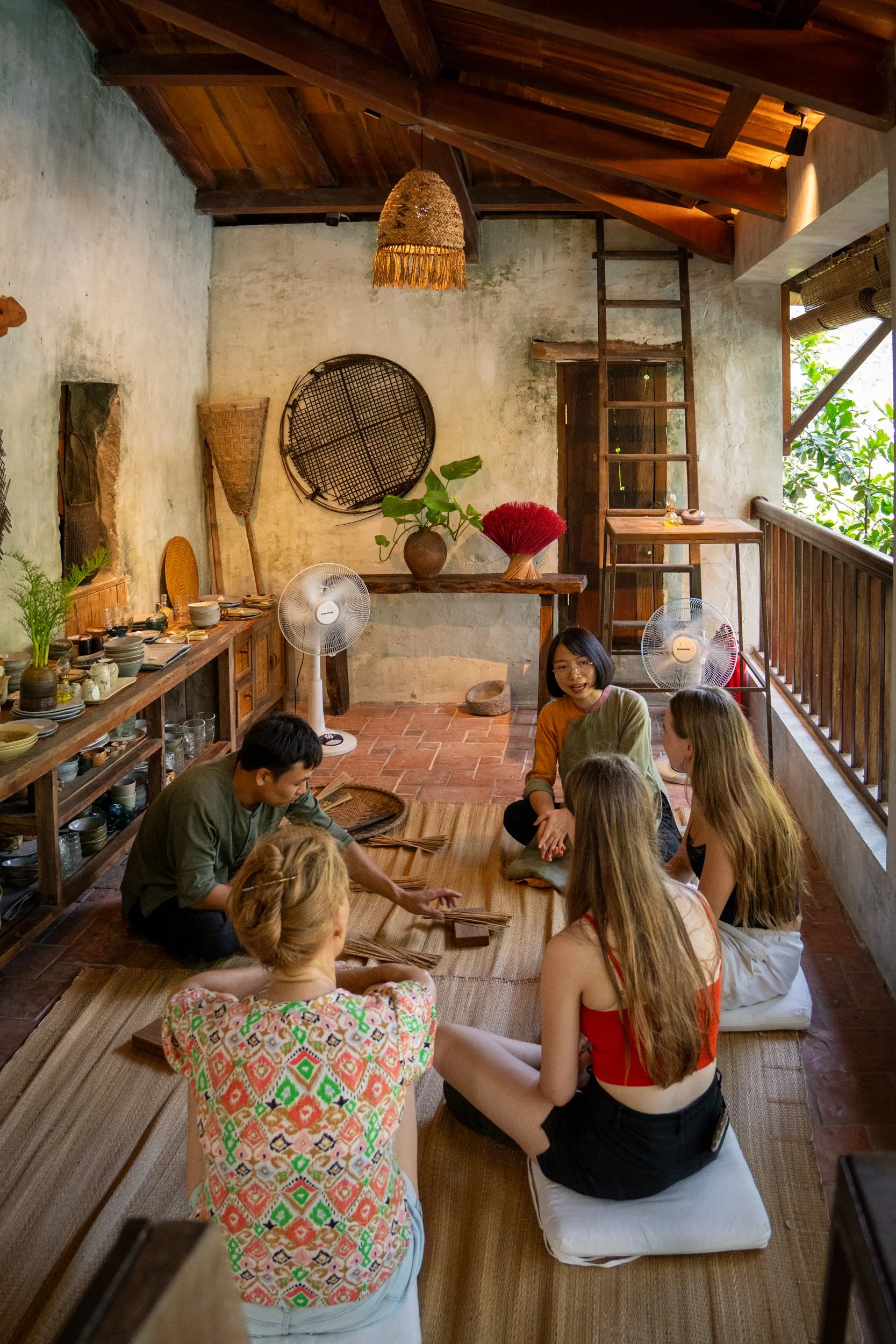
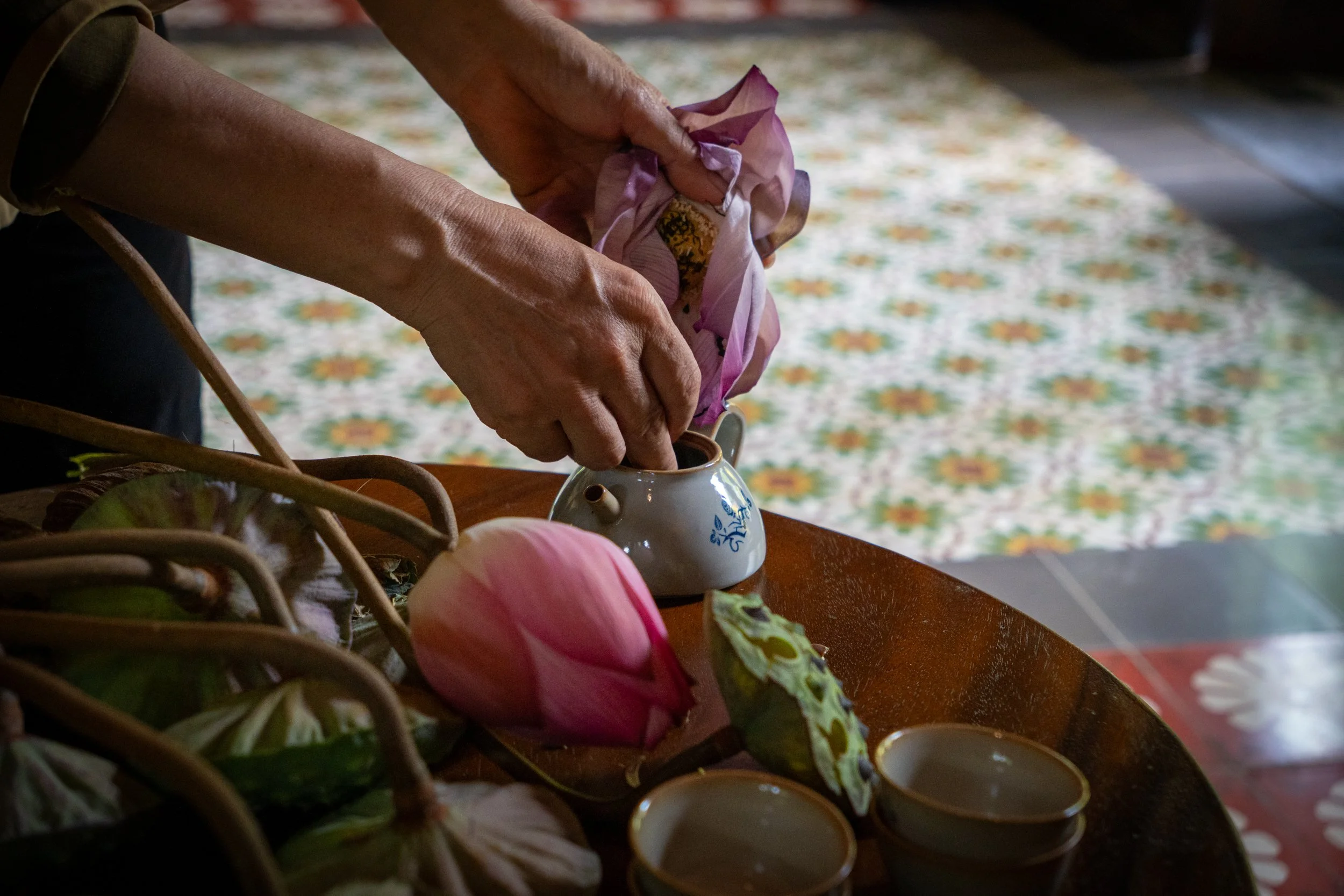
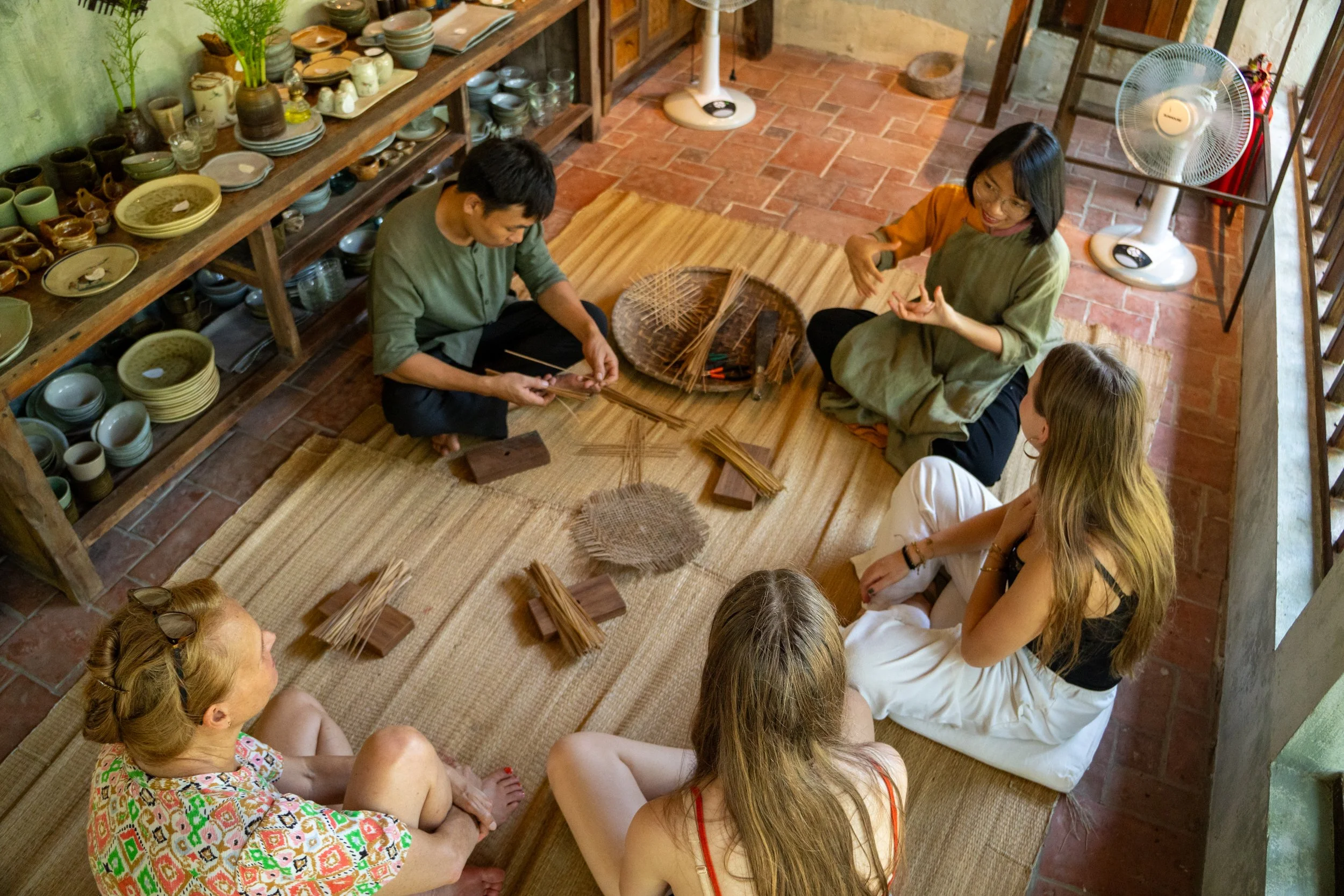
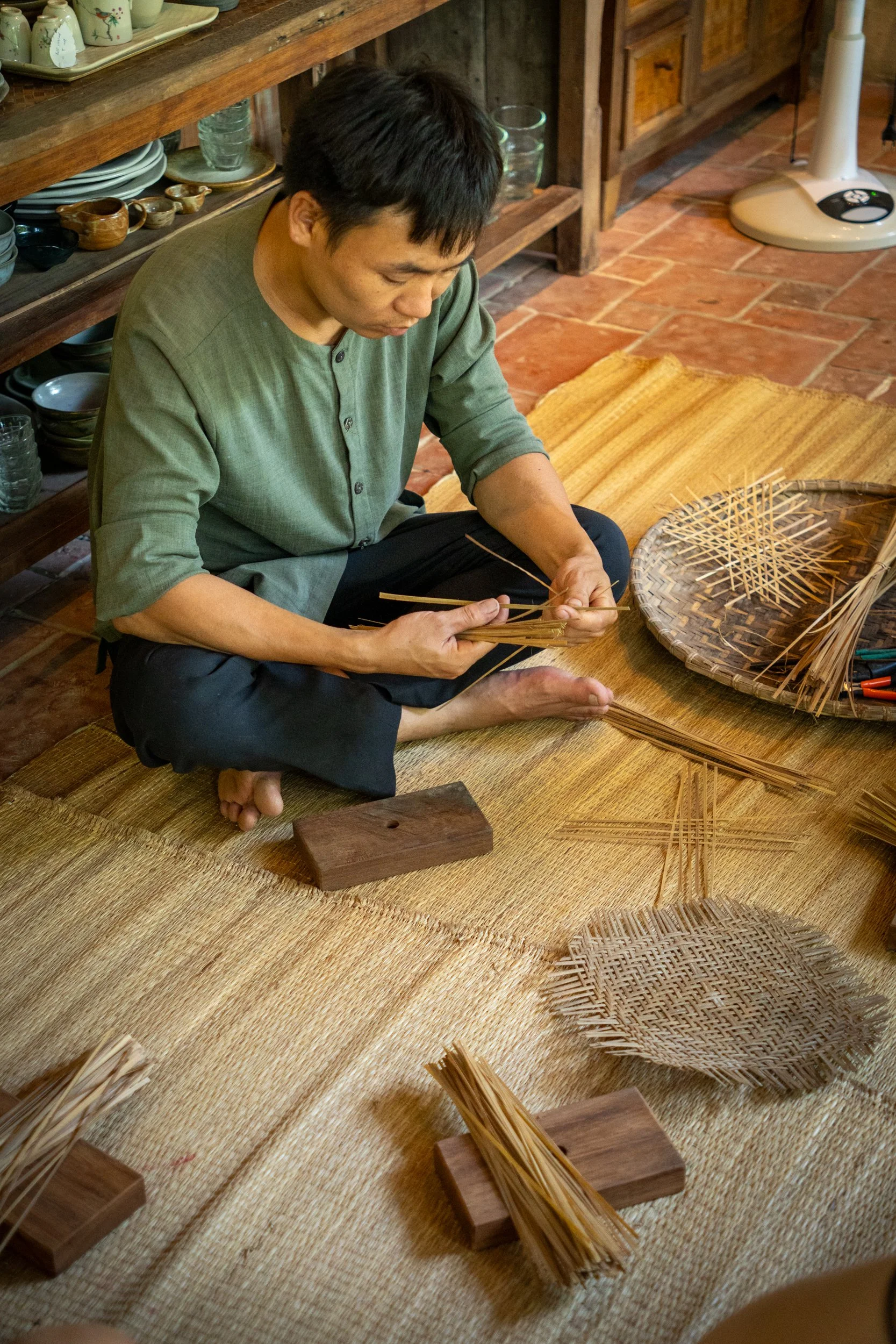
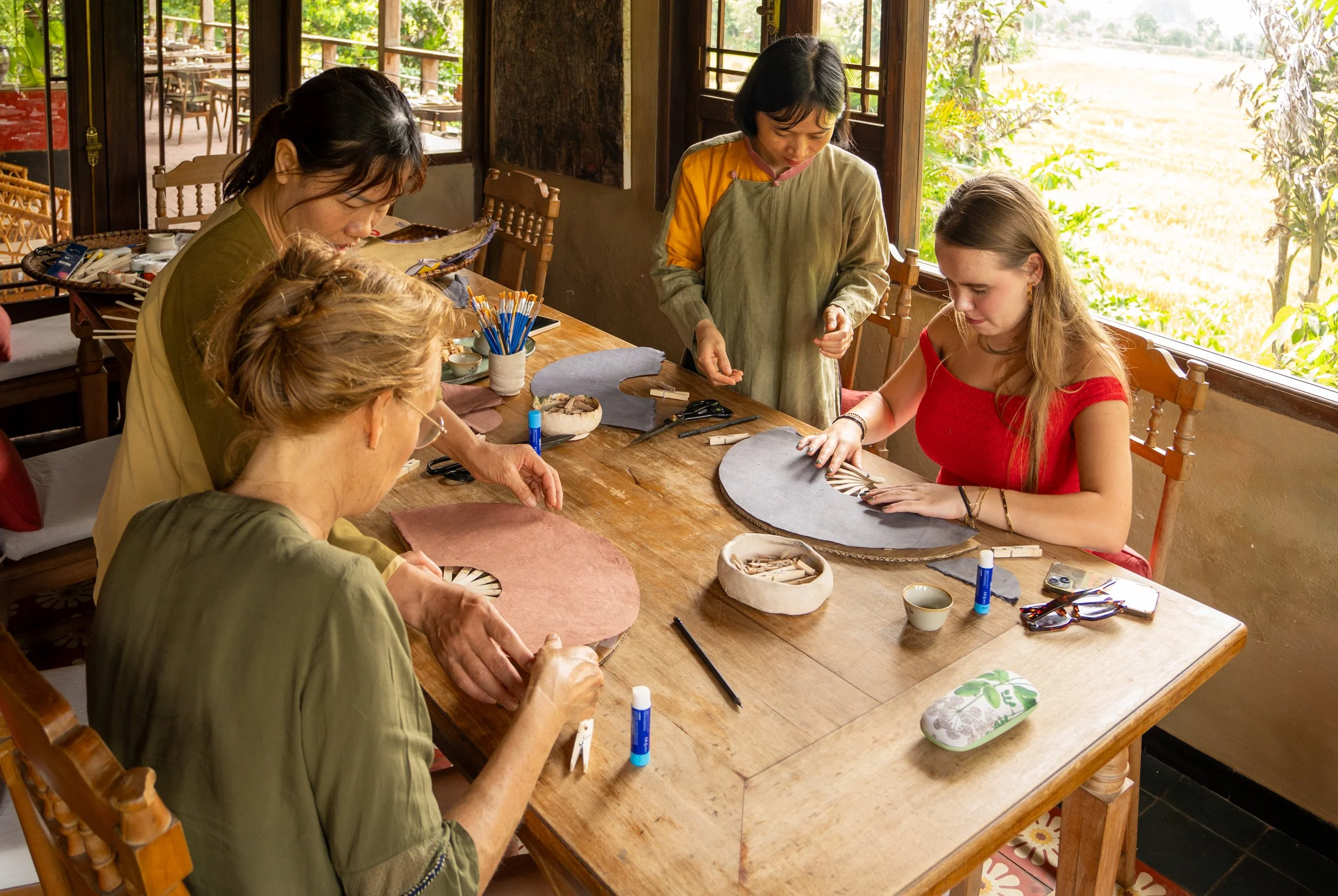
The resort also organises a changing programme of cultural and creative workshops. Depending on the day, guests may be able to try bamboo weaving, work with clay, make traditional rice balls, create paper objects or transform used textiles through sewing and collage. Ofcourse we participate in several workshops during our stay. They provide a pleasant counterpoint to the larger attractions outside the resort. Producing a perfect object is never really the point; handling bamboo, fabric, paper or local ingredients offers a more direct encounter with the Vietnamese staff, and with materials and traditions.
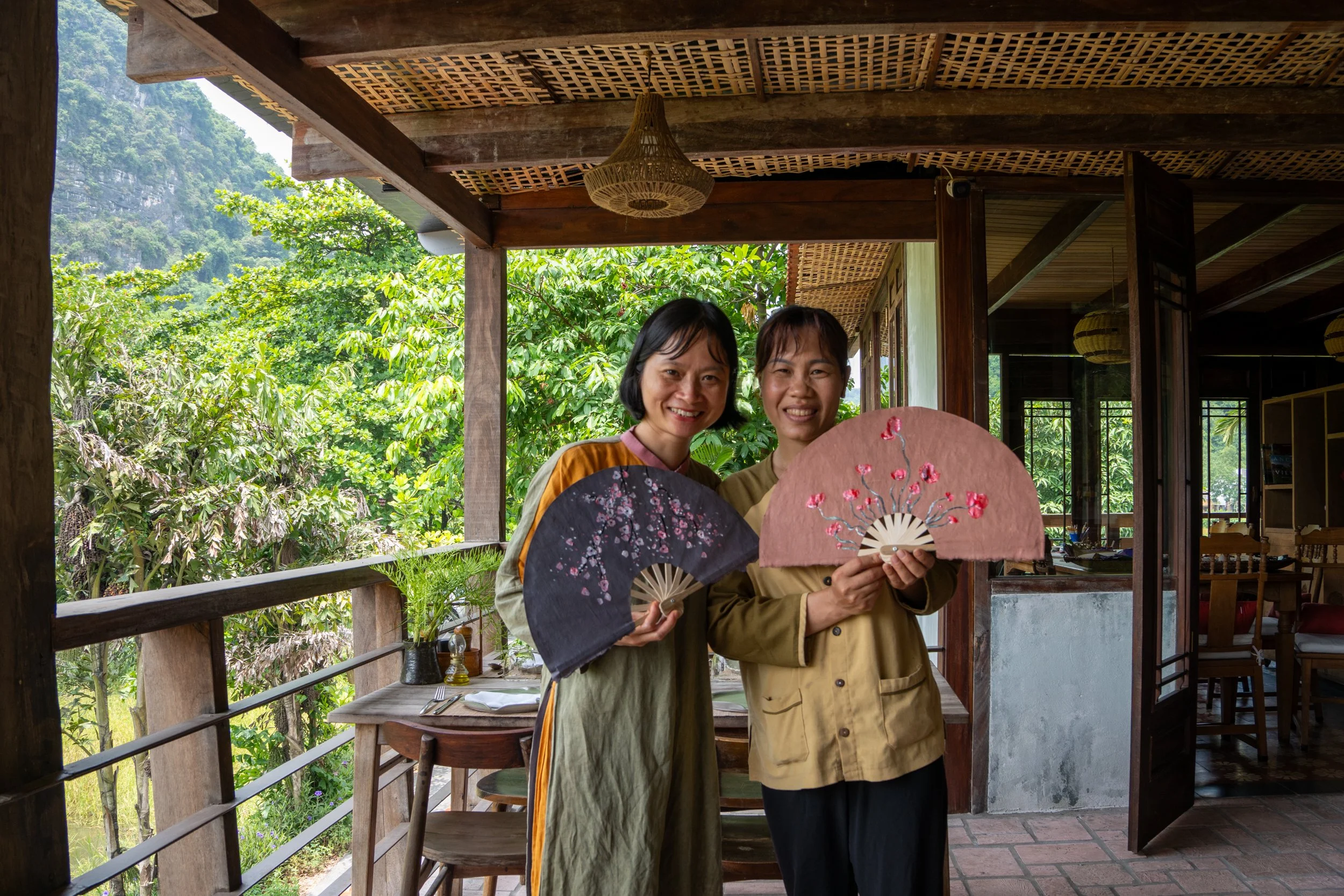
Cooking experiences are also available. The resort’s Indigenous Cookery programme can begin outside the kitchen, with participants collecting ingredients from the garden and even catching shrimp before preparing well-known Vietnamese dishes. Private picnics can be arranged in the garden or aboard a traditional sampan. These experiences come at an additional cost, but they make intelligent use of the landscape rather than treating it as a decorative backdrop.
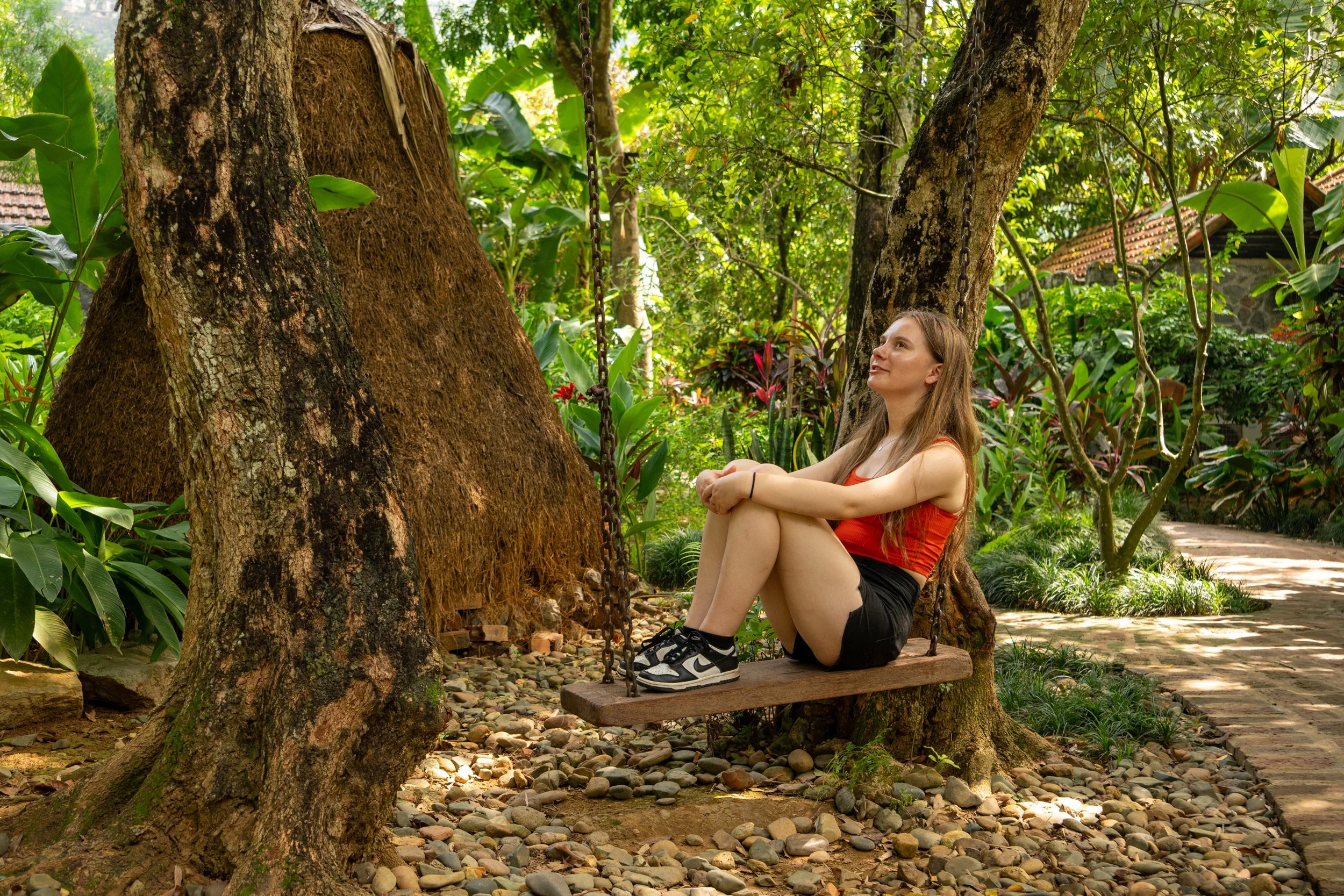
Never too old, in Tam Coc Garden
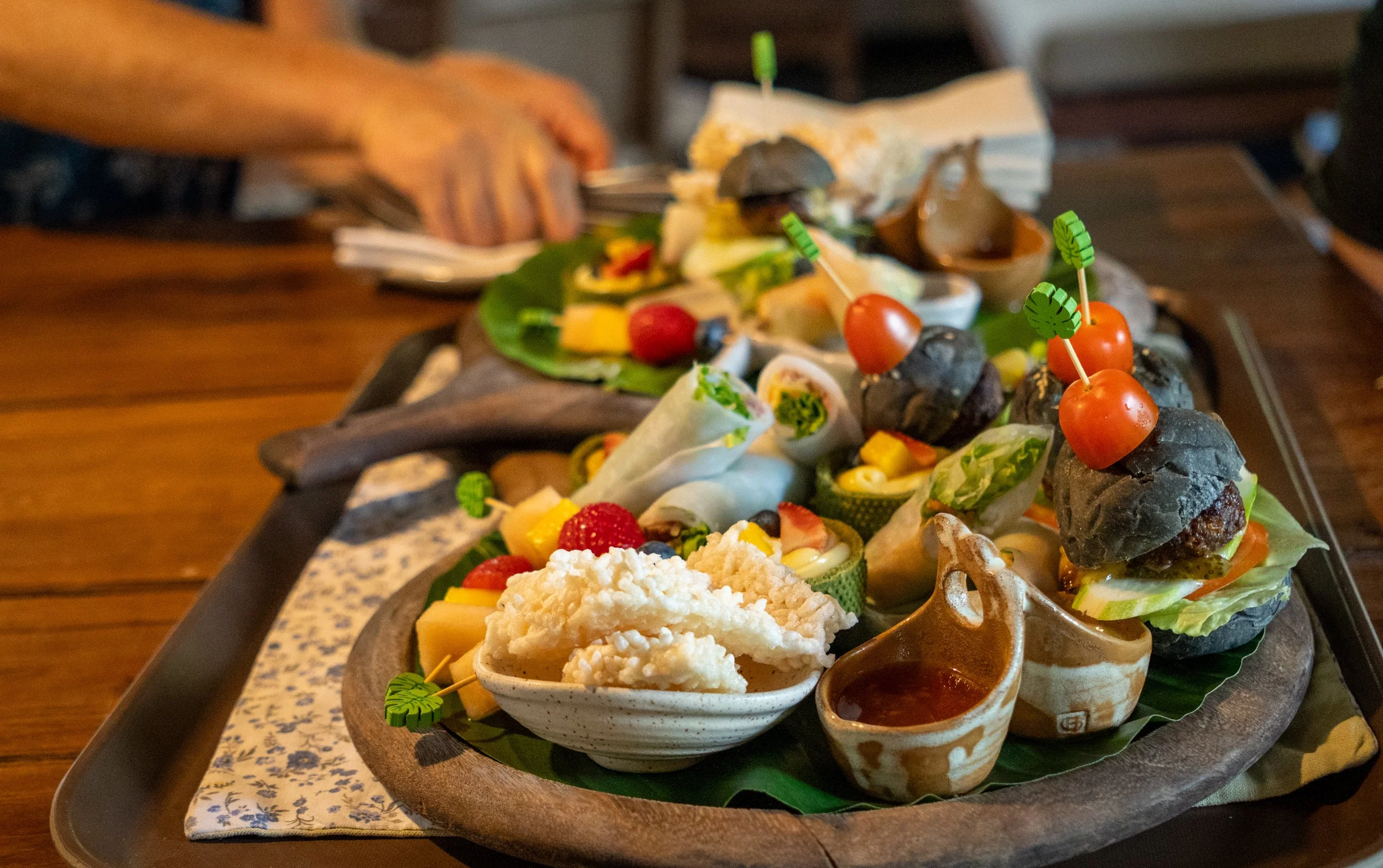
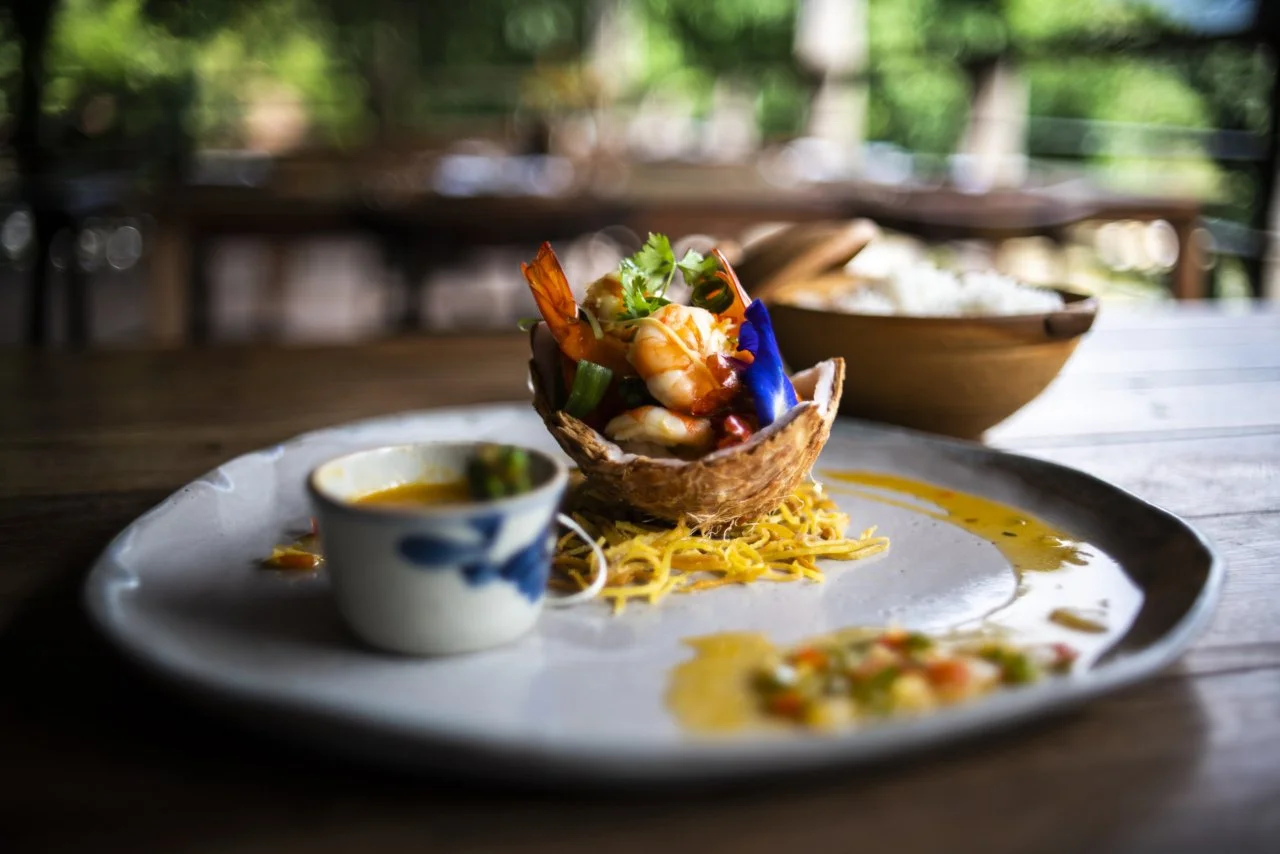
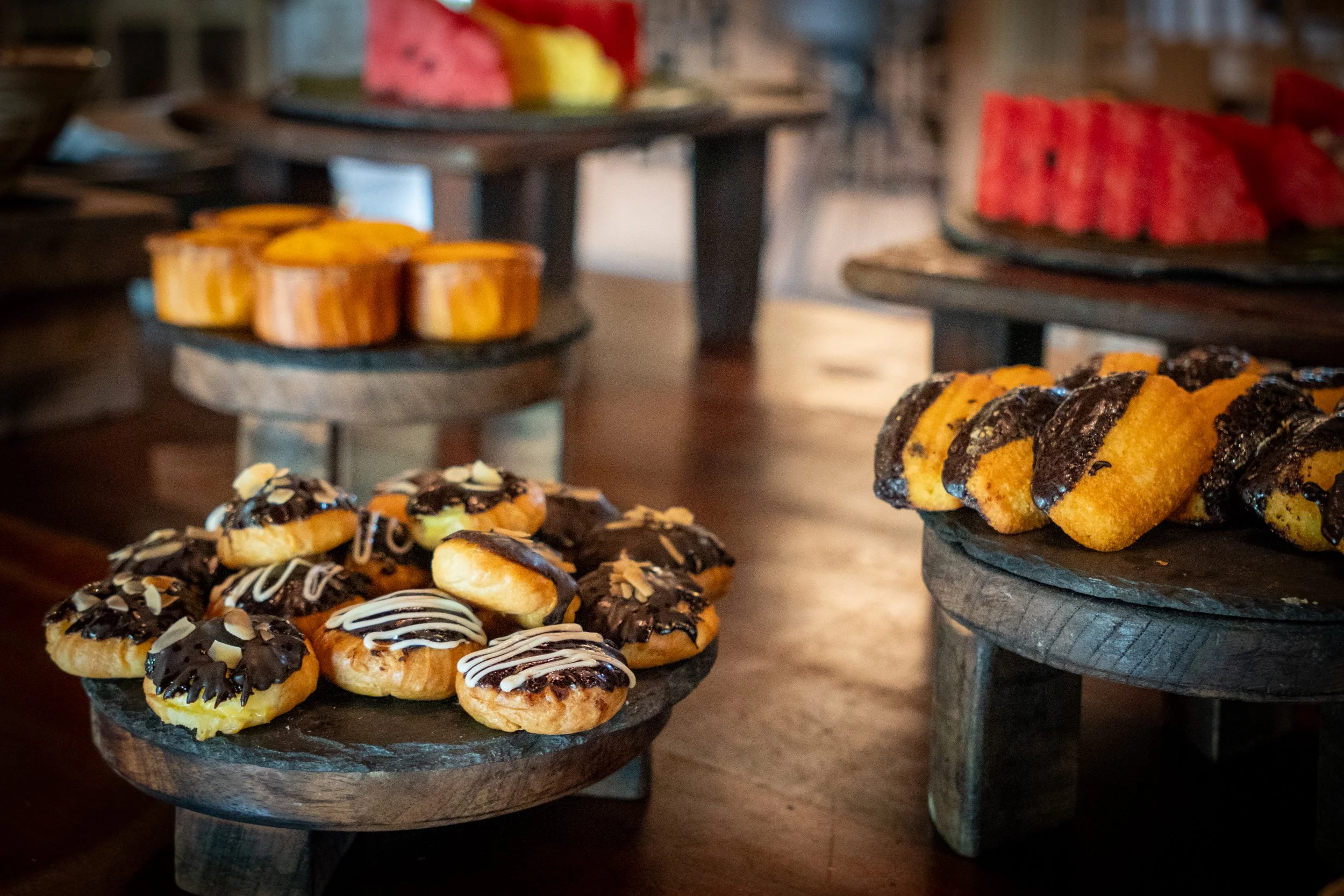
Fortunately, the regular restaurant is already one of the strongest parts of our stay. Citronella Restaurant looks across the gardens and rice fields, with outdoor tables that become especially attractive when the afternoon heat begins to subside. The cooking is consistently excellent. Vietnamese dishes make the greatest impression, particularly those built around local vegetables, herbs, river fish, prawns, chicken and the goat for which Ninh Binh is known. The menu is varied enough for a family staying several nights, while the presentation remains refined without turning local food into an overcomplicated fine-dining performance.
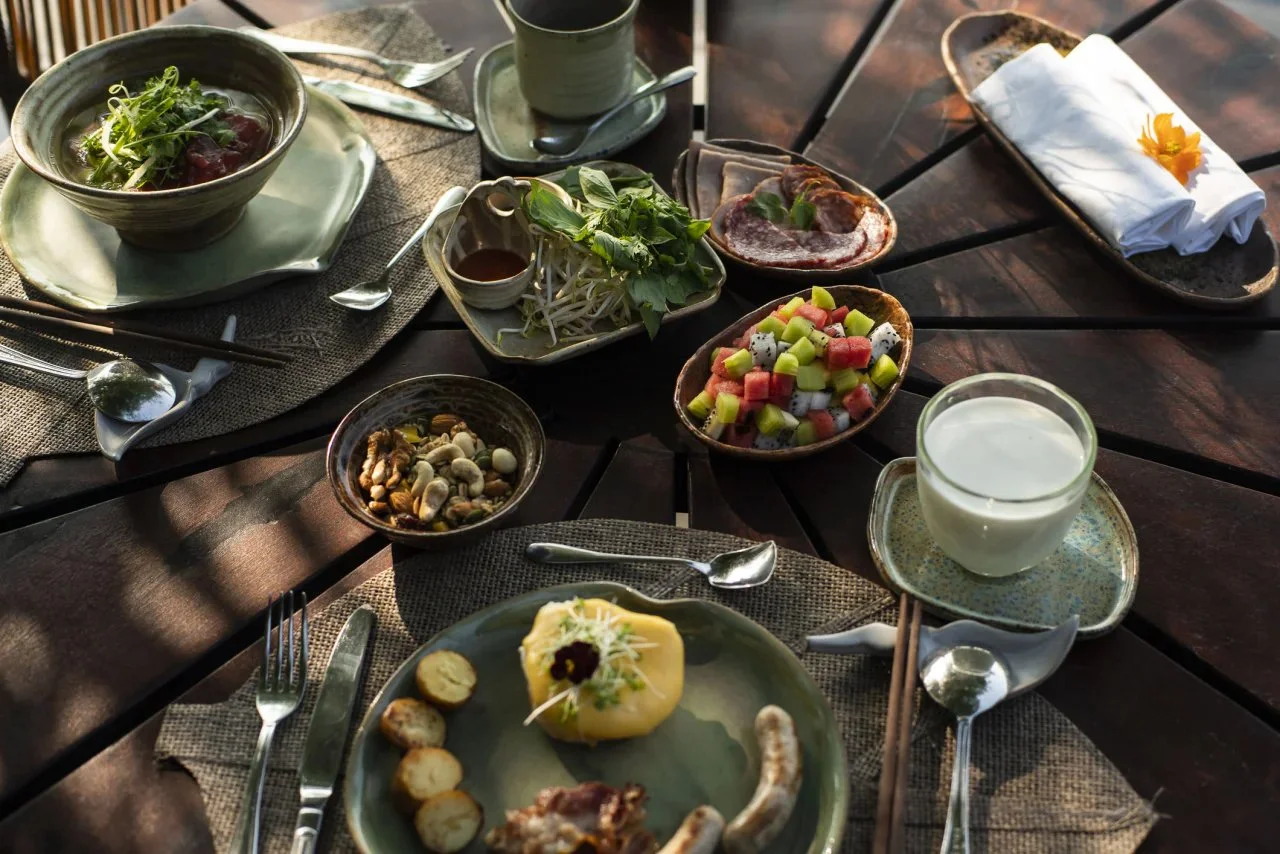
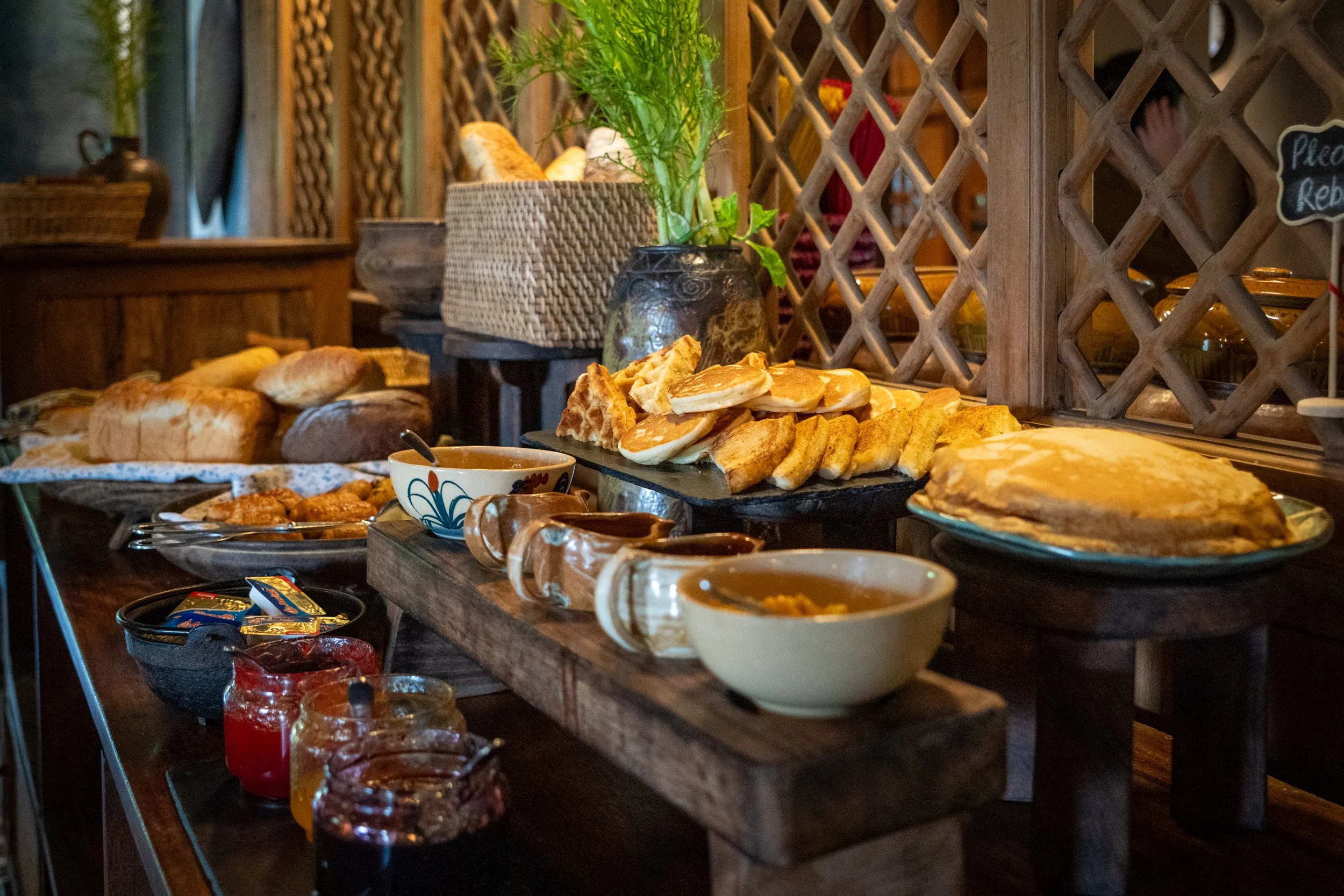
Breakfast!
In our experience, Citronella is the best restaurant in the immediate area. Importantly, it also welcomes diners who are not staying at the resort, making it worth the journey in its own right. Booking ahead is advisable, particularly for an outdoor table overlooking the rice fields.
We rent a scooter to explore independently. It gives us considerable freedom: we can leave early, take smaller roads and return whenever the traffic or heat became tiring. Whether renting one is sensible, however, depends on riding experience, licensing and insurance rather than on how easily a rental can be arranged. The fact that a company is willing to hand over a scooter does not establish that the rider is legally qualified or insured.
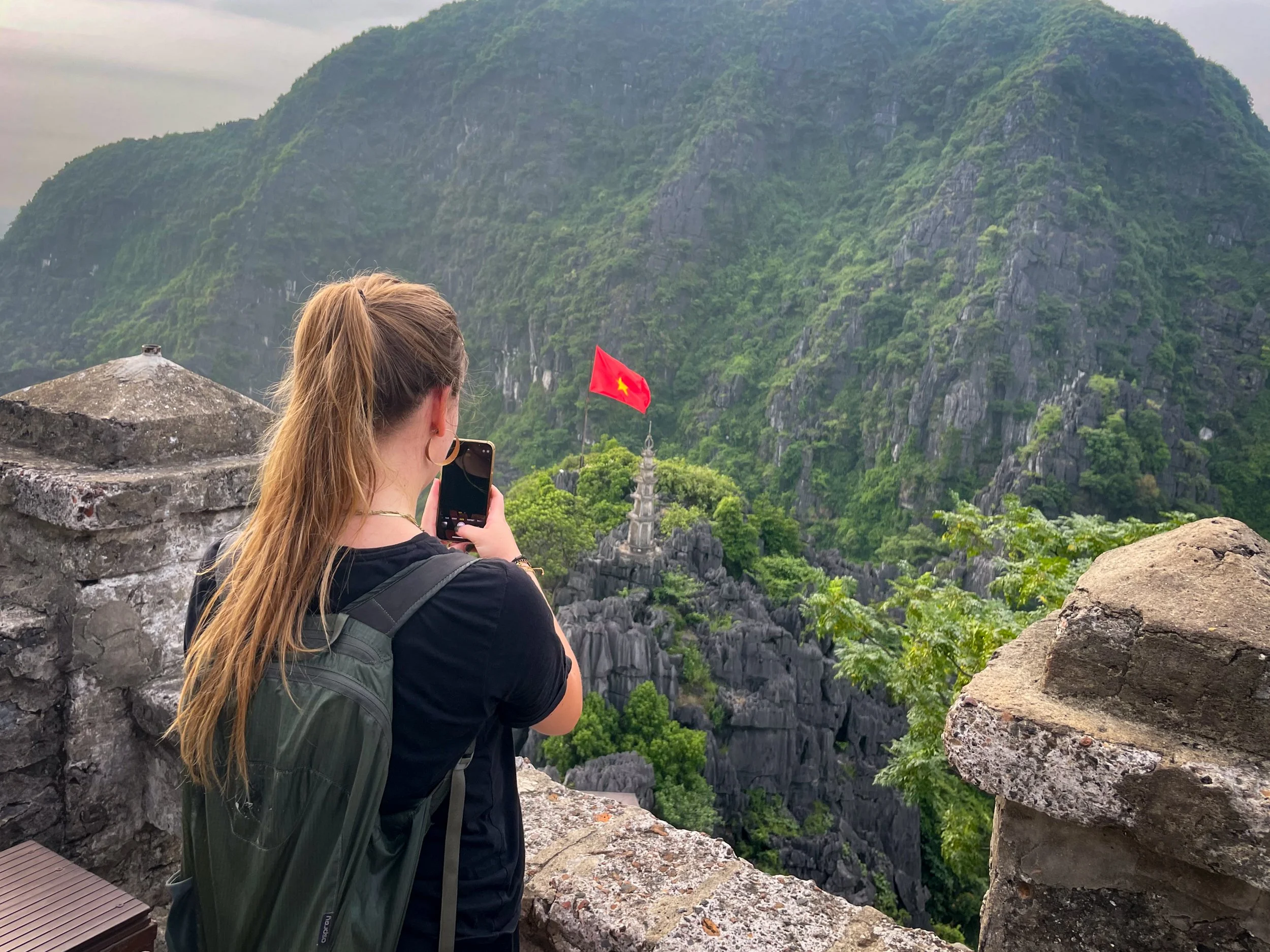
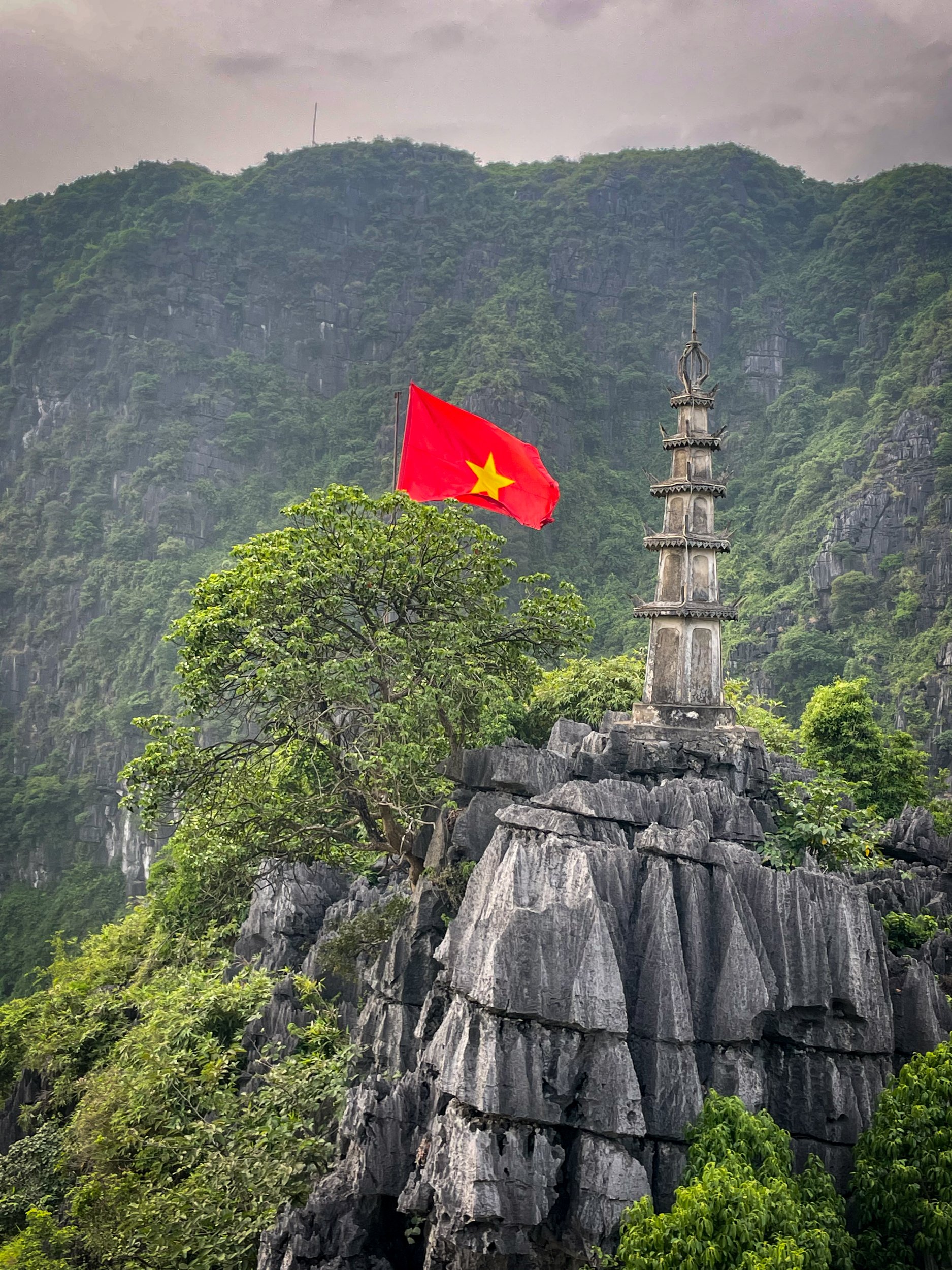
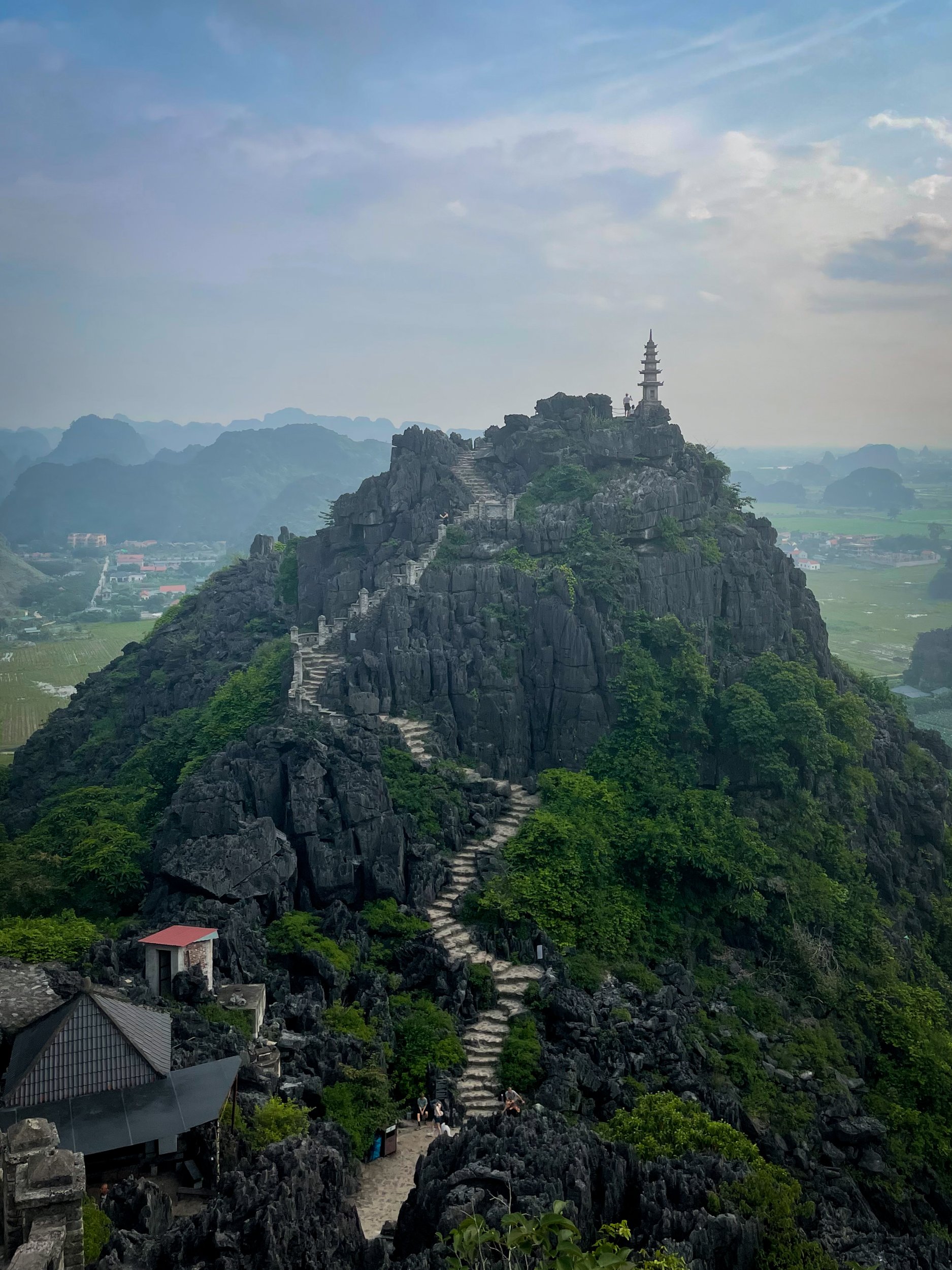
One of the region’s best-known excursions is Hang Múa, sometimes advertised as Mua Cave even though the climb and viewpoint are the real attractions. Almost five hundred stone steps lead up the mountain, dividing near the top between two summits. From above, the Ngô Đồng River curves between rice fields and limestone peaks, revealing the structure of the landscape more clearly than any road journey can.
We arrive at 6:00 in the morning, when the site opens. This spares us the strongest heat and provides softer light, but it does not produce an empty mountain. Even at that hour the steps are already becoming busy. The ascent is steep and humid but manageable when taken slowly. Some steps are irregular, and the final sections require care when other visitors stop abruptly to take photographs. The dragon sculpture along the ridge is striking, although the narrow rocks and growing crowds make this section less suitable for anyone uncomfortable with heights. Despite its popularity, the climb is worthwhile. From the summit, water, paddies and seemingly isolated mountains reveal themselves as one continuous landscape. Bring water, wear suitable shoes and leave enough time to descend before the temperature rises.
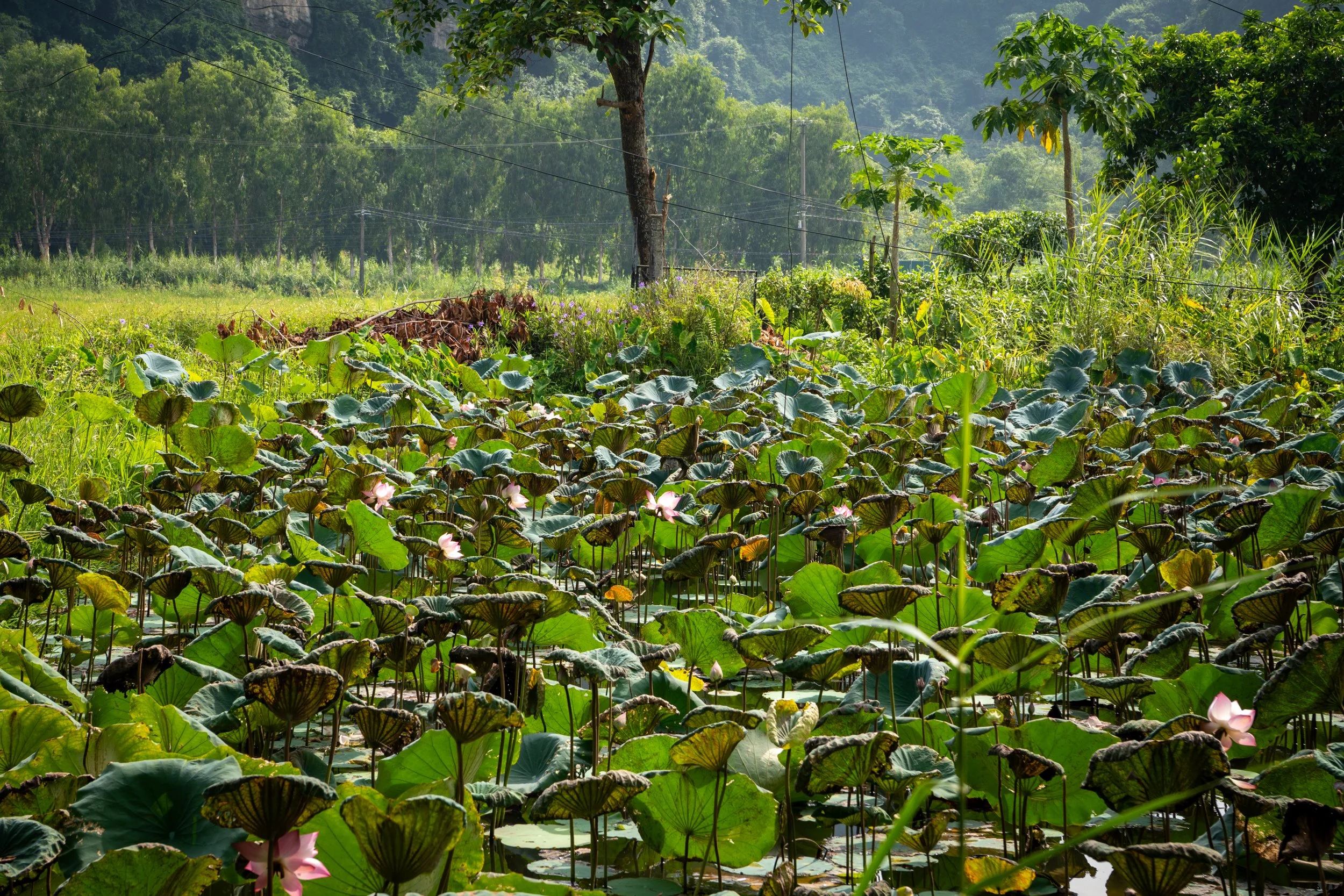
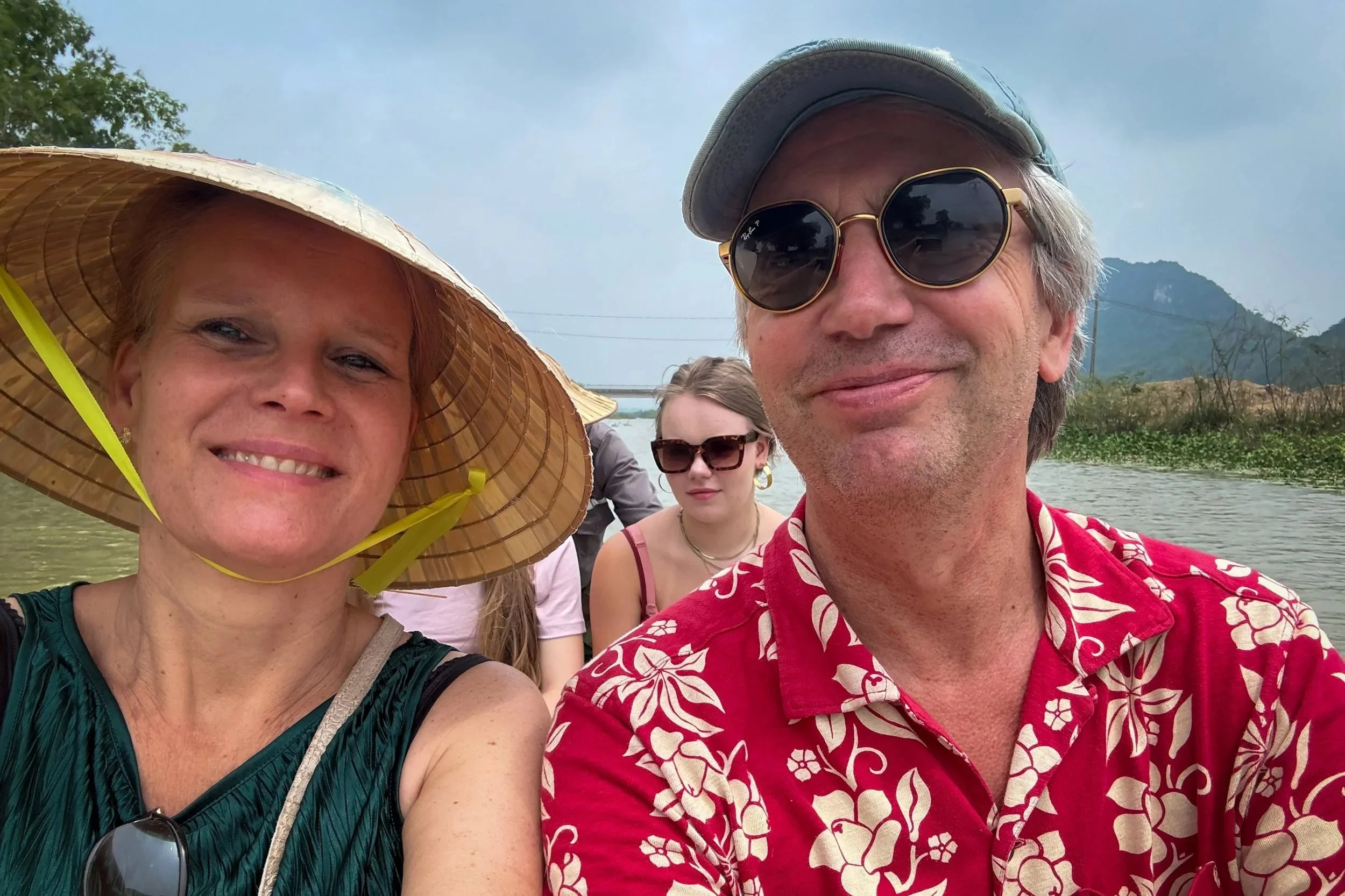
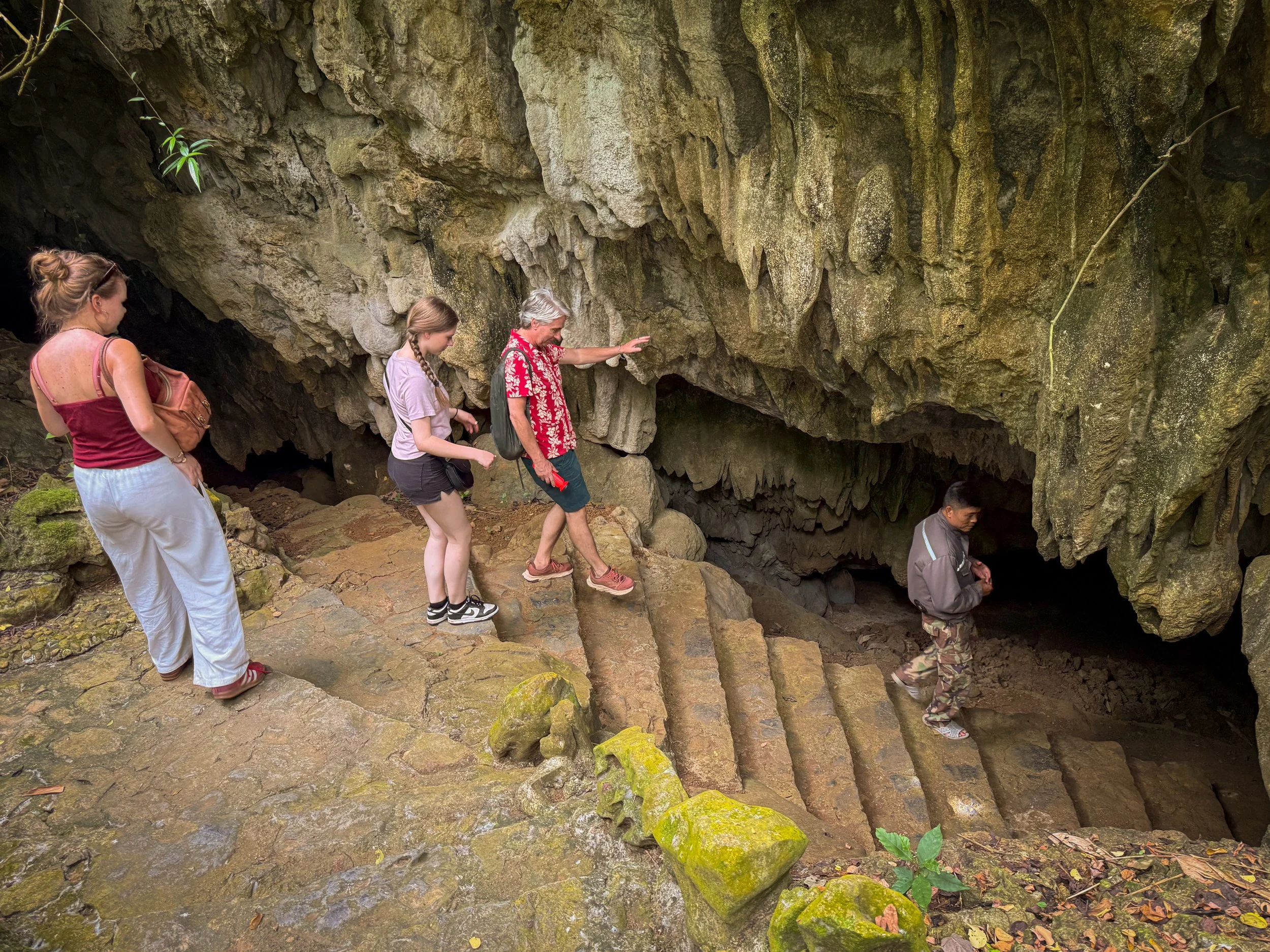
A very different experience is Thiên Hà Cave, usually called Galaxy Grotto in English. Ninh Binh has several celebrated boat routes, particularly Tam Coc and Trang An, but their popularity can result in long queues and an almost continuous procession of boats. Galaxy Grotto was dramatically quieter. Entering “Galaxy Grotto” as our Grab destination brought us to a small, non-touristic embarkation point where, apart from one other couple, the surroundings appeared deserted. We select the extended tour of approximately two and a half hours. The route combines a peaceful journey through the rural landscape with walking sections and visits to several caves. Parts of Thiên Hà are explored on foot, while another section is entered in a small rowing boat. Inside, beams of light catch the wet stalactites and create the scattered reflections that explain the cave’s English name. With almost nobody else present, we could hear paddles entering the water and individual drops falling from the cave roof. The experience felt exploratory without being theatrical or physically demanding.
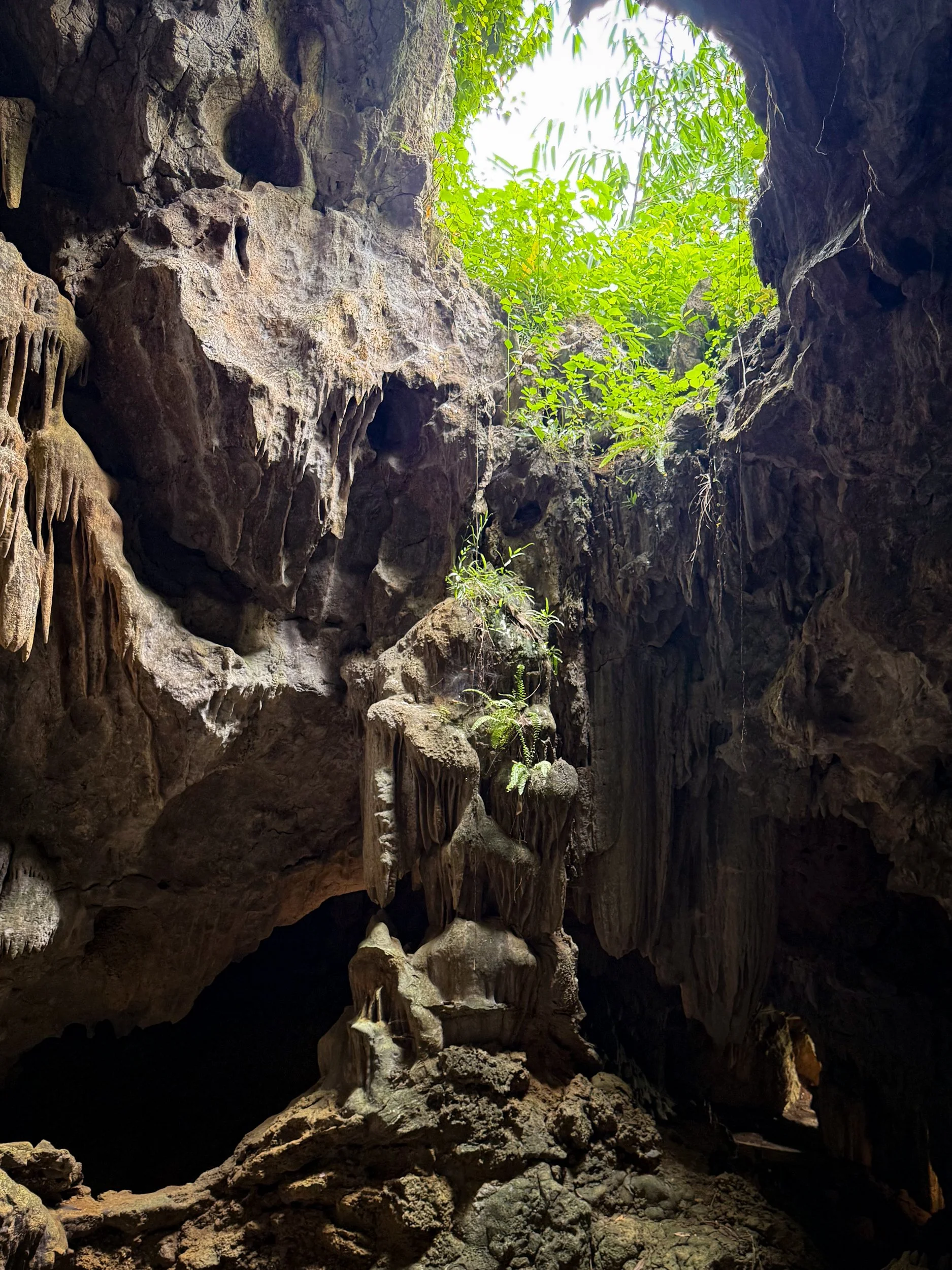
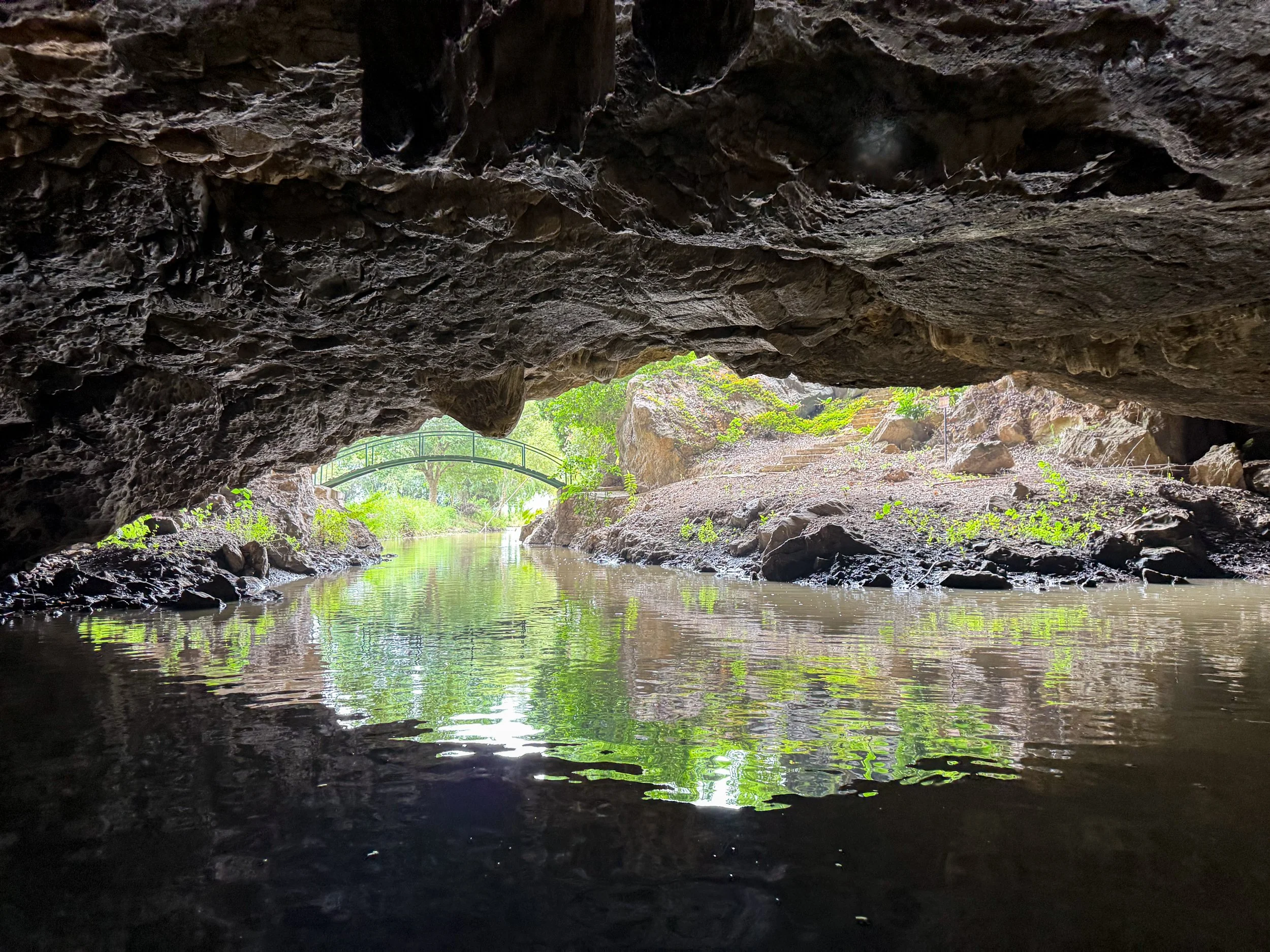
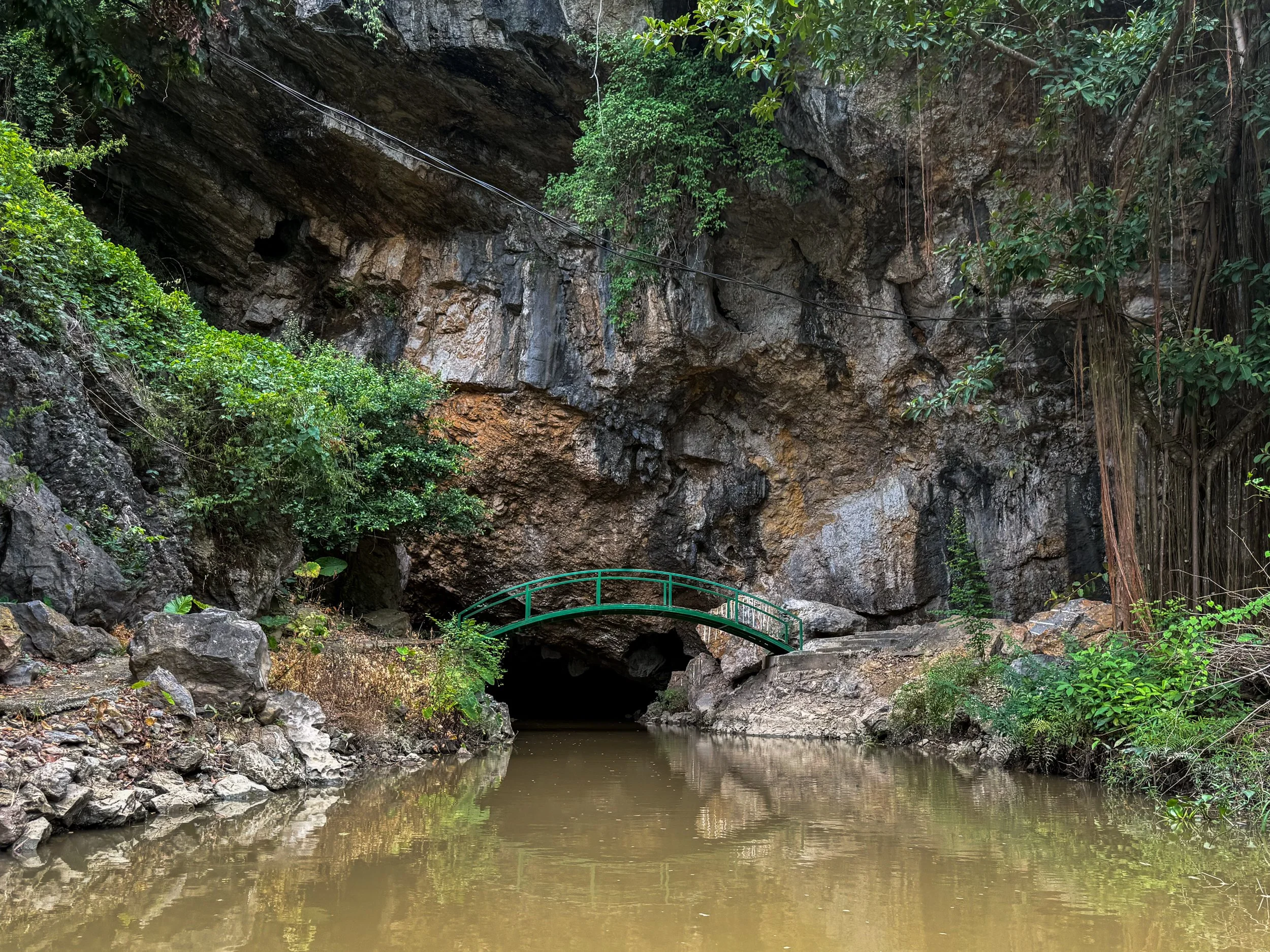
It is best to go early in the morning, when the temperature is comfortable, the light over the fields is gentle and the chance of finding the route quiet is greatest. Different tickets and embarkation points may produce tours of different lengths, so the route should be confirmed before departure. Our Grab driver agreed to wait during the excursion for an additional 100,000 VND, which was extremely convenient given the isolated setting. This was a privately agreed amount rather than an official tariff; both price and waiting time should be settled clearly in advance.
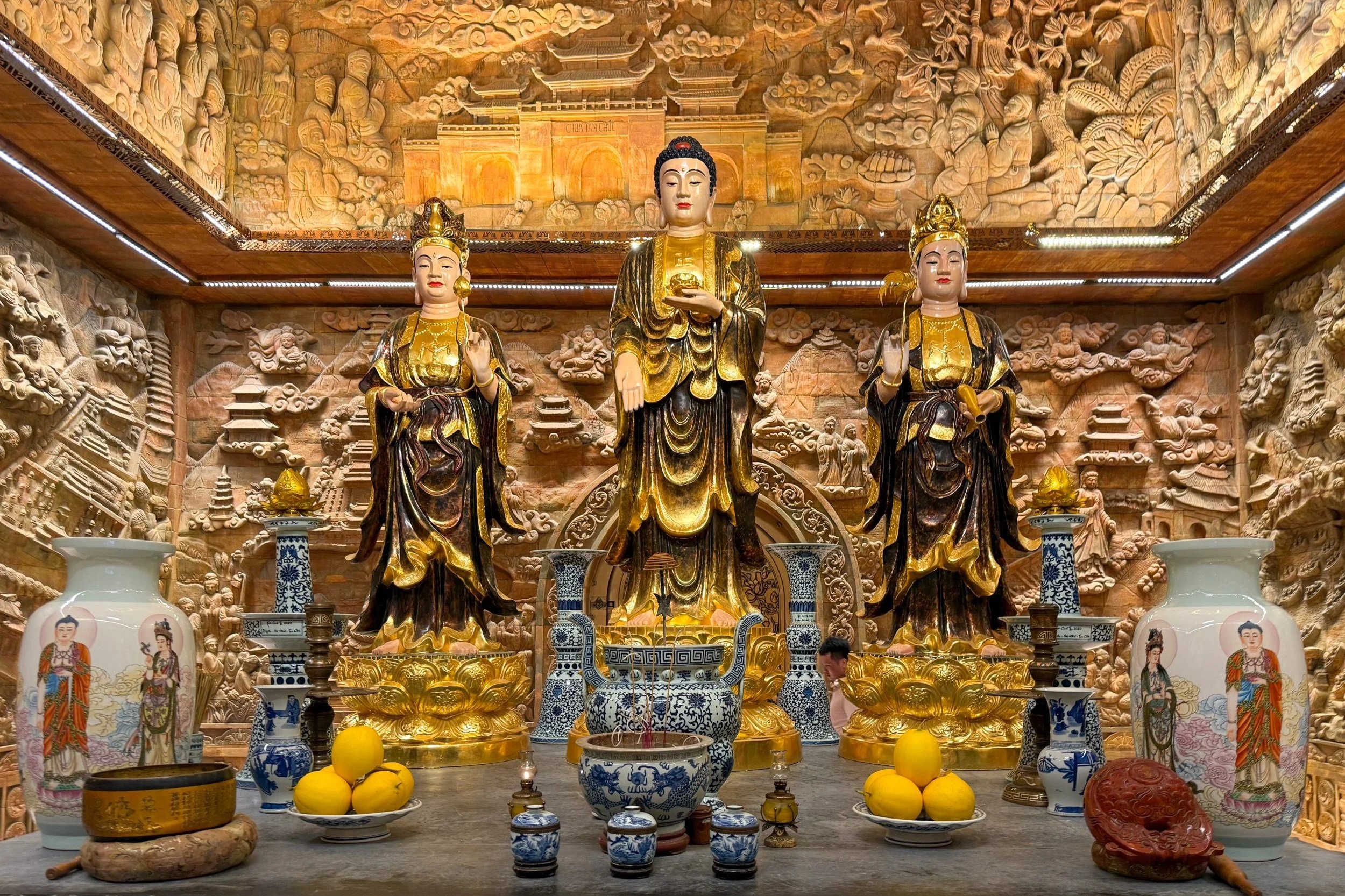
For an evening excursion, Hoa Lu Old Town is a great surprise. It should not be confused with the original ancient capital of Hoa Lu. The “old town” is a modern cultural and commercial development around Ky Lan Lake in Ninh Binh city, designed with traditional-style buildings, bridges, temples and pagodas. On paper this can sound rather artificial, but after dark the place acquires a convincing life of its own.
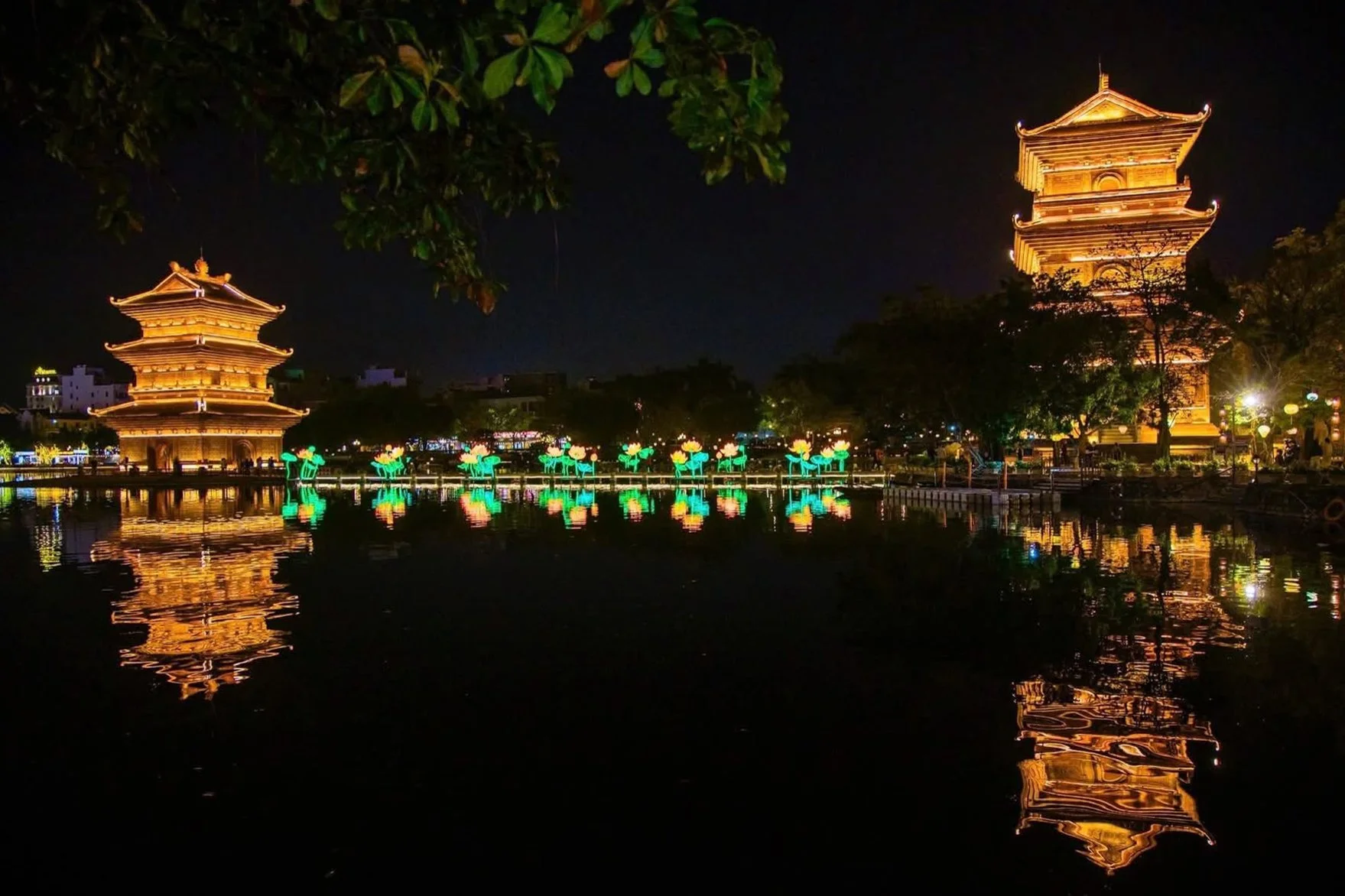
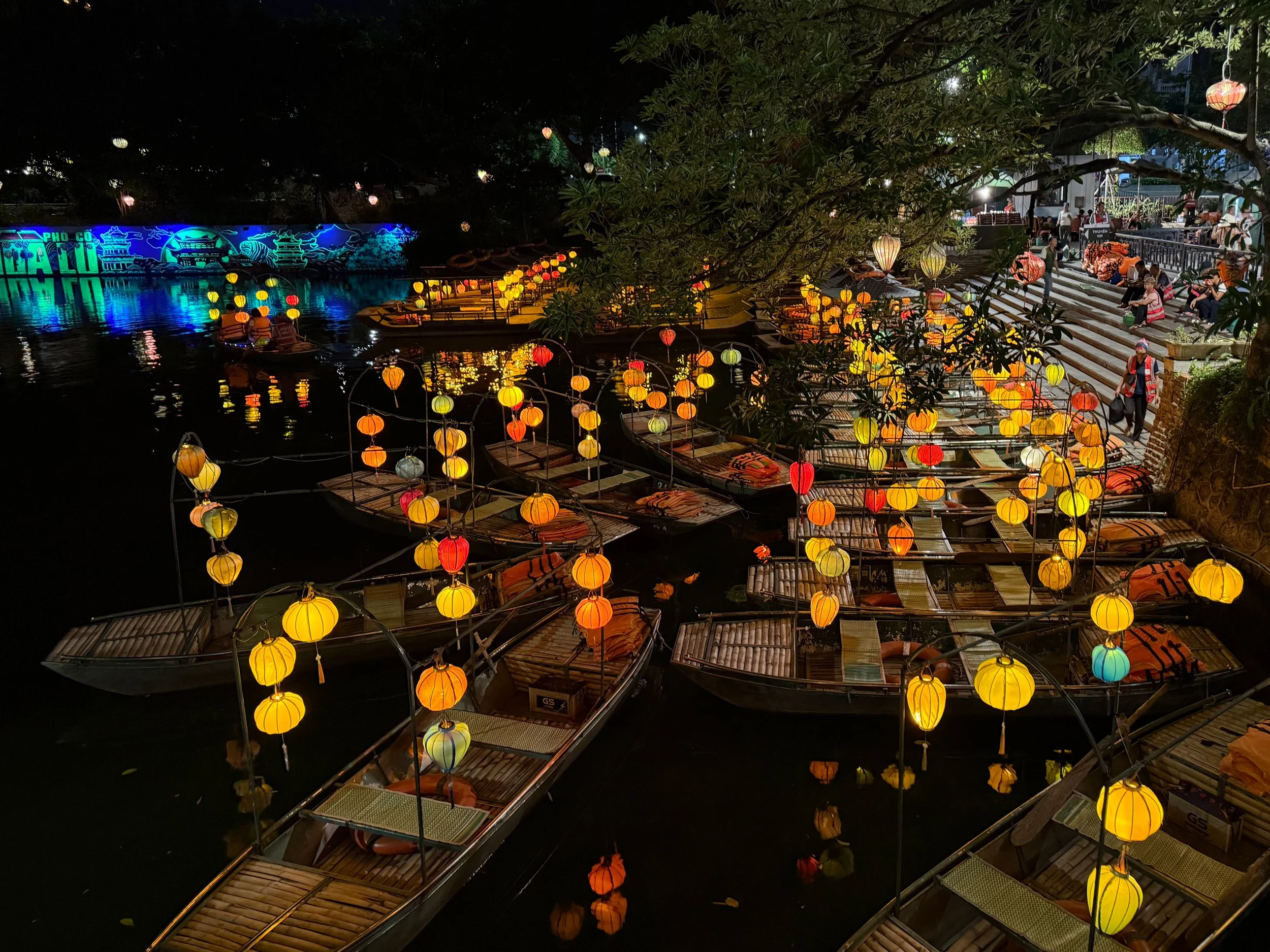
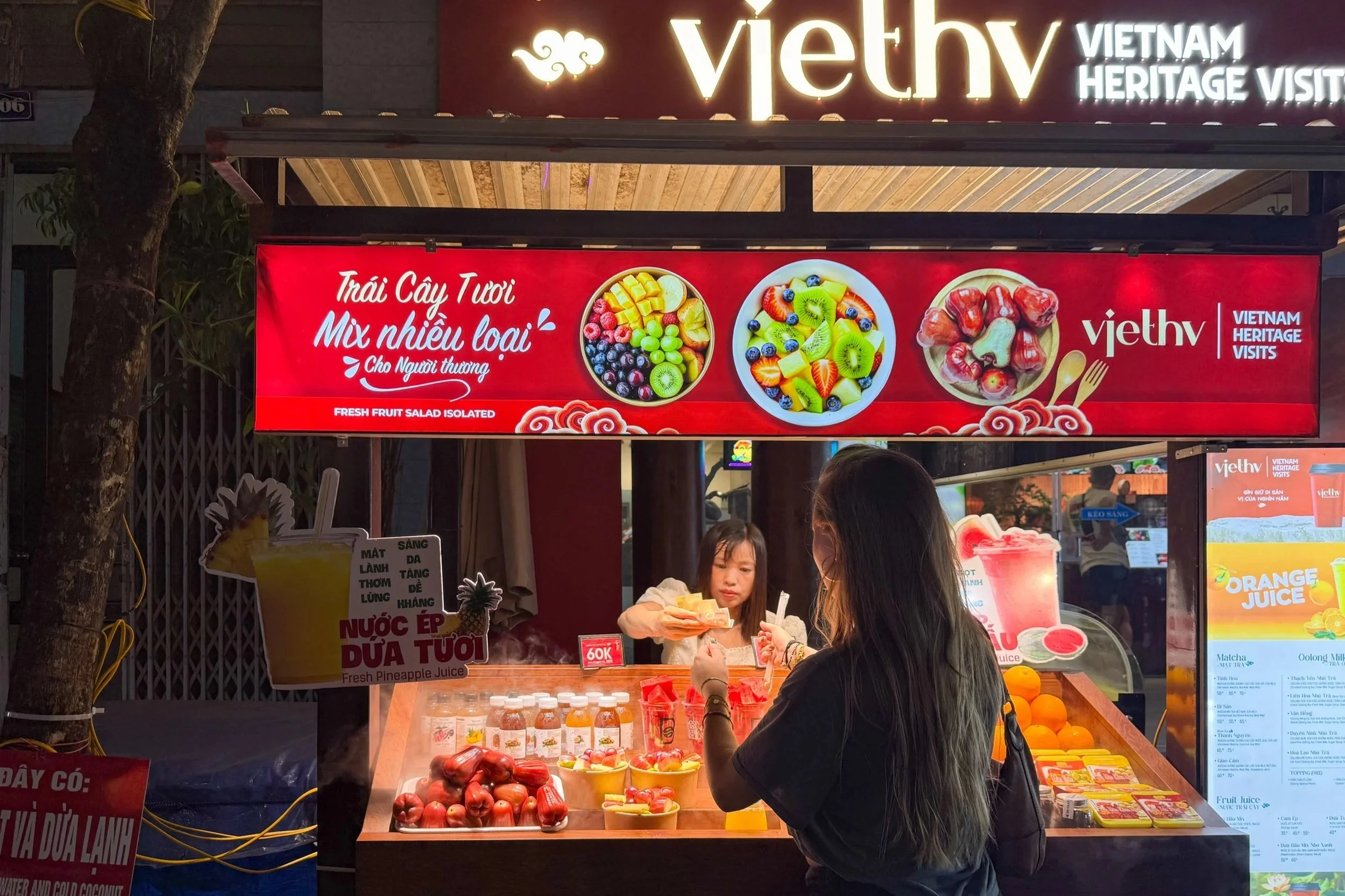
Thousands of lanterns illuminate the streets and reflect in the water, while decorated boats move slowly across the lake. Food stalls fill the pedestrian areas and Vietnamese families gather along the river to eat, walk and photograph one another. We take a Grab from the resort, which is easier and safer than riding a scooter back in the dark. The evening is extremely busy, but almost none of that crowd consist of international tourists. Instead, thousands of local families are enjoying the cooler air, carrying illuminated toys, sharing food beside the water and visiting the temples.
That local popularity creats the atmosphere. Hoa Lu Old Town is not an untouched historical discovery, but neither does it feel like an attraction constructed principally for foreign tour groups. Religious spaces, family entertainment, food and spectacle overlap in a way that feels distinctly Vietnamese. Come hungry, allow several hours and spend time simply walking beside the water. The combined effect of the lights, temples, food stalls and crowds is memorable.
Tam Coc Garden is the right base from which to experience so much. We can leave early, explore independently and return to a private pool, exceptionally friendly staff and the best meals we find in the area. The resort does not compete with Ninh Binh; it belongs to it, drawing the mountains, fields, materials and food of the region into the experience of staying there.
WOW
# The detached villa and private pool make Tam Coc Garden particularly comfortable for families travelling with teenagers.
# Citronella Restaurant is worth visiting even without an overnight stay; in our experience, it is the best restaurant in the area.
# Climb Hang Múa at opening time, choose the extended Galaxy Grotto tour and visit Hoa Lu Old Town after dark.